The (M)Anthropocene: how masculinity fuels the climate crisis


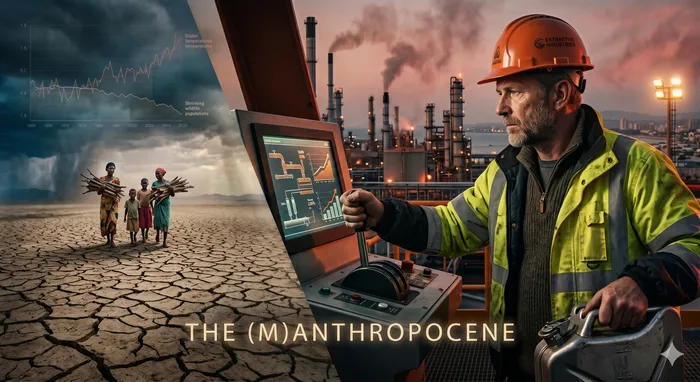
Why the Climate Crisis is a crisis of masculinity.
Image: AI generated/Gemini
The devastating collapse of our natural world—driven by climate change, global warming, and environmental degradation—has long been framed as a universal human failing. However, ground-breaking new research suggests that the "humanity" responsible for our planet’s precarious state is far from gender-neutral.
In a provocative double special issue of the journal Norma: International Journal for Masculinity Studies, an international team of scholars has identified a direct correlation between traditional masculine behaviours and the acceleration of environmental collapse.
Co-edited by Professor Tamara Shefer of the University of the Western Cape and Professor Jeff Hearn of the University of Huddersfield, the research introduces a searing new term for our era: the (M)Anthropocene. The findings, compiled by 22 researchers across 13 countries, argue that we cannot fix the planet without first addressing the "gender gap" in environmental destruction.
“There is now plenty of research that shows clear negative impacts of some men’s behaviour on the environment and climate,” explained Professor Hearn. “What is astonishing is how this aspect does not figure in most debate and policy on a more sustainable world.”
The data is as consistent as it is damning. The team’s findings reveal that men, particularly elite men in the global North, possess a significantly larger carbon footprint than their female counterparts. This disparity is driven by consumption patterns—specifically a higher propensity for frequent travel, heavy transport, and luxury tourism. Beyond individual habits, the research highlights a psychological divide: men statistically show less concern for climate change and a marked resistance to altering their everyday practices to ameliorate its effects.
The (M)Anthropocene is not merely a matter of lifestyle choices; it is a crisis of structural power. The research identifies that men overwhelmingly own, manage, and control the most "carbon-intensive" sectors of the global economy. From the boardrooms of chemical and extractive industries to the management of industrialised agriculture, the machinery of environmental destruction is largely steered by men. Perhaps most critically, the study points to the devastating environmental toll of militarism—a traditionally masculine domain that remains one of the world's largest polluters, yet is frequently shielded from environmental scrutiny.
The scope of the research is global, touching on diverse and disturbing trends. It examines the rise of "pro-meat" online influencers in Finland who frame carnivorous diets as a form of masculine rebellion, the aggressive "pipeline politics" of Canada, and the ecological consequences of male-dominated industrial policies in the Pacific Ocean.
However, the researchers stress that masculinity is not a monolith. While elite power structures drive the crisis, the study also spotlights "ecological masculinities"—the men in Africa, Latin America, and the UK who are working urgently to dismantle these damaging patterns. These activists are championing environmental justice, proving that masculinity can be redefined through stewardship and care rather than extraction and dominance.
The implications for policy are profound. If environmental collapse is being driven by specific gendered behaviours, then "one-size-fits-all" climate policies are destined to fail. To save the planet, governments must move beyond generalisations and address the toxic intersection of masculine identity and industrial power.
The era of the (M)Anthropocene has brought us to the brink. The research from Professors Shefer, Hearn, and their colleagues serves as an urgent wake-up call: we will not solve the climate crisis until we address the men at the wheel. The survival of the planet may well depend on our ability to transform what it means to be a man in the 21st century.