Five key areas for South Africa's environmental protection on Earth Day


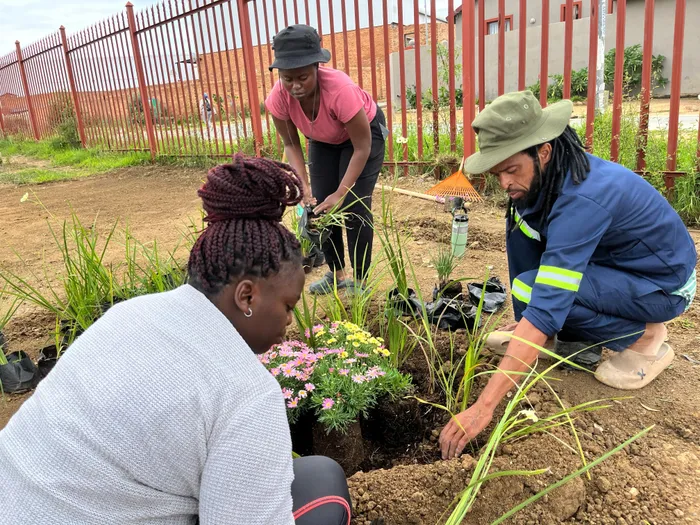
Learners take part in tree planting and recycling activities during a school-based environmental awareness drive in Johannesburg ahead of Earth Day
Image: Supplied
Earth Day has put the spotlight on how South Africa is fairing in its environmental protection and its goal of moving towards a just energy transition. Here are five areas that the country must focus on if it wants to move upwards in its global standing in protecting the environment.
1. From 'awareness' to 'accountability'
The most significant shift in the South African landscape is the move away from abstract environmental goals toward measurable accountability. Whether it is logistics companies tracking carbon footprints at the package level or tourism providers using carbon footprinting as a management tool, the focus is now on data-driven progress. This transition indicates that South African industries are beginning to treat environmental impact as a core business metric rather than a secondary corporate social responsibility task.
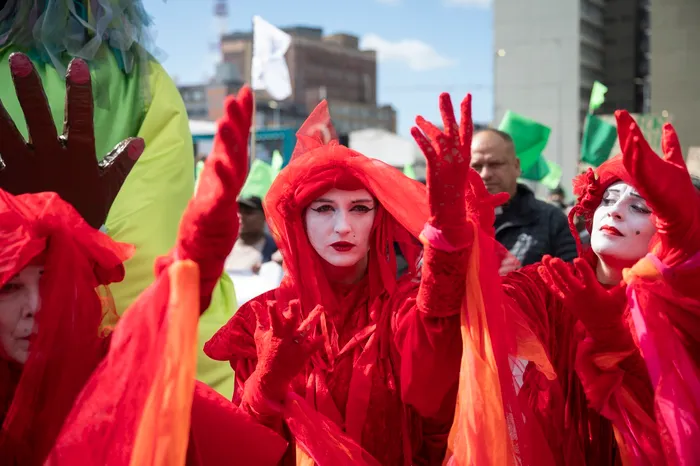
Protesters gathered in Cape Town on Earth Day, calling for a just transition and rejecting what they described as “false solutions” to the climate crisis.
Image: Armand Hough
2. Redefining resilience and infrastructure
There is a growing realization within South Africa’s engineering and urban planning sectors that "natural disasters" are often the result of human systemic failures. South Africa is currently facing the challenge of reconciling aging infrastructure with increasing climate volatility. the key takeaway here is a strategic pivot towards 'survivability — designing systems for energy, water, and transport that can withstand the "new normal" of floods and heatwaves rather than relying on historical weather data.
3. The power of public-private partnerships
South Africa’s environmental protection is increasingly dependent on collaboration between the government, NGOs, and the corporate sector. As seen with the initiatives at Avoca Primary School and the Western Cape’s organic waste diversion programs, the government admits it cannot solve these challenges in a vacuum. By leveraging corporate resources (like JoJo tanks or seedlings from agricultural departments) and community leadership, the country is actively building a more decentralized and robust environmental response.
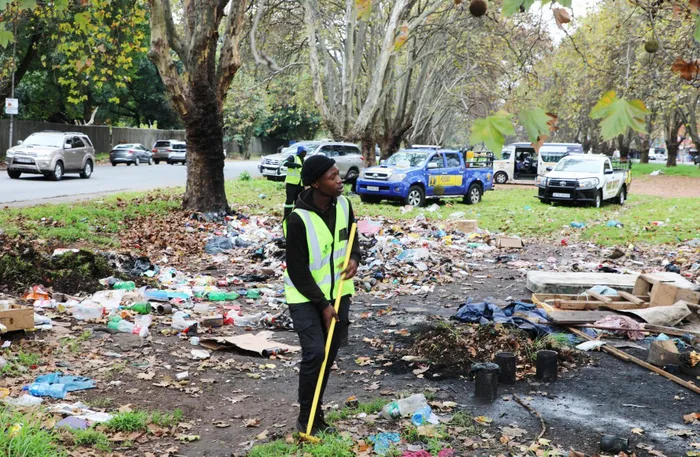
Lead by Bad Boys cleaning a group of volunteers clean the park near Garden City Hospital and surrounding areas. This is part of their World Earth day initiative.
Image: Timothy Bernard
4. The demand for a "just transition"
A critical takeaway is the social tension surrounding climate solutions. South Africa’s environmental progress is being closely scrutinized by civil society to ensure it does not deepen existing inequalities. The mass march to Parliament highlighted a firm rejection of "false solutions" like expensive nuclear energy or harmful industrial farming. This suggests that for South Africa to succeed, its environmental policies must also address energy, food, and economic justice for its most vulnerable citizens.
5. Tourism as a conservation engine
South Africa is uniquely positioning its tourism sector not as an environmental problem, but as a vital protector of "climate infrastructure." By valuing the carbon sequestration potential of the bushveld and savannas (storing up to 150 tonnes of carbon per hectare), the country is turning travel into a mechanism for land preservation. This approach helps protect biodiversity while providing a financial incentive for maintaining intact ecosystems that act as essential carbon sinks.
How is South Africa doing?
South Africa’s performance is a study in ambitious policy meeting complex reality.
In Policy: The country is a leader in the region, with frameworks like the African Continental Free Trade Area (AfCFTA) driving sustainable trade and the Western Cape's aggressive organic waste diversion goals leading the way in circular economy practices.
In Practice: There remains a significant gap between policy and implementation at the municipal level. While logistics and tourism are making high-tech strides, many communities still struggle with basic waste management and reliable access to clean energy.
In Spirit: South Africa’s greatest strength remains its active civil society and youth engagement. From primary school gardens to national protests, there is a powerful grassroots movement holding both government and industry to account, ensuring that the country’s path toward a "greener" future remains inclusive and transparent.