The impact of trophy hunting: 40,508 animals killed in South Africa


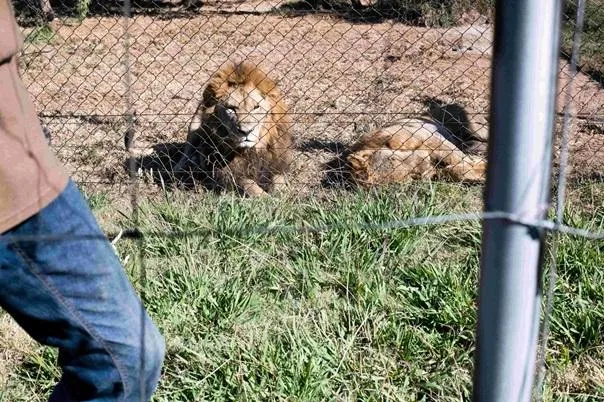
Lions bred in captivity.
Image: Dr Stephanie‑Emmy Klarmann
Last week I saw a post on LinkedIn. It was Dr Stephanie‑Emmy Klarmann’s Mongabay commentary on South Africa’s trophy hunting numbers. One line stopped me: 40,508.
That’s how many wild animals foreign trophy hunters shot in South Africa in 2024, according to the Department of Forestry, Fisheries and the Environment. When I read it, I posted: “Calling this pragmatic is obscene.”
I still think that. Not because I’m against hunting. But because we’ve built an entire conservation model around that number and called it common sense. The model has a name: “If it pays, it stays.” The idea is that wildlife must fund its own survival through what it earns from being killed.
Dr Klarmann put it plainly: “Trophy hunting remains contentious and continues to undergo fierce debates. But we can’t ignore the sheer scale of wildlife ranching in South Africa where the value of animals is determined by the revenue they generate while ignoring ecology, culture, and ethics. Thousands of the wild animals hunted are ranched and bred specifically to be killed, often bred for specific variants, such as white lions, golden wildebeest, or black impala. These are not animals that are contributing to fully functioning ecosystems and the protection of biodiversity.”
After digging into the research, I don’t think the model is pragmatic. I think it’s stuck. And the data shows why.
The scale
Between 2016 and 2024, international clients killed almost 300,000 wild animals in South Africa. The 2024 breakdown includes lions, elephants, rhinos, and leopards — the species we put on postcards. But it also includes baboons, otters, honey badgers, monkeys, and squirrels.
Ninety five percent of the 7,756 hunters last year were from the United States, Canada, and Europe. This is not subsistence hunting. It is not culling problem animals. It is a high‑end, discretionary luxury trade in which clients pay tens of thousands of dollars to shoot animals and take parts home as trophies.
Conservation Action Trust looked at the same registers and called it “extraction at scale.” That phrase matters, because the word “conservation” implies protecting something. Extraction implies removing it.
The jobs
The main defence of trophy hunting is economic. It brings foreign currency. It creates jobs in rural areas. It gives landowners a reason not to convert wildlife land to cattle or crops.
Research from the University of Pretoria shows the picture is more complicated. Trophy hunting was the most profitable model, with a 33 percent margin. Ecotourism lost money on average, with a negative 10 percent margin.
But profit isn’t the only measure. Ecotourism employed an average of 23 people per operation. Trophy hunting employed fewer, and the work was seasonal. One in three jobs disappeared when hunting season ended. Ecotourism jobs were more likely to go to women and more likely to be skilled. Trophy hunting’s workforce was 90 percent male and 85 percent unskilled.
In other words, we’ve chosen the business model that makes more profit for owners but employs fewer people, for less time, in worse jobs.
Communities matter
Surveys of households near Kruger National Park show the vast majority support protecting wildlife. They support non‑consumptive uses like tourism and photography. They oppose consumptive uses like trophy hunting.
This is the contradiction at the heart of “If it pays, it stays.” We justify trophy hunting as a community benefit. But the communities themselves are not asking for it. They are asking for alternatives.
Alternatives
The most important data point in this debate is not about hunting. It’s about poaching.
In 2025, a study in Science looked at 11 reserves in the Greater Kruger area. During that time, $74 million was spent on traditional anti‑poaching: rangers, dogs, cameras, helicopters. Despite that, 1,985 rhinos were poached.
In the same period, 2,284 rhinos were dehorned. The cost was 1.2 percent of the anti‑poaching budget. The result was a 78 percent reduction in poaching.
The same logic applies to funding. A 2023 study in Global Ecology and Conservation found 84.2 percent of tourists would support a “lion protection fee.” At $6 to $7 per day, that fee could generate $176 million per year — enough to replace all trophy hunting revenue in South Africa.
The money is there. The public support is there. The mechanism is simple. We just haven’t built it.
The contract
A lion gets to live to adulthood because a client has already paid for the right to kill it. Its value is determined by its death, not its life.
We call this pragmatic because the alternative seems naive. But the evidence suggests the opposite. Pragmatism would mean scaling interventions that work: dehorning, community stewardship, tourist levies. Naivety is continuing to rely on a market of 7,756 foreign clients to fund the survival of millions of wild animals.
The 40,508 number is not just a tally of deaths. It’s evidence of a policy choice. We chose to make wildlife survival contingent on bullet money. The research shows we have other options. They are cheaper, more effective, and more popular with the people who matter: South Africans living with wildlife, and the tourists who come to see it alive.
Calling the current system pragmatic isn’t just obscene. It’s inaccurate.