How to protect yourself during a dog attack: Essential survival tips


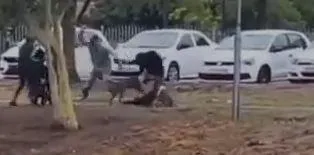
A viral video captures a man being attacked by two pitbull-type dogs in Goodwood, Cape Town, as bystanders rush to intervene.
Image: Video screenshot
In light of the viral dog attack captured on camera, the Cape of Good Hope SPCA has issued a practical safety guide for the public. Spokesperson Belinda Abraham warned against using violence to try and stop an attacking dog.
“Beating a dog that is attacking will likely not have the desired result and may escalate the situation,” she said. If a person is attacked, the recommended response is to curl into a ball, protect vital areas such as the neck and face, and remain as still as possible. For bystanders, using deterrents such as cold water, loud noises or placing a barrier between the dog and the victim may help interrupt the attack. Above all, she urged the public to remain calm and immediately contact authorities, including law enforcement and emergency medical services.
The SPCA added no dogs linked to attacks on people in Goodwood at the weekend were admitted over the period in question. “These dogs are not at the SPCA,” she said. The clarification comes as the video continues to circulate online, appearing to show two pitbull-type dogs engaging with a man, while bystanders attempt to intervene. The incident has reignited debate around dog ownership, public safety and the responsibilities that come with keeping high-risk breeds.
Breeding practices
Abraham pointed to growing concern around the role of breeding practices and neglect in shaping dangerous behaviour. “Recent studies indicate that pit bull type dogs are disproportionately involved in severe and fatal attacks in South Africa,” she explained. “This is influenced both by dog population numbers and the correlating number of cruelty complaints relating to neglected and abused pitbulls.”
While emphasising that many dog breeds suffer from poor welfare conditions, she noted that certain breeds possess the physical capacity to inflict more serious harm when behavioural issues arise. “Families must make informed decisions about whether a dog originally bred for high-intensity physical engagement is suited to their home, experience and environment,” she said.
The SPCA has also raised concerns around informal and unregulated breeding. Dogs acquired through unverified sellers or backyard breeding operations may come with unknown behavioural traits, increasing risks for owners and communities alike.
“Backyard and indiscriminate breeding often takes place without any consideration for temperament or behavioural stability. This has a disastrous impact on the types of dogs entering homes as companion animals,” Abraham said.
She stressed that responsible ownership extends beyond basic care and includes understanding breed-specific needs. Early socialisation, humane training and regular interaction are essential, while neglect, chaining and isolation can significantly increase the likelihood of unpredictable behaviour.
Legal requirements
Owners are also reminded that compliance with legislation such as the Animals Protection Act No. 71 of 1962 and local municipal by-laws is not optional. Dogs must be properly contained, under control at all times and sterilised unless lawful breeding permits are in place.
“Owners may be held liable if their dogs roam, cause injury or are kept in conditions that contravene the law,” Abraham added. “Keeping a dog for protection does not exempt an owner from providing proper care.”