How Hercules and Ned are keeping Charleston's skies safe


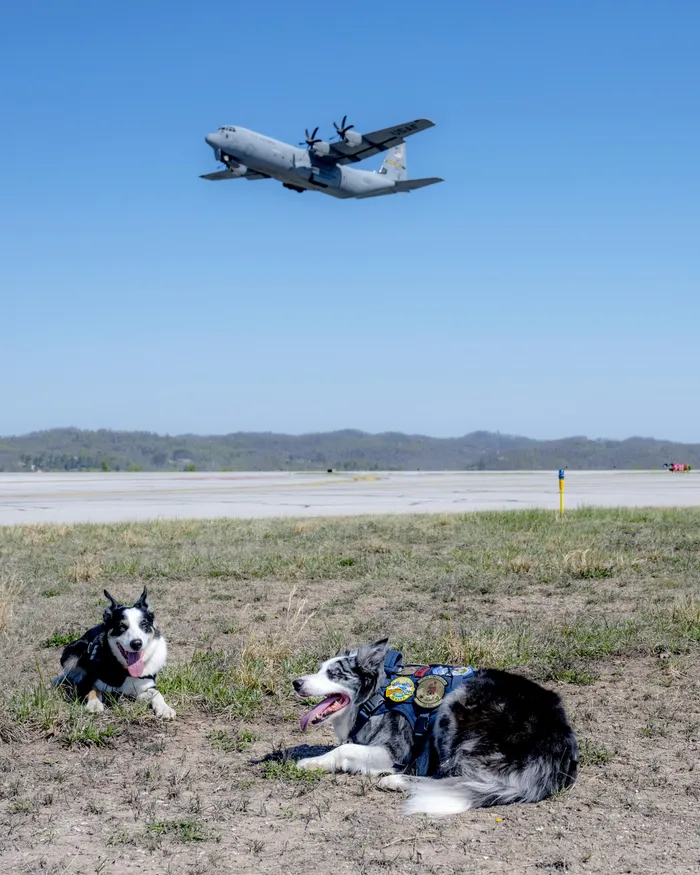
Hercules, left, and Ned on the lookout for birds and other wildlife that might interfere with the runway.
Image: The Washington Post
While most airport employees are preoccupied with luggage and boarding passes, the hardest-working staff at West Virginia International Yeager Airport (CRW) are more concerned with starlings and whitetail deer. Hercules and Ned, two elite border collies, serve as the airport’s dedicated wildlife patrol.
Tasked with clearing the mountaintop airfield of animals that could cause catastrophic bird strikes, these herding dogs have become an essential component of the airport’s safety infrastructure. Their mission is critical; between 1990 and 2024, the Federal Aviation Administration recorded over 313,000 wildlife strikes, including accidents that resulted in 52 human deaths. Since the dogs joined the team, however, bird strikes at CRW have plummeted by more than 70 percent.
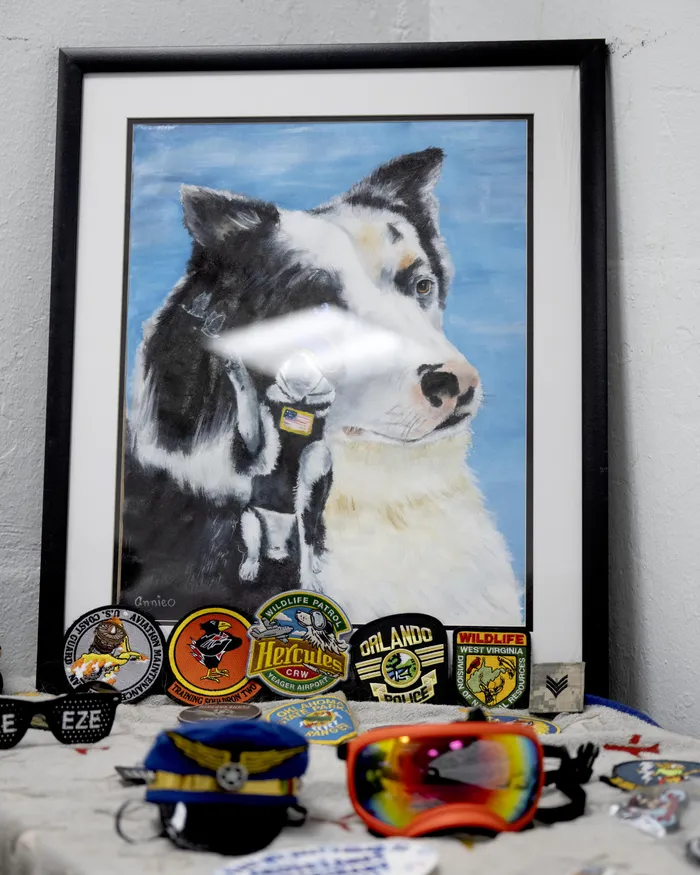
A portrait of Hercules, along with his various work gear (blue pilot’s cap, goggles) and honorary patches.
Image: The Washington Post
Chris Keyser, the airport’s wildlife specialist and dog handler, notes that his co-workers are entirely focused on the safety of the people flying in and out of the airport. Border collies were chosen for the role due to their intelligence and natural herding instincts, which allow them to endure various weather conditions while maintaining the energy required to patrol a 767-acre facility. Hercules, now nine years old, was the first to join in 2018, followed by the younger and more energetic Ned in 2024. Together, they have achieved celebrity status, boasting 72,000 followers on social media and their own line of souvenir merchandise in the airport gift shop.
The dogs live at the airport full-time in a dedicated room furnished with beds, kennels, and pilot-themed attire. Their work day often begins shortly after dawn. When Keyser says the magic words, "Are you ready to run some birds?" the pair leaps into a white SUV, ready to patrol the taxiways and runways.
The work is highly seasonal. In the spring, they disperse massive migratory flocks of crows and starlings, the latter of which Keyser describes as being hit with a shotgun if they make contact with a plane. Summer brings a slower pace as birds seek shade, but autumn sees the return of birds of prey like hawks and owls. Throughout the year, the dogs also manage larger threats such as deer, coyotes, or turtles that could derail a taxiing aircraft.
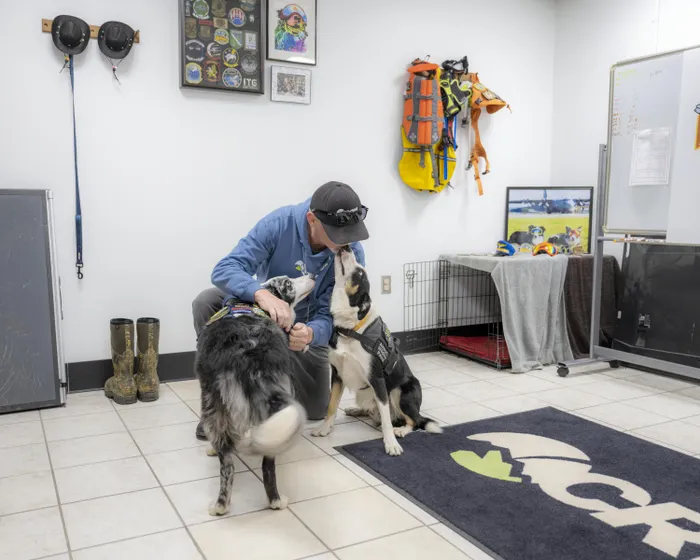
Hercules, left, and Ned prepare for another shift of work with wildlife specialist Chris Keyser.
Image: The Washington Post
During a typical patrol, Keyser coordinates with the air-traffic control tower to ensure the airfield is clear for the pups to run. As they speed across the grass, reaching up to 35 miles per hour, they flush out stubborn birds like killdeer and robins. When a plane is actively taking off or landing, the dogs are trained to lie down immediately to avoid any risk of a fleeing bird colliding with the aircraft. This blend of high-speed action and disciplined restraint is what makes the border collies so effective in a high-stakes aviation environment.
Beyond their tactical roles, Hercules and Ned serve as unofficial therapy dogs for the airport’s passengers. Unlike many working dogs that must not be touched, the wildlife team encourages interaction. Hercules, dressed in a patch-covered vest and blue pilot’s cap, often spends time in the departures gate, offering comfort to nervous travellers.
Passengers frequently pause to snap selfies or receive a gentle lick from the dog with the striking blue and brown eyes. For many, like Orlando resident Marjorie Halfhill, meeting the dogs is a highlight of their journey. "You have an important job, don’t you?" she remarked while petting Hercules. "I won’t forget you."
The day usually winds down by mid-afternoon. After completing a final inspection of the airport cafe floor, Hercules typically settles under a desk for a well-earned nap. Ned, however, often remains alert, wandering the office in the hope that the radio might crackle with a request for overtime. Through their tireless work and natural instincts, Hercules and Ned have transformed the way the airport manages wildlife, proving that sometimes the best technology for modern aviation safety is a centuries-old herding instinct and a pair of very good boys.