How Zohran Mamdani's budgeting strategies can transform Cape Town


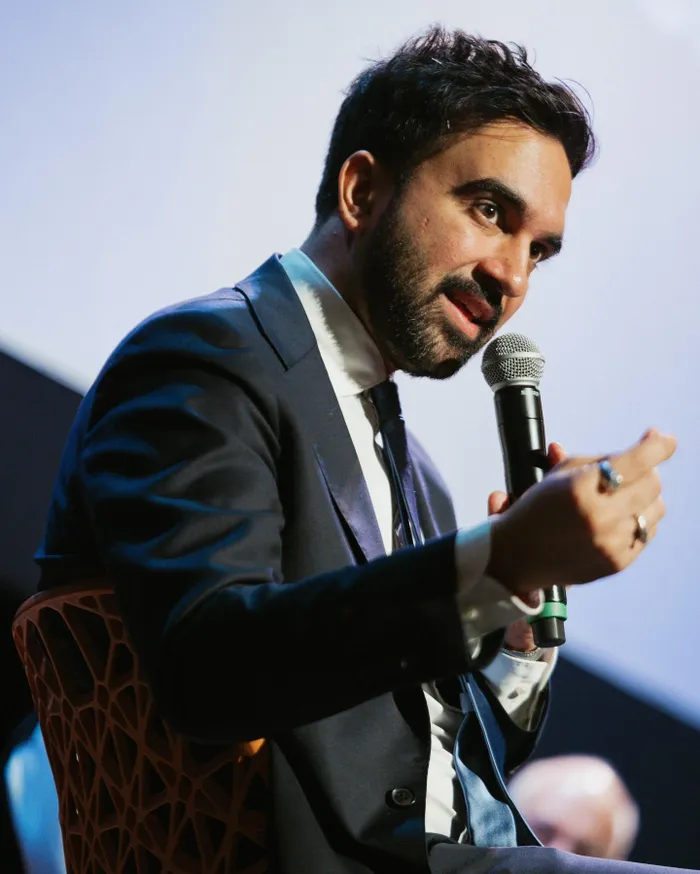
The City of Cape Town can learn a thing or two about budgeting from New York City Mayor Zohran Mamdani, says the writer.
Image: Supplied.
Faiez Jacobs
The Mamdani story matters to Cape Town because it breaks one of the most dangerous myths in modern city politics: that ordinary people must always carry the cost of “responsible” budgeting.
For people who have not followed New York politics, the story is simple. Its mayor Zohran Mamdani says he inherited a city facing a huge fiscal crisis more than $12 billion across two financial years caused by under-budgeted essential services including rental assistance, shelter operations and special education. His administration says it reduced that gap through a combination of savings, updated revenue, state support and a push to ask more from wealthy New Yorkers and large corporations. The New York executive budget was later presented as a balanced $124.7 billion budget.
There is debate about the details. Some critics argue the plan relies too much on temporary support, optimistic savings, delayed costs and new fees. That warning should not be ignored. But even the criticism confirms the political importance of what Mamdani has done: he forced a debate about whether cities should balance budgets by squeezing working people, or by looking first at concentrated wealth, waste, under-budgeting, and unfair intergovernmental burdens.
Cape Town's budget
Cape Town’s 2026/27 budget is about R87.8 billion. Roughly R74.7 billion is operating expenditure and about R13 billion is capital expenditure. The largest capital allocations go to Water and Sanitation at R5.387 billion, Urban Mobility at R3.039 billion, and Energy at R1.506 billion, while Human Settlements receives under R1 billion.
The question is not whether Cape Town needs infrastructure. Of course it does. The Mayor says high tariffs are necessary because infrastructure must be funded. But that is only half the argument. The real question is: what kind of infrastructure, for whom, where, and with whose money?
Cape Town is borrowing and financing billions that us and future Capetonians must pay. Yet the people who suffer most from flooding, fires, overcrowding, backyard living, gang violence, weak public facilities and insecure transport are still not receiving a budget response equal to the scale of our lived reality and crisis. If the City can borrow and spend big for systems, why can it not borrow and spend big for dignity?
This is where Mamdani’s lesson becomes powerful. He reframed the question from: “How do we stabilise the books by cutting or charging ordinary people?” to: “How do we stabilise the books while protecting ordinary people?”
The shift
A Cape Town people’s budget would begin with one principle: housing is infrastructure. A house is not charity. A serviced site is not welfare. A safe, dry, connected settlement is core city infrastructure. If a wastewater plant can be treated as urgent, then so must flood protection in informal settlements. If a transport corridor can be treated as strategic, then so must backyarder upgrading in Mitchells Plain, Delft, Khayelitsha, Gugulethu and Philippi.
The City’s current targets around 2,200 top structures, 3,200 serviced sites, and 2,400 informal settlement sites serviced are not enough for a city with a massive housing crisis. This is not a housing breakthrough. It is backlog administration. A caring city would create a housing emergency budget: mass serviced land, rapid informal settlement upgrading, backyarder service support, land acquisition, social housing, and clear annual targets that match the real scale of need.
Second, Cape Town needs a progressive revenue model. At the moment, too much of the burden sits on ordinary households through electricity, water, sanitation, refuse, rates and fixed charges. A fairer model would ask: where is the idle wealth? Where is the concentrated value? Where are the luxury assets that benefit from Cape Town’s infrastructure but do not contribute enough to repairing its inequality?
This does not mean reckless and unconstitutional taxation like what the recent court order Mayor Hill Lewis to pay back the money. It means intelligent municipal finance. Cape Town should explore legally sound instruments such as higher development contributions for luxury developments, stronger penalties for land banking, vacancy-related levies where legally possible, targeted charges on underused high-value property, tourism-linked infrastructure contributions, and better capture of value created by public investment. Mamdani’s proposed New York approach included a focus on second luxury homes and wealthier residents; Cape Town must adapt the principle, explore alternatives and not copy the mechanism blindly.
Third, Cape Town must find savings inside the system. Mamdani’s administration spoke about agency savings, Chief Savings Officers, contract review, efficiency and updated revenue estimates. Cape Town should do the same, but openly: audit overtime, consultant spend, contract leakage, duplicated systems, slow procurement, expensive outsourcing, unused facilities, and poor project phasing. A progressive city must be efficient not to impress ratings agencies, but to release money for people.
Fourth, infrastructure must protect people first. Cape Town’s infrastructure plan must stop treating poor communities as risk zones to be managed and start treating them as communities to be defended. Floods and fires are here to stay. Budget and plan for it. That means stormwater justice on the Cape Flats, fire-prevention design, safer access roads in informal settlements, public lighting, drainage, toilets, refuse access, youth facilities, clinics, libraries and safe walking routes.
The recent storms and floods showed the truth. Rain falls on the whole city, but it destroys the poor first. A caring city does not arrive after the flood with mop up operations and plastic sheets only. It budgets before the flood with drainage, land, housing and prevention.
Fifth, the City must build community wealth. Cape Town spends billions through contracts. Who gets that work? A people’s budget would break appropriate contracts into local work packages, build township contractor pipelines, support women and youth enterprises, create co-operatives, and turn maintenance into dignified employment. EPWP-style short-term work is not enough. We need living-wage community infrastructure teams: drainage teams, fire-prevention teams, waste teams, repair teams, public-space teams, and youth safety teams.
Sixth, safety must move from control to healing. Cape Town invests in CCTV, enforcement, command systems and visible policing. Those may have a role. But no camera can heal trauma. No drone can create a job. No patrol can fix overcrowding. A caring city would invest in violence interruption, addiction treatment, youth employment, sports leagues, school safety, mental health support, family support and safe transport. Security without social repair becomes control.
The contrast
Mamdani’s message is: balance the books, but protect the people. Cape Town’s budget too often says: protect the system, and ask the people to pay.
That is why the borrowing question matters so much. If Cape Town is willing to borrow more than R5 billion, residents have the right to ask: how much of that borrowing directly breaks the housing backlog? How much floodproofs informal settlements? How much creates jobs in townships? How much protects children from winter misery? How much shifts communities from survival to dignity? Because we have to paid it by this extractive, unaffordable and unconstitutional tariffs and taxes
A caring city budget would not abandon financial discipline. It would redefine it.
True discipline is not only a balanced spreadsheet. True discipline is a city that refuses to let children sleep in wet beds every winter. True discipline is refusing to let backyarders remain invisible. True discipline is building infrastructure where pain is deepest, not only where returns are easiest.
Cape Town does not lack money. It lacks a people-first political order.
* Jacobs is a Governance Advisor, former Member of Parliament, and proud Capetonian.