England 1966: The most 'talked-about' World Cup in history ... well, if you are English anyway
Fifa World Cup 2026


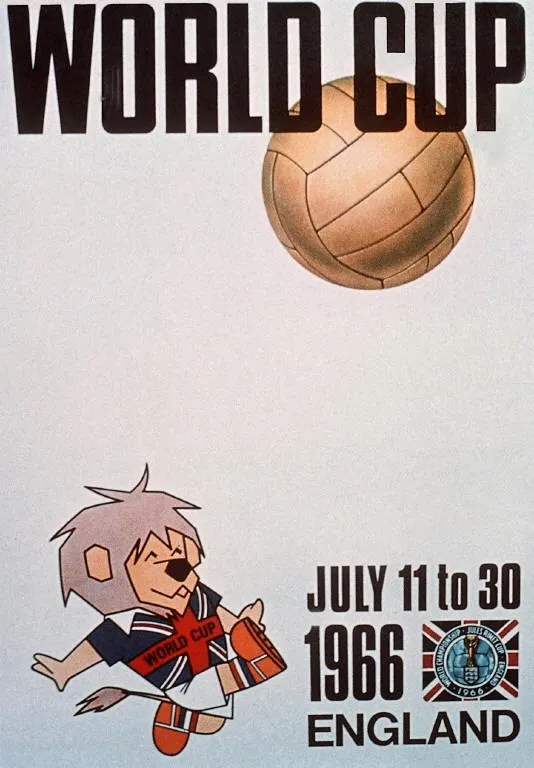
Glory, goals, and ghosts: A look back at the unforgettable 1966 World Cup in England, where history was made amidst geopolitical tension and crossbar controversies. Photo: AFP
Image: AFP
Brazil, Germany, France, Italy and Uruguay have all been more successful at the World Cup, but when it comes to recalling the glory days and harping on about winning the championship, the England victory in 1966 has no equal.
The home nations (England, Scotland, Wales and Northern Ireland) all boycotted the initial World Cups, declaring that their matches were more important than the showpiece event. After World War II, however, it became clear that the Fifa World Cup had gained much traction and was evolving into the juggernaut it is today.
Despite this, Africa boycotted the '66 event after Fifa decreed that there would be no designated spot at the World Cup for the continent. It was not the only controversy at the event: the inclusion of North Korea — on debut — created geopolitical tensions as the UK did not recognise the nation and were concerned about their relations with South Korea and the US.
Meanwhile, the West Germany team that would go on to contest the final has retroactively been found to have been part of a state-sponsored doping regime.
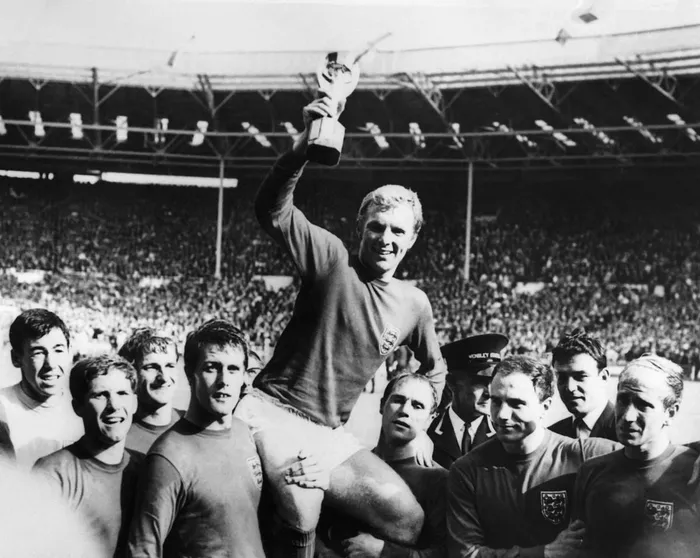
Glory, goals, and ghosts: A look back at the unforgettable 1966 World Cup in England, where history was made amidst geopolitical tension and crossbar controversies. Photo: AFP
Image: AFP
Who was there?
Asia: North Korea
Europe: Bulgaria, England, France, Hungary, Italy, Portugal, Soviet Union, Spain, Switzerland and West Germany
North America: Mexico
South America: Argentina, Brazil, Chile and Uruguay
Where did they play?
England hosted the tournament across eight stadiums. Wembley Stadium was the centrepiece of the event, hosting the most matches and all of the England games, including their quarter-finals, semi-finals and the final.
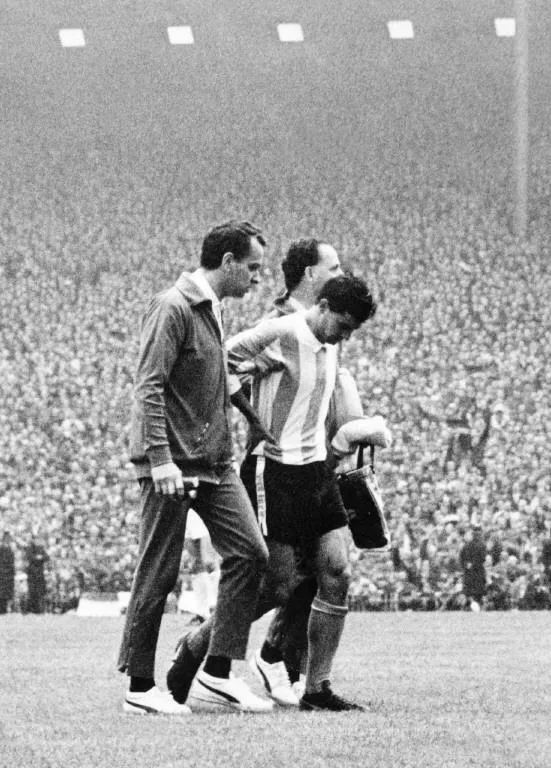
Argentinian captain Antonio Rattin was escorted off the pitch due to "violence of the tongue." Photo: AFP
Image: AFP
How did it work?
The 16 teams were once again drawn into four groups, with two points for a win and one for a draw. Goal difference was used to separate teams for progression to the knockout stages of the tournament.
Extra-time of 30 minutes would decide matches that ended in a draw during the knockout stages, with lots separating the winner thereafter. An extra day was set aside for the final, had it ended in a draw.
In the beginning …
Inconsistent officiating and rough play marred the tournament and would lead to several major reforms, including the introduction of yellow and red cards at the next edition in Mexico.
Brazilian great Pelé was on the receiving end of this inconsistency. He was injured due to dangerous play in their opening match, and upon his return in their third game, was once again injured and stretchered off. Portugal player João Morais was allowed to play on after the tournament-ending tackle, but in another match — the quarter-final between England and Argentina — the latter’s captain Antonio Rattín was dismissed due to "violence of the tongue”.
The loss of Pelé certainly played its part in Brazil being dumped out of the tournament in the group stages, the second time a defending champion would be dumped out of the tournament during this particular stage. ‘The King’, however, would be back in arguably his greatest achievement in four years’ time.
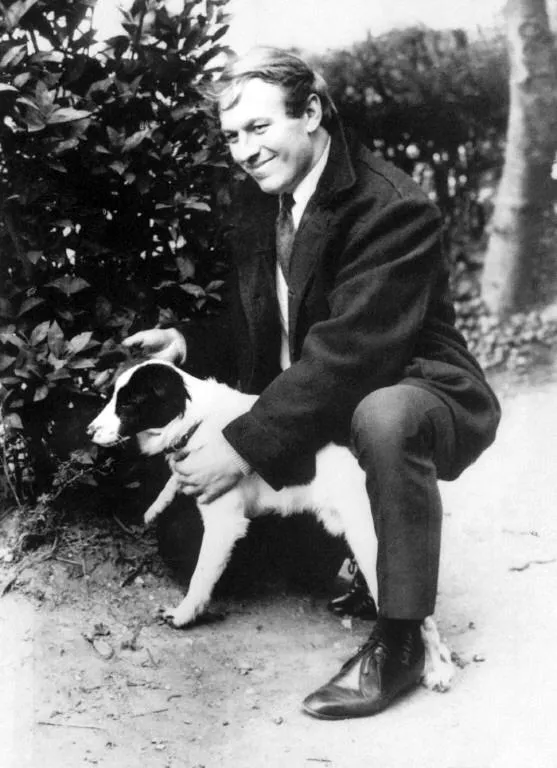
Pickles was one of the heroes of the 1966 Fifa World Cup. Photo: AFP
Image: AFP
The knockouts
Quarter-finals: England 1, Argentina 0; Portugal 5, North Korea 3; West Germany 4, Uruguay 0; Soviet Union 2, Hungary 0
Semi-finals: England 2, Portugal 1; West Germany 2, Soviet Union 0
Portugal would go on to win the third-place play-off 2-1.
And finally
The 4-2 victory remains England’s only major trophy, the spectre of which still haunts them today at both the World Cup and European Championship.
The encounter ended 2-2 in regular time, and required 30 minutes of extra-time to decide the champion, after West Germany’s Wolfgang Weber scored a dramatic equaliser in the 90th minute. England’s Geoff Hurst scored a controversial third goal in the 101st minute to lead 3-2.
Subsequent analysis of the goal has shown that after hitting the crossbar, less than 50% of the ball crossed the line and, in the strictest sense of the rules, should not have been awarded. Nonetheless, Hurst would go on to score England’s fourth goal in the final minute of extra-time to record the first hat-trick in a World Cup final.
Only France’s Kylian Mbappé, in the 2022 final, has replicated that particular record.
From left field
Before the start of the tournament, the Jules Rimet Trophy was stolen from display in Westminster and ransomed for £15 000 (about R334 500). The trophy was partially recovered and the culprit arrested. The rest of the trophy was found by a border collie called Pickles just seven days before the opening round.