One in five households in the Western Cape face hunger as fuel costs soar


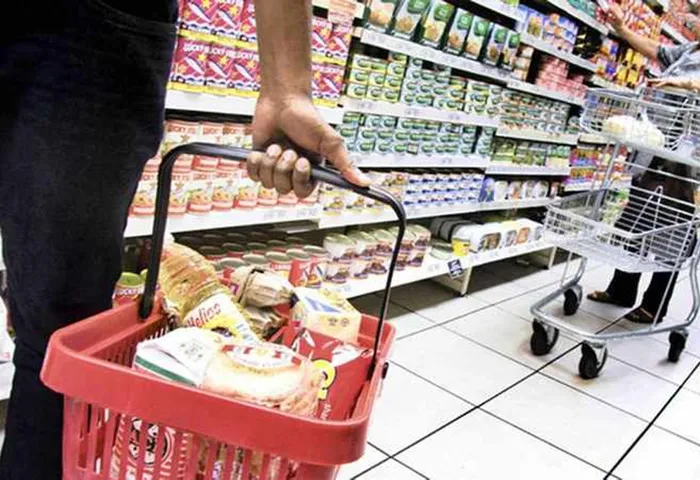
Economists warn that the recent spike in fuel prices could lead to increased food prices, pushing more families into food insecurity.
Image: File
With World Hunger Day exactly a week away, one in five households in the Western Cape will go to bed tonight on an empty stomach.
And even those who somehow manage to scrape together enough for milk or eggs will likely need double the cash soon, as food prices brace for another jump on the back of soaring fuel costs.
Over 80% of goods in SA move by road, and economists Cape Argus spoke to warn that such basic food items could very well rise, with others saying price hikes are already hitting them.
In a Western Cape parliamentary reply, Social Development MEC Jaco Londt said households across the province are already battling hunger.
“The department acknowledges that one in five households in the province experience food insecurity,” Londt said.
“The situation was further exacerbated by the fuel increase in April, which was expected to increase food prices, transport costs and overall financial pressure.”
If mid-month data from the Central Energy Fund is anything to go by, relief is mixed heading into June.
Diesel prices are set to drop sharply on the first Wednesday of the month, but petrol will rise again as the government phases out temporary fuel levy relief.
The split comes after two months of severe fuel shocks that pushed diesel up nearly R13 a litre and petrol up R3.27 a litre in May alone.
The latest basic fuel price recovery, driven by global oil prices and the rand-dollar rate, offers some respite.
Diesel is expected down R3.52 to R4.41 per litre, illuminating paraffin down R4.37, while petrol 93 and 95 are set to rise by 13 and 19 cents per litre respectively.
That comes as Stats SA announced on Wednesday that headline inflation jumped to 4% in April from 3.1% in March, the highest rate since August 2024.
Fuel was the main driver.
Passenger transport services rose 3.1% month-on-month, the biggest jump since July 2022, and airfares spiked 24.5% in April after a 14.3% hike in March.
Milk, dairy and eggs recorded their first annual increase since May 2025 at 0.1%, though powdered milk and eggs remain in deflation at -3.4% and -5.8%.
But economists warn that respite won’t last.
Independent economist Ulrich Joubert said the drop in food inflation is likely temporary.
“Food is produced by farmers who use diesel, so they are exposed to the higher diesel price. That’s going to cost more,” Joubert said.
“On top of that, fertilisers cost more, so that impacts production costs.
"That means food prices are most likely to rise.”
He said while it largely depended on supply and demand for vegetables, fruit or meat, “in general terms, we are going to pay more for food, and that is going to have an impact on the inflation rate eventually".
The pressure also shows up in migration patterns.
Economist Dawie Roodt said many of the poorest households are moving to the Western Cape precisely because of the chance to find work, even if it means living in a more unequal province.
“People move from areas where everyone is equally poor to places like Cape Town where there is inequality but also opportunity,” Roodt told Cape Argus.
“The lesson is that poor people will choose a place with jobs over a place where everyone is equally poor. "The question for policymakers is whether you want equality in poverty, or inequality with a chance to get out of it.”
GOOD Secretary-General Brett Herron said the city was one of the most unequal in the world.
"Cape Town is among the most unequal city in the world, it is the city with the highest property values in South Africa, and the highest rental costs, that sits alongside a +800,000 housing backlog."