No congestion charge for Cape Town: What this means for residents


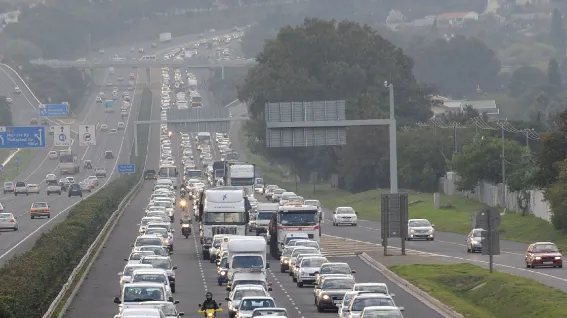
Cape Town - Slow-moving traffic on the N1.
Image: Henk Kruger/Independent Newspapers (Archives)
The City of Cape Town is neither introducing nor considering a congestion charge in its current draft Budget.
Mayco member for Urban Mobility, Rob Quintas, clarified this following reports of a potential congestion tax for drivers in busy areas.
Last week, Stellenbosch University logistics expert Stephan Krygsman, speaking at a recent Urban Mobility Strategic Dialogue hosted by the Cape Chamber, said the city is running out of viable options to fund and fix public transport.
“There is no other alternative to generate revenue for public transport other than implementing congestion taxes, development contributions and privatising elements of the system,” he said.
The City previously suggested a "traffic tax" in its Travel Demand Management (TDM) Strategy, which was open for public comment last November.
Quintas noted that the misunderstanding arises from the TDM Strategy, a long-term policy framework.
“While the document references a wide range of theoretical measures based on international case studies, it clearly states that a congestion charge would not be considered, let alone implemented, unless public transport is the most reliable and effective travel option. That point has not yet been reached and remains a long-term goal.
“Furthermore, there is currently no provision in national legislation that would enable the City to implement a congestion charge,” Quintas said.

Mayco member for transport Roberto Quintas (Rob Quintas)
Image: Phando Jikelo/Independent Newspapers (Archives)
He added that on the TDM Strategy, the City is currently reviewing and incorporating feedback received from residents and stakeholders.
“In the interim, the City remains focused on practical, near-term measures to improve mobility for all residents. These include investing in more reliable and integrated public transport, expanding park-and-ride facilities, improving walking and cycling infrastructure, encouraging flexible and remote working arrangements and using parking management to support a shift away from private vehicle use,” Quintas said.
GOOD Party Councillor, Sandra Dickson, voiced her concern, saying that this policy direction should concern ratepayers.
“At a time when households are already under pressure from rising municipal costs, the idea of charging residents for road use — without first providing reliable and accessible public transport alternatives — risks placing an unfair burden on those who have no choice but to drive.
“The City needs to be clear whether this is a serious proposal, what form it would take, and whether it is about managing congestion or simply creating another revenue stream,” she said.
She had also raised an issue with the city’s public participation process for the City of Cape Town's 2026/27 Draft Budget.
The City’s tabled budget for the period July 2026 – June 2027, which reflects key policy decisions and priorities, determines rates increases and indicates where it will spend money on programmes and services, is out for public comment from 1 April until April 30, 2026.
Dickson said that the current public participation process raises serious concerns about whether residents are being meaningfully informed or deliberately misled.
“The Municipal Systems Act is clear: public participation must be meaningful, informed, and capable of influencing decisions. The Constitution further obliges municipalities to actively encourage community involvement in matters of governance. What is currently happening falls far short of that standard,” Dickson said.
Dickson said that instead of equipping residents to interrogate the budget, the City's presentations focus on selected ward-level projects that create the impression of delivery, simplified tariff percentages without explaining the real financial impact, and general service narratives that distract from the actual cost implications residents will face from July 1, 2026.