Could Cape Town's traffic congestion lead to a congestion tax?


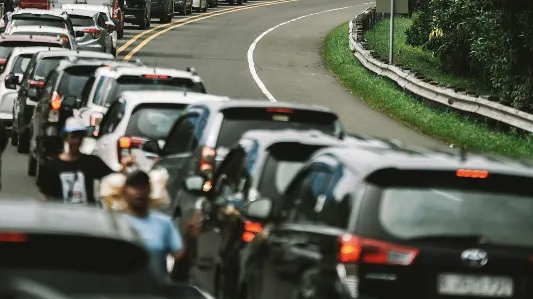
Cape Town’s growing traffic congestion could push the city toward a congestion surcharge, as a fragmented transport system struggles to meet demand.
Image: File
Cape Town’s traffic congestion could force the introduction of a congestion surcharge, as a fragmented and inefficient transport system continues to fail both commuters and businesses.
This is the warning from Stellenbosch University logistics expert Stephan Krygsman, speaking at a recent Urban Mobility Strategic Dialogue hosted by the Cape Chamber, who said the city is running out of viable options to fund and fix public transport.
“There is no other alternative to generate revenue for public transport other than implementing congestion taxes, development contributions and privatising elements of the system,” he said.
Cape Town generates about four million passenger trips a day, the majority linked to work commutes, Krygsman said.
These trips are split across five main modes — private cars, rail, buses, bus rapid transit and minibus taxis — which, he said, fragments demand and weakens overall system efficiency.
“We have a recipe for complete failure,” he said.
Krygsman said this fragmentation prevents key systems such as rail and bus rapid transit from reaching the scale needed to operate efficiently and reduce costs, limiting their ability to shift commuters away from private vehicles.
Rail would need to carry about 600 000 to 700 000 passengers a day to significantly reduce congestion, levels last seen before 2016, he said.
“But rail is not really planned for the car user market, and the major market is really minibus taxis,” Krygsman said, adding that it is unlikely taxis will relinquish their share.
He said rail and bus rapid transit are also competing for the same passenger base, preventing either from reaching the critical mass required for efficiency.
Businesses are increasingly relocating to the outskirts of the city to be closer to their workforce, Krygsman said, a shift that further entrenches urban sprawl and long travel distances.
According to the 2025 INRIX Global Traffic Scorecard, Cape Town ranks sixth globally for traffic congestion, with drivers losing an average of 96 hours a year in peak traffic, well above other South African metros including Johannesburg, Pretoria and Durban.
Recently, Mayco Member for Urban Mobility, Rob Quintas, said a congestion charge is not being considered in the near term and would only be explored once public transport becomes a reliable alternative to private vehicles.
The City has also noted that current national legislation does not make provision for such a system.
Without major structural reform and better coordination of transport and land use, Krygsman warned, Cape Town risks locking itself into a future of chronic congestion and rising costs for commuters.