Leading scientists mobilise against the Bundibugyo Ebola strain


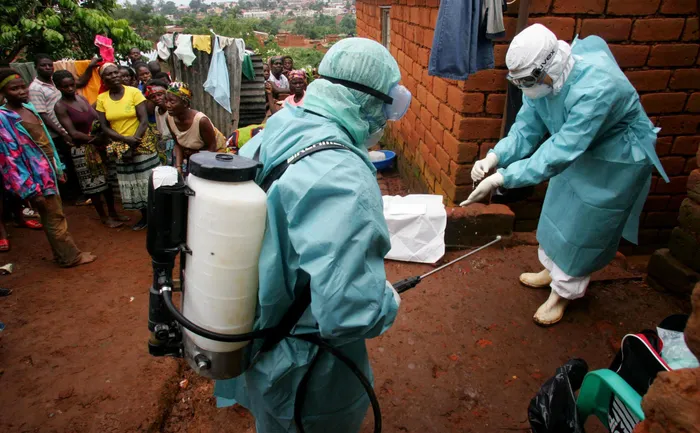
Frontline researchers at Stellenbosch University’s (SU) Faculty of Medicine and Health Sciences are assisting in mobilising to bolster containment and diagnostic operations in the DRC and Uganda.
Image: File
Leading African scientists have launched an urgent, cross-border intervention following the World Health Organisation’s declaration of a Public Health Emergency of International Concern (PHEIC) over a rising Ebola outbreak in East and Central Africa.
The outbreak, which was officially designated a global health emergency on 17 May 2026, is tearing through regions of the Democratic Republic of the Congo (DRC) and Uganda. Unlike previous high-profile epidemics, this crisis is driven by the rare Bundibugyo strain of the ebolavirus—a variant for which there are currently no licensed vaccines, no approved antiviral treatments, and no reliable rapid diagnostic tests.
In response to the escalating threat, frontline researchers at Stellenbosch University’s (SU) Faculty of Medicine and Health Sciences in South Africa have rapidly mobilised to bolster containment and diagnostic operations in the affected nations. Professor Jean B. Nachega, Director of SU’s Biomedical Research Institute (BMRI), has been appointed to the Africa Centres for Disease Control and Prevention Emergency Consultative Group to help shape the continental defense strategy.
Professor Nachega warned that this outbreak requires an urgent and highly coordinated response. This is to strengthen surveillance, expanding diagnostic capacity closer to affected communities, protecting healthcare workers, and accelerating research on diagnostics, therapeutics, and vaccines. He emphasised that everything possible must be done to contain the outbreak early and prevent further regional, continental, and global spread.
The Bundibugyo strain presents a terrifying operational challenge for international health agencies because standard molecular diagnostic platforms widely used across Africa, including several GeneXpert-based assays, are engineered primarily for the more common Zaire Ebola strain and cannot reliably detect this variant. As a result, patient samples must be shipped across vast distances to highly specialised reference laboratories just to confirm a diagnosis. This bottleneck creates critical delays in isolating patients and tracing contacts, allowing the virus to spread undetected.
Furthermore, while the Bundibugyo strain has historically exhibited a lower case fatality rate than its Zaire counterpart, the lack of medical countermeasures means mortality rates in this outbreak have reached a staggering 40% to 50%. The situation is compounded by fragile local healthcare infrastructure and severe regional insecurity.
To combat the crisis, Professor Nachega and his team at the BMRI have joined forces with Professor Jean-Jacques Muyembe-Tamfum, Director of the Institut National de Recherche Biomédicale (INRB) in Kinshasa. Professor Muyembe-Tamfum, a world-renowned virologist and co-discoverer of the Ebola virus in 1976, has previously partnered with Stellenbosch University during the COVID-19 and mpox crises.
This established scientific coalition is currently executing a multi-pronged emergency strategy that focuses on genomic surveillance to actively monitor the virus’s genetic variability and track how it is mutating and moving across borders. They are also mobilising international financial and scientific resources to fast-track the development of Bundibugyo-specific tests, therapies, and vaccines, whilst simultaneously utilising the NIH-Fogarty-funded Emerging and Re-emerging Pathogens Research Training Programme to deploy trained medical personnel directly to the outbreak's epicentre in the DRC.
With high population mobility, volatile border areas, and busy regional trade routes connecting the DRC and Uganda, health officials fear the window to contain the virus is rapidly closing. The ongoing mobilization by Stellenbosch University and its continental partners represents a vital shield against a localized epidemic transforming into a global catastrophe.