Celebrated dancer Mamela Nyamza shines at Baxter Theatre with 'Hatched Ensemble' and 'The Herd/Less'


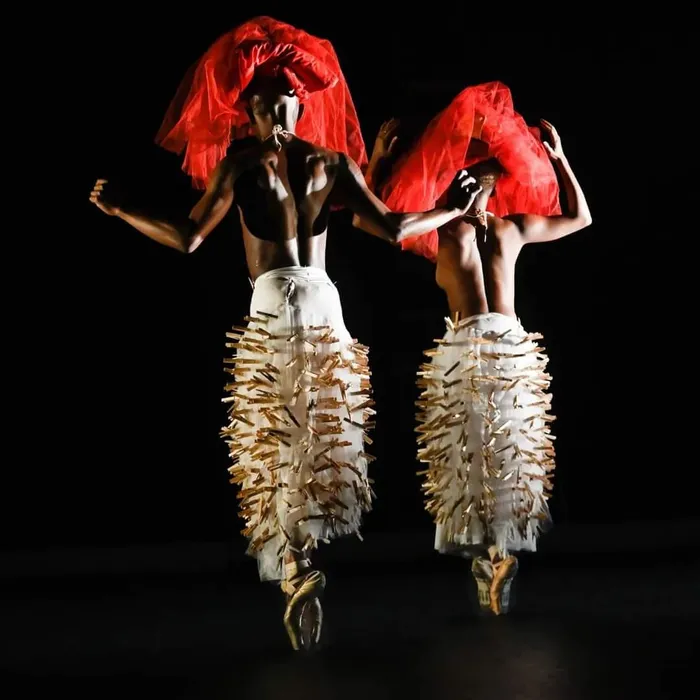
Dancers in the production Hatched Ensemble performed at the Baxter Theatre last week.
Image: Val Adamson
Cape Town dancer and choreographer Mamela Nyamza’s double bill at the Baxter Theatre last week received standing ovations, leaving the artist with a feeling that she has “finally arrived at home”.
Nyamza, who is from Gugulethu, presented Hatched Ensemble and The Herd/Less. After the opening of Hatched Ensemble the audience offered celebratory songs and extended applause. The theatre was warmly wrapped in joy.
"Nyamza said that before the evening she had felt under-appreciated at home, despite winning international awards.
“I felt like I have finally arrived at home. It took me so many years… and actually in a mainstream theatre,” she said.
“This is a validation. I just need to continue doing what I’m doing. Finally people are woke now. They have been sleeping for years. Now they are catching up. It’s a great feeling for me to experience.”
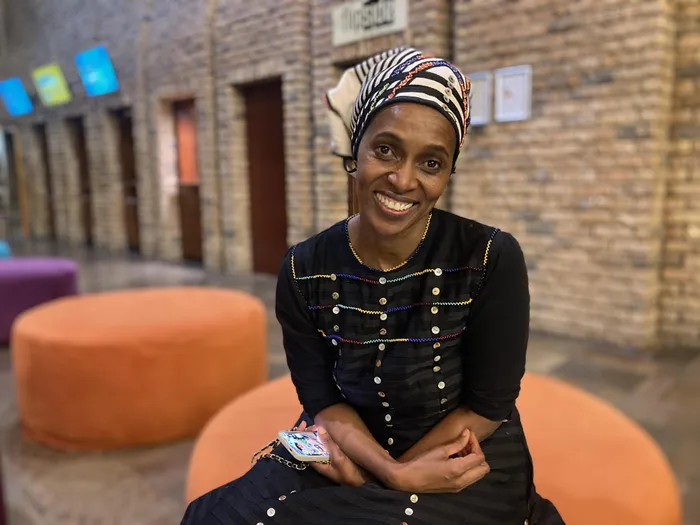
Dancer and choreographer Mamela Nyamza from Gugulethu at the Baxter Theatre where two of her shows were recently performed.
Image: Yazeed Kamaldien
“It’s always been my dream. I feel like I have seen it before. It’s like a déjà vu moment… It has finally happened. I am a dreamer by the way.”
Nyamza has previously mentioned though she receives greater recognition abroad.
The reality is that most South African audiences often do not relate to the type of work she offers.. Local audiences generally want dance that is traditional — ballet or contemporary dance that sweeps across the stage in a recognisable format.
Nyamza however does not offer The Lion King or Sarafina. Her work is not packaged as entertainment made primarily to sell instead of provoke.
Instead, she choreographs concepts and that can be challenging to watch. Sitting through one of her performances — whether she appears as dancer or choreographer — requires patience. One waits for revelations.
The opening of Hatched Ensemble had dancers slowly crossing the stage for what felt like three nights. The scene was set to classical music and wire sculptures depicted images evoking Gugulethu.
Both works shown last week were movement-based, with some dance. There was eloquent examination instead of crass spectacle. Themes were autobiographical.
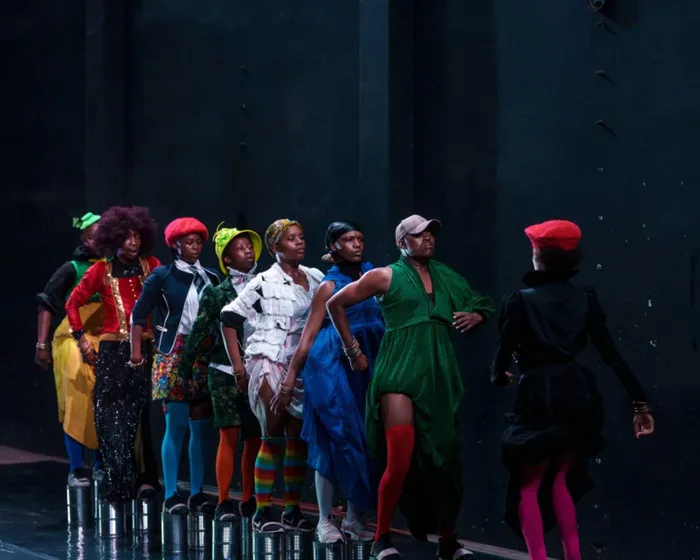
The Herd/Less was more choreographed movement than dance performed at the Baxter Theatre last week.
Image: Supplied
Turning to Nyamza’s point about receiving more recognition abroad, quite frankly, South Africa does not offer artists the level of global rewards available. She has just been shortlisted among five artists globally for the Salavisa European Dance Award in Denmark, with the R3-million winner to be announced in November.
Earlier this year she was awarded the Biennale Danza Silver Lion at the Venice Biennale in Italy. This prize is regarded as one of the most prestigious honours in contemporary dance and “recognises, encourages, and celebrates artists who have expanded the definition of contemporary dance, often through radical, political, or culturally charged work”.
At home she has recently received the Sustaining Theatre and Dance (STAND) Foundation’s Mohlopi Award for “cultural workers whose impact extends far beyond the stage” and “plant seeds of change and nurture the creative landscape”. She has previously won the Standard Bank Young Artist Award for Dance which at some point paid winners R25,000 prize money.
Nyamza is correct to “continue doing what I’m doing”. The lack of dance residencies coupled with diminishing theatre ticket sales in South Africa means though that production of new work for her and many others remains largely unsupported in an industry of predominantly self-employed artists.
Sure, there are arts grants that are disbursed but this is not an institutional strategy. The latter looks like a cemented residency that could give an experienced choreographer space and time to work. A choreographer could undertake, for example, a paid three-month residency to research and create a new work.
A host theatre could offer a limited production budget and then work with the choreographer on how to sell the work globally.
This way, South African dance is developed and audiences can consistently see new work. Given that government often talks about job creation, this would also ensure national checklist targets are met. Hopefully, someone is listening.