Accessibility in Cape Town's theatre scene: who is theatre really for?"


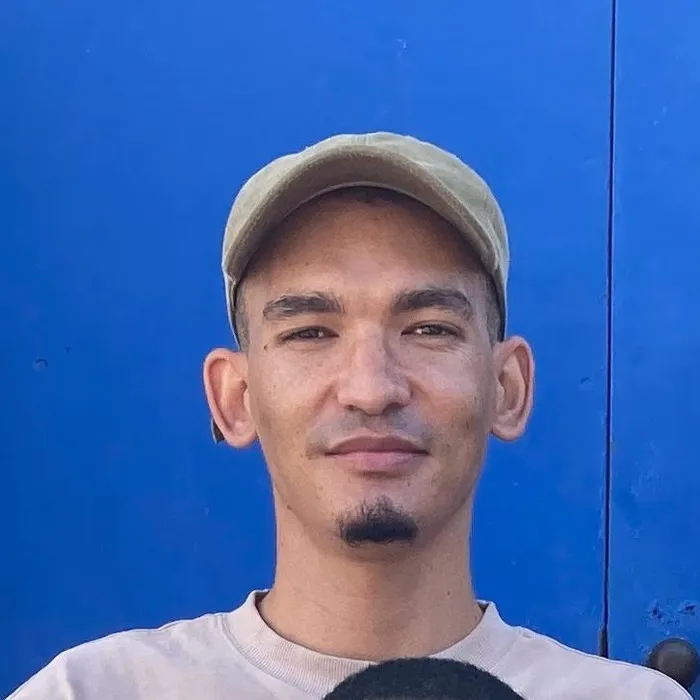
Chester Miggels
Image: Supplied
Chester Miggels
Cape Town is often celebrated as one of South Africa’s cultural capitals. Its theatre ecosystem includes prestigious venues such as the Artscape Theatre Centre, the Baxter Theatre Centre, the Homecoming Centre, the Maynardville Open-Air Theatre and Theatre on the Bay. These venues stage world-class productions, attract local and international artists, and contribute significantly to the city’s cultural identity. Yet behind the bright stage lights lies a persistent and uncomfortable question: who is theatre really for?
The disconnected theatre landscape
Despite the abundance of venues and performances, theatre audiences in Cape Town remain relatively small and demographically narrow. Ticket prices, transportation costs, geographic distance, and cultural perceptions all contribute to barriers that prevent broader participation. For many people living outside the city centre, particularly in townships and rural communities, attending theatre at established venues is simply not feasible. The result is a theatre landscape that, while vibrant, often remains disconnected from the everyday lives of many Capetonians.
I was reminded of this reality during a recent visit to a production of Twelfth Night staged at the Maynardville Open-Air Theatre. The ticket prices were high, placing the production beyond the reach of many working-class audiences. The venue, located in a suburban park in Wynberg, is not easily accessible to those travelling from rural or peripheral areas.
Representation on stage
More troubling, however, was the lack of representation on stage. The cast was predominantly white, while the few actors of colour were largely confined to servant roles. The audience reflected a similar demographic. The overall experience felt exclusionary, an example of theatre that appears to cater to a specific, historically privileged group. It raised an uncomfortable but necessary question: if theatre continues to look like this, who is being left out?
This sense of exclusion becomes even clearer when contrasted with theatre practices closer to home. In Kraaifontein, where I live, theatre exists in very different forms. Less formal, less resourced, but often more accessible and community-driven.
Spaces like Kraai4Theatre Arts Center, a small non-profit initiative, focus on youth development, local storytelling, and community participation. It is perhaps the closest example of a true grassroots theatre space in the area, where performances reflect the lived experiences of the people who attend them. Similarly, Lofdal Theatre Company operates not as a fixed venue but as a community-based collective, producing work and engaging in outreach initiatives that bring theatre directly to local audiences.
The need for community-oriented spaces
Even venues not originally designed for theatre, such as the Kraaifontein Town Hall, play a crucial role. Like many community spaces across South Africa, it functions as a multi-purpose venue where performances, events, and cultural gatherings take place. This highlights an important reality: a lot of South African theatre does not happen in purpose-built theatres, but in adaptable, community-oriented spaces.
This model is echoed across Cape Town’s townships. Areas such as Khayelitsha and Gugulethu have long histories of vibrant theatre-making, often driven by community organisations and youth groups.
Township theatre offers several strengths. It is often accessible to local audiences and culturally relevant, reflecting lived experiences and local languages. It also plays a vital role in nurturing emerging artists who may not have access to formal training institutions.
The challenges
However, these spaces face significant challenges. Many operate with limited or inconsistent funding, inadequate technical resources, minimal institutional support and restricted visibility beyond their immediate communities. As a result, while community and township theatre is rich in creativity and relevance, it often remains marginalised within the broader theatre economy.
This brings us back to the central issue: the imbalance between well-resourced, centralised theatres and under-supported community-based spaces.
For audiences living in townships or rural areas, attending a performance at the Artscape Theatre Centre or the Baxter Theatre Centre is not just a matter of interest, it is a matter of access. Distance, cost, and cultural disconnect all play a role in limiting participation.
This is why decentralisation is increasingly seen as a necessary shift. Rather than expecting audiences to travel to established venues, theatre must expand into the spaces where people already live and gather.
Some institutions have begun to recognise this. The Artscape Theatre Centre runs outreach programmes that bring performances to rural communities. In 2026, this initiative will extend to Wellington, creating opportunities for audiences who might otherwise never experience live theatre. Initiatives like the Zabalaza Theatre Festival, hosted at the Baxter Theatre Centre, actively platform township-based productions, bringing grassroots work into more formal theatre circuits.
Beyond outreach
But outreach alone is not enough. Sustainable audience development requires long-term investment in local infrastructure and community venues. It requires recognising that these spaces are not secondary to mainstream theatre. They are essential to its future.
Decentralising theatre does not mean abandoning established venues. Rather, it means redefining their role within a broader, more inclusive ecosystem. Partnerships between major institutions and community groups could help bridge the gap, creating pathways for artists and audiences to move between different spaces.
Embracing community-based models
Ultimately, the question is not whether Cape Town has theatre, it clearly does. The question is whether that theatre is accessible, representative, and relevant to the majority of its population.
If theatre continues to exist primarily within elite, centralised spaces, it risks reinforcing the very inequalities it has historically sought to challenge. But if it embraces community-based models, invests in township and rural initiatives, and prioritises inclusivity, it has the potential to become a truly democratic art form.
Because theatre, at its core, is about storytelling and storytelling only matters when people can see themselves on stage, in the audience, and in the spaces where those stories are told.
*Miggels is an actor and writer.