South Africa's stunting crisis: a national emergency for children


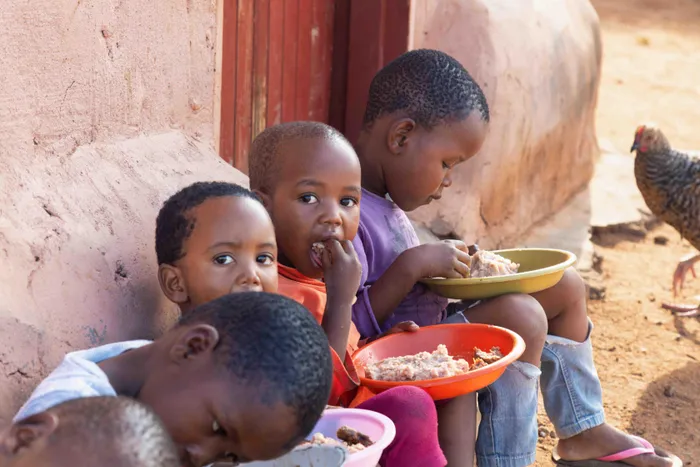
South Africa’s stunting crisis is a ‘national emergency’ hiding in plain sight.
Image: Supplied
It is an indictment of South Africa’s progress that, despite its status as an upper-middle-income nation, more than a quarter of its children are being left behind before they even reach school.
At a launch hosted by Stellenbosch University, researchers and civil society practitioners released a comprehensive body of evidence on the drivers of stunting — and a clear set of recommendations to shift outcomes for young children.
Despite decades of social grants and poverty alleviation efforts, stunting rates have remained stubbornly stagnant for thirty years.
Stunting—defined as being too short for one’s age due to chronic malnutrition—is not merely a physical measurement. It is a permanent marker of a child’s lost potential. The report notes that stunting is highly correlated with poor brain development, which affects the ability to learn, school performance, and future productivity. For the 27% of South African children under five who are currently stunted, the disadvantage begins in the womb and is often solidified by their second birthday.
Professor Ronelle Burger of Stellenbosch University warned that failing to address this in-utero and in the first 1,000 days of life effectively wastes government spending elsewhere. She explained that the impact of money spent downstream on schools and clinics is diluted, as the intervention reaches children too late.
The special issue of Development Southern Africa, comprising 10 peer-reviewed papers, identifies several structural uncomfortable truths. First, there is a data vacuum; national surveys are so inconsistent that stunting estimates range from 20% to 30%, making it nearly impossible to track if policies are actually working.
Second, responsibility is currently scattered across the Departments of Health, Social Development, and Education. With no single department held accountable, the strategy has become fragmented. Finally, aggressive marketing of infant formula and ultra-processed foods by the private sector actively undermines breastfeeding, particularly in low-income communities.
Earlier this year, President Cyril Ramaphosa used his State of the Nation Address to pledge the eradication of stunting by 2030. While experts welcomed this political commitment, they argue that will must be met with way. The research calls for a National Food and Nutrition Security Council to provide oversight and the urgent implementation of nutrient-rich interventions, such as small-quantity lipid-based supplements (SQ-LNS) and eggs, for the most vulnerable.
The argument for intervention is as much economic as it is moral. The research suggests that the social returns on eradicating stunting are extraordinary. By failing to ensure that every child is properly nourished, South Africa is effectively capping its future GDP and ensuring that the cycle of structural inequality remains unbroken. As Liezel Engelbrecht of the Hold My Hand Accelerator puts it, while political commitment is visible, the country needs a clear national plan with targets. With the previous national plan having lapsed, the clock is ticking for South Africa’s youngest citizens.