National Treasury defends funding reforms affecting Cape Town's MyCiTi bus service


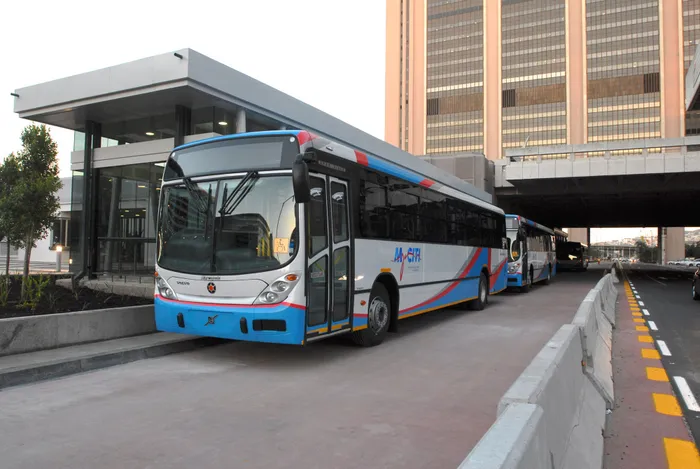
The future of Myciti buses do not look bright
Image: File
National Treasury has defended its stance on proposed changes to the Public Transport Network Grant (PTNG) after concerns were raised by the City of Cape Town over the possible impact funding reforms could have on the future of the MyCiTi bus service and its planned Cape Flats expansion.
This comes after the City warned that the possible phasing out of the PTNG by the 2027/28 financial year could place major public transport projects at risk, particularly the long-awaited rollout into communities including Mitchells Plain and Khayelitsha.
Cape Town’s expanding MyCiTi bus network, long touted as one of South Africa’s few public transport success stories, now faces uncertainty amid concerns over future national funding cuts that could ripple far beyond commuters potentially affecting jobs, travel costs and billions of rand worth of infrastructure projects already underway.
The City has raised alarm over proposed national reforms to the Bus Rapid Transit funding and warned the uncertainty could jeopardise not only existing MyCiTi operations, but also the Cape Flats expansion project expected to serve more than 1.4 million residents across 30 neighbourhoods, including Mitchells Plain, Khayelitsha, Wynberg, and Claremont.
Responding to questions from Weekend Argus, National Treasury said the current programme funded through the PTNG was “underperforming and has limited impact”.
“The programme funded by the Public Transport Network Grant in its current design, is being cut, and the reductions have been reprioritised to other programmes in the Department of Transport, specifically Prasa, while a new programme for road based public transport is being designed, where all modes of public transport is integrated, affordable and sustainable,” Treasury said.
Treasury added that once work on the redesigned model is complete, proposals would be considered as part of the budget process for a restructured PTNG framework.
The City of Cape Town has previously defended the performance of its MyCiTi service, arguing that it accounts for approximately 42% of all Bus Rapid Transit passenger trips nationally, making it one of the country’s most successful BRT systems. Ridership has reportedly grown by 68% since 2021 to around 23 million passenger trips annually, with projections expected to rise further once the Cape Flats routes become operational.
Asked how successful systems such as MyCiTi would be protected from broader funding reforms, Treasury said the changes were being implemented in a way intended to limit disruptions.
“As part of the targeted and responsible savings, the funding reforms at the city level is also targeted to ensure that disruptions are minimal,” Treasury said.
Treasury's assessment has been strongly disputed by the City of Cape Town.
Rob Quintas, the City’s Mayoral Committee Member for Urban Mobility, said MyCiTi was widely regarded as South Africa's best-functioning Bus Rapid Transit system and the only Integrated Public Transport Network operating at significant scale with sustained passenger demand and ongoing expansion.
"The demand for the MyCiTi service is growing. Passenger growth has increased by approximately 68% since 2021 following the Covid-19 pandemic, showing rising reliance on scheduled public transport," Quintas said.
He said MyCiTi accounts for approximately 40% of all Bus Rapid Transit passenger trips nationally, carries around 20 million passenger trips annually, operates 39 routes with approximately 347 buses, 42 stations and close to 1,000 stops, and serves major transport corridors stretching from Atlantis and the West Coast to the CBD, Hout Bay, Khayelitsha and Mitchells Plain.
Quintas argued that it was "fundamentally inequitable, counterproductive, and simply wrong" for high-performing systems such as MyCiTi to be subjected to the same funding reductions as non-performing or incomplete systems elsewhere in the country.
"The proposed funding reductions do not simply impact infrastructure projects, it directly impacts commuters and the City's ability to improve mobility outcomes for residents," he said.
Quintas added that Cape Town's public transport challenges remained significant, particularly for lower-income commuters travelling long distances between residential areas and economic centres.
He said the rollout of Phase 2A was intended to improve access to economic opportunities, reduce travel times, expand access to reliable scheduled public transport and support future integration with passenger rail services.
"The City supports public transport reform and the need for improved efficiencies nationally. However, reform should build on systems that are demonstrably working, rather than destabilising functioning networks that continue to grow in ridership, operational maturity, and public confidence," Quintas said.
Quintas said approximately R2.5 billion of the current Phase 2A allocation remains available over the 2026/27 and 2027/28 financial years, but warned there was currently no clear or guaranteed funding framework beyond that period to support future corridor expansion, supporting infrastructure, operational growth requirements, or fleet expansion and replacement programmes.
"National funding reforms are understandable because most BRT systems in metros and large towns have failed. In some cases, billions in grant funding have been allocated without a single scheduled service ever commencing. But some, like MyCiTi, have succeeded.
"The state should not throw out the baby with the bathwater by cutting funding to successful BRT services along with all the unsuccessful ones," Quintas said.
He said the City had requested an urgent engagement with the Ministers of Transport and Finance, warning that funding uncertainty placed both the new Cape Flats route and the broader MyCiTi service at risk.