Cape Town's MyCiTi bus expansion at risk: Funding cuts could hit jobs and commuters' pockets


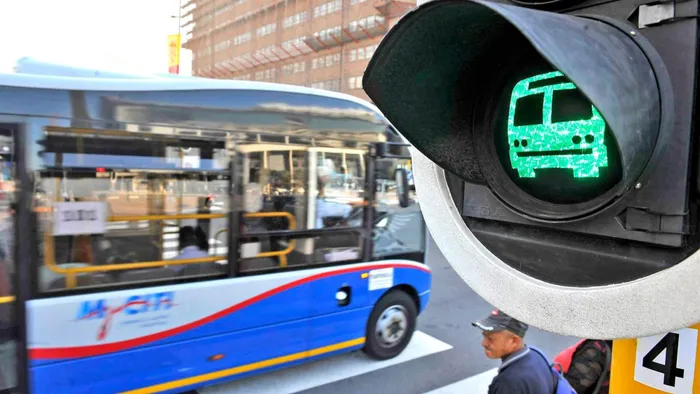
The future of Myciti busses do not look bright
Image: File
Cape Town’s expanding MyCiTi bus network, long touted as one of South Africa’s few public transport success stories, now faces uncertainty amid concerns over future national funding cuts that could ripple far beyond commuters potentially affecting jobs, travel costs and billions of rand worth of infrastructure projects already underway.
The City of Cape Town has raised alarm over proposed national reforms to Bus Rapid Transit (BRT) funding and the possible phasing out of the Public Transport Network Grant (PTNG) by the end of the 2027/28 financial year.
City officials warn that the uncertainty could jeopardise not only existing MyCiTi operations, but also the long-awaited Cape Flats expansion project expected to serve more than 1.4 million residents across 30 neighbourhoods, including Mitchells Plain, Khayelitsha, Wynberg and Claremont.
The expansion has been positioned as a major economic and social investment aimed at improving access to affordable transport, reducing commute times and connecting residents to jobs and opportunities across the metro.
But concerns are now mounting over what could happen should funding support dries up.
Apart from commuters potentially being forced to spend more on transport alternatives such as taxis or multiple connecting routes, fears have also emerged around the impact on employment linked to the rollout of the system.
Construction and infrastructure work tied to the expansion has already generated jobs, while further operational phases are expected to create additional employment opportunities linked to transport operations, maintenance, security and surrounding economic activity.
Questions are also being raised over whether partially completed projects and infrastructure developments could stall if funding certainty is not secured.
According to the City, approximately R7.1 billion has already been invested into infrastructure for the Cape Flats expansion, including developments such as the Spine Road depots and the Sky Circle in Lansdowne.
Cape Town Mayor Geordin Hill-Lewis previously warned that successful public transport systems should not be penalised alongside failed projects elsewhere in the country.
“Successful public transport services must be protected, especially for the sake of millions of Cape Town commuters in lower-income communities who will benefit from growing the MyCiTi bus service,” he said.
The City maintains that MyCiTi is currently the country’s best-performing BRT system, accounting for 42% of all BRT passenger trips nationally. Ridership has reportedly grown by 68% since 2021 to around 23 million passenger trips annually, with projections expected to rise further once the Cape Flats routes become operational.
Mayoral Committee Member for Urban Mobility Rob Quintas also warned that funding cuts could create what he described as a “perverse outcome” where successful systems are effectively punished while underperforming projects elsewhere continue to shape national policy decisions.
Meanwhile, Brett Herron,general secretary of the Good Party, who played a key role in the early rollout of the MyCiTi system, said National Government should rethink how BRT funding is allocated nationally, arguing that not all cities are suited to such transport systems.
Herron said Cape Town’s MyCiTi and Johannesburg’s Rea Vaya were among the few systems that had been properly implemented, while other projects across the country had suffered collapse, delays or never became operational. He argued that funding should rather prioritise cities where passenger demand and urban planning make BRT systems viable.
He also warned that delays to the Cape Flats expansion could have severe consequences for residents already struggling with transport costs and congestion.
“The people of the Cape Flats, being public transport dependent, will carry an increased burden on their pockets and on their time in trying to commute to where the jobs are,” Herron said.
Herron noted that many working-class households in Cape Town already spend between 40% and 60% of their income on public transport, far above the generally accepted affordability benchmark of around 10%.
“We are creating the working poor,” he said.
He further cautioned that failing to complete affordable and efficient public transport systems would ultimately place pressure on Cape Town’s broader economic growth.
“The City’s economic growth will be strangled by an absence of affordable and efficient public transport,” Herron said.
Herron also pointed to frustrations among communities affected by ongoing construction linked to the delayed expansion project, saying residents were increasingly dealing with “never-ending road reconstruction” while awaiting operational routes.
Concerns have also emerged from the taxi industry, with Congress of Democratic Taxi Associations chairperson Nceba Enge saying operators were shocked by reports that national funding support for BRT systems could be withdrawn.
Enge said taxi operators had already been in advanced negotiations with the City over Phase 2A of the MyCiTi expansion, which includes routes linked to infrastructure currently under construction as well as newly built depots.
“We were always hoping that things will go smoothly and that the contract of the buses will start operating next year from 1 July as per our agreement with the City already, but seemingly things will not go that way,” he said.
Enge warned that uncertainty around the project could also affect taxi operators who had anticipated being bought out of the industry as part of transition agreements linked to the MyCiTi rollout.
“So they will be affected, of course,” he said.
He added that the lack of clarity around National Government’s reasoning for potentially withdrawing support for BRT systems was causing concern within the industry.
“It would be very good for us if we knew what are the reasons. But now they are quiet about the reasons. So this is really disturbing to us,” Enge said.
He further questioned how the City planned to continue negotiations and honour commitments linked to the project should funding support be reduced or withdrawn.
The City has requested urgent engagements with Transport Minister Barbara Creecy and Finance Minister Enoch Godongwana over concerns that future funding uncertainty could place the entire MyCiTi network at risk.
In response to media queries, national Department of Transport spokesperson Collen Msibi said:"The Department has had consultative meetings with provinces and the cities regarding this grant, after it was flagged as underperforming. Provinces and cities have all been given an opportunity to reflect on the new perspective in this regard and provide feedback to the department. The City of Cape Town was part and parcel of this consultation process. We therefore look forward to their inputs."
The Ministry of Finance failed to respond at the time of going to print.