Why Finland remains unbeatable after a nine-year streak in the 2026 World Happiness Report


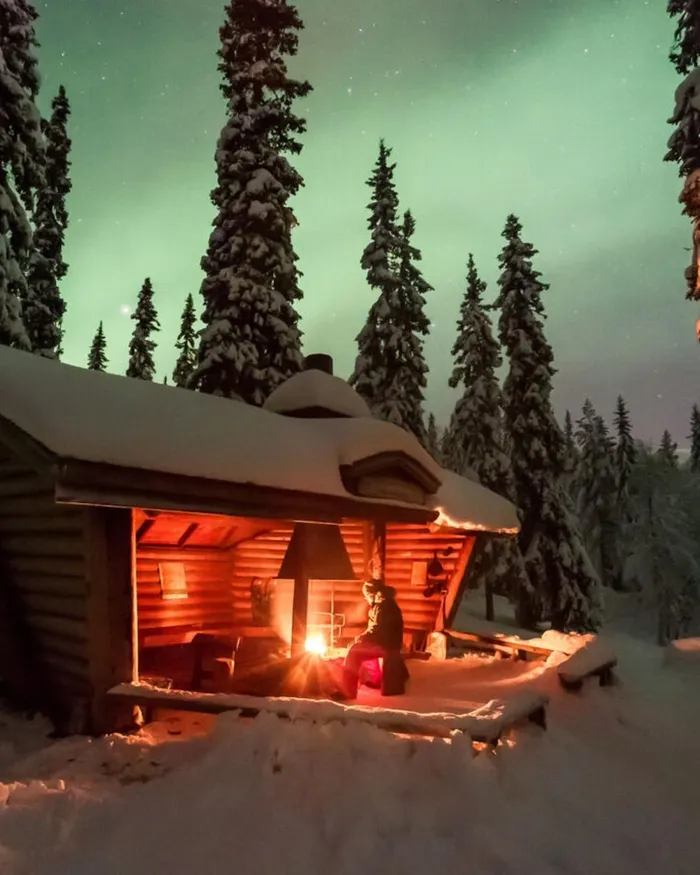
Finland is named the World’s Happiest Country for the 9th year in a row.
Image: Instagram.
For the ninth year running, Finland has secured the top spot as the happiest country on Earth.
According to the United Nations’ World Happiness Report 2026, the secret to a "good life" isn't just about wealth; it’s about how we treat each other and how we spend our time.
While the quirky Nordic nation known for its thousands of lakes and saunas remains the gold standard, the global landscape of happiness is shifting in fascinating ways.
Who made the Top 10?
The Nordic countries continue to dominate, but a new contender has broken into the top five, marking a historic moment for Latin America.
- Finland
- Iceland
- Denmark
- Costa Rica (the highest ranking ever for a Latin American country)
- Sweden
- Norway
- Netherlands
- Israel
- Luxembourg
- Switzerland (Re-entering the top 10 this year.)
South Africa continues to hold a steady, middle-of-the-pack position globally, but it stands out as one of the leaders on the continent. South Africa ranks as the 4th happiest country in Africa, trailing behind Mauritius, Libya and Algeria.
Why do the same countries always win?
It comes down to a mix of equality, healthcare and community.
John Helliwell, a founding editor of the report, notes that Nordic countries boast high prosperity that is distributed much more equally, alongside affordable public health systems and robust social support.
“When it comes to happiness, building what is good in life is more important than finding and fixing what is bad. Both need doing, now more than ever," said Helliwell.
Costa Rica’s rise to 4th place highlights a different path to joy.
Despite having less wealth than their European counterparts, Latin American countries often perform better than their income suggests.
The report attributes this to "the value and importance of family as a centrepiece. They have links across generations that other countries strive to maintain."
The youth happiness gap
While the global outlook is generally positive, with 79 countries seeing significant happiness gains since 2010, the news is less rosy for the US, North America, Australia and New Zealand.
Happiness among those under 25 in the US, Canada, Australia and New Zealand has dropped significantly, with these countries ranking between 122 and 133 out of 136 for youth well-being.
The darker side: Conflict and hardship
While happiness is rising in Central and Eastern European countries like Lithuania, Serbia and Slovenia, conflict remains the absolute destroyer of happiness.
Countries struggling with war and instability sit at the bottom of the rankings. Afghanistan remains the unhappiest country in the world for 2026, followed by Malawi (145) and Sierra Leone (146).
"Countries like Afghanistan, Venezuela and so on have been plunging," shared Helliwell.
Social media: A double-edged sword
A major focus of the 2026 report is how our digital lives affect our moods. The findings suggest that:
- Using social media for less than an hour a day is actually linked to higher well-being than not using it at all.
- Excessive scrolling is tied to lower life satisfaction.
- Apps that prioritise real social connection are positive; those driven by algorithms and influencers tend to increase stress and social comparison.
“The global evidence makes clear that the links between social media use and our wellbeing heavily depend on what platforms we’re using, who’s using them and how, as well as for how long,” said editor Jan-Emmanuel De Neve.
How happiness is measured
The report, published by the Wellbeing Research Centre at the University of Oxford, doesn't just guess how people feel. It uses the Gallup World Poll to ask roughly 1,000 people per country to evaluate their lives.
"We compute the average life satisfaction within each country by taking the average response... and look at how they evaluate their life as a whole on a one item measurement," explained editor Lara Aknin.
Helliwell added: "We ask people to rate their life from zero, for the worst possible life, to ten for the best possible ... These findings are a real challenge to other countries, if they want to be happier, to study how the Nordic countries do it."