Kevin Hart's family gorilla trekking adventure in Rwanda: a real-life 'Jumanji' experience


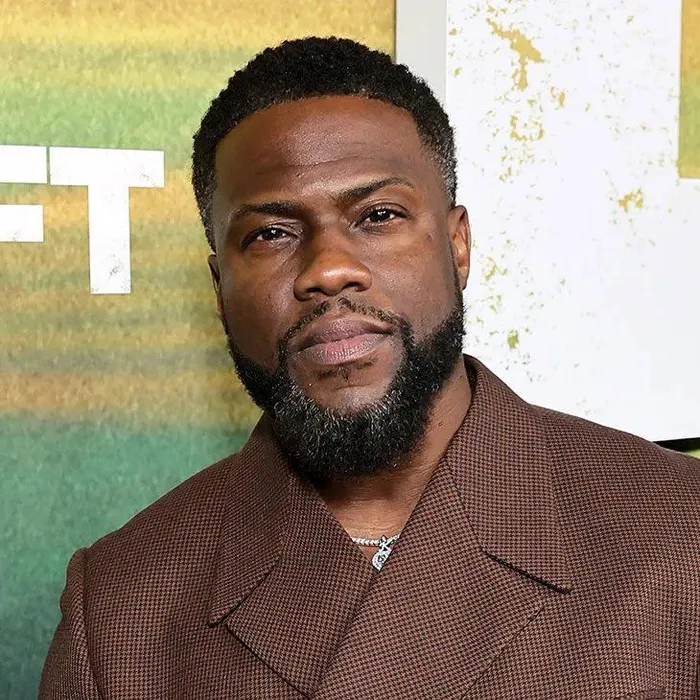
Kevin Hart embraces adventure (and terror) during a family trip to Rwanda.
Image: Picture: X/@BuzzingPop
American comedian Kevin Hart recently gave us a peek into one of their wildest family vacations ever. It involved jungle vines, sweaty hikes and a lot of “maybe I should’ve thought this through” moments.
In his new Netflix special "Acting My Age", Hart dedicates a good 13 minutes to what was supposed to be a chilled‑out trip to Volcanoes National Park in Rwanda. Instead, he got up close and personal, no glass, no barrier, with real mountain gorillas.
Hart says: “We wanted to take a vacation … We went to Rwanda. I wanted a new experience, something that could give us a little bit of culture... When we go on vacation, the word 'no' never exists. We embrace it all.”
And embrace it they did.
One of the first things suggested to the family was gorilla trekking. Hart signed up, under one big assumption: “The reason I agreed to go is because, in my mind, I was like - there has to be glass. I've never been around gorillas, and there hasn’t been glass…”
However, there was no glass. And that’s when the adventure turned into a real-life "Jumanji" moment for the comedian.
Gorilla trekking in Volcanoes National Park is not a zoo visit. It’s a no‑frills, jungle‑on‑foot mission. Trekkers meet early in the morning at the park headquarters in Kinigi for a briefing.
After that, groups of up to eight people, along with experienced guides and porters, set off into steep slopes, rain forest and bamboo thickets in search of one of the park’s habituated gorilla families.
Depending on where the gorillas were that day, the hike can take anywhere from a few hours to almost a full day.
Once found, you get a precious hour to stand or sit nearby, silently watching mothers feeding babies, youngsters playing, and maybe a large silverback silently observing you back.
Silverback males can weigh up to 200 kg and are known for the distinctive grey hair on their back that develops with age.
Before stepping foot into the forest, trekkers are given strict rules: no direct eye contact, stay calm and still if a gorilla approaches, no sudden moves, no flash photography, no eating or smoking, basically, treat the forest like a sacred living space.
In Hart’s case, part of the challenge was staying cool under pressure, especially when the silverback appeared. According to him, his son quickly whispered, “Dad, don’t look!”
Oops.
Rwanda’s Volcanoes National Park has a long history rooted in conservation. It was once the base for the pioneering primatologist Dian Fossey, whose work in the late 1960s laid the foundation for mountain‑gorilla protection, documented in the book and film "Gorillas in the Mist".
Although the park suffered closures through the early 1990s, including during the 1994 genocide, gorilla trekking officially reopened in 1999 and literally changed the tourism game for Rwanda. Since then, the park has become the world’s go‑to for habituated mountain gorilla sightings.
Today, a limited number of permits are issued daily to protect the fragile gorilla populations, ensuring each group gets a maximum of eight human visitors for one hour per day.
That scarcity, along with Rwanda’s stunning volcano‑forest scenery, high visitor safety and rising interest in eco‑tourism, means seeing gorillas in the wild has become a once‑in‑a‑lifetime experience many travel junkies are dying to tick off.