The saint and the chauvinist


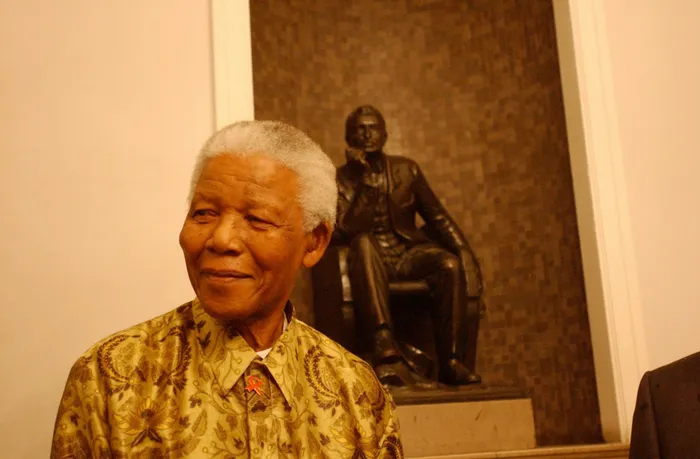
As we continue to celebrate the iconic Nelson Mandela’s 93rd birthday, it is interesting to contrast his legacy with the very different one of Cecil Rhodes whose 158th birthday would have been this month.
The controversial co-joining of both historical figures under the Mandela Rhodes Foundation in 2002 justifies this approach. While Rhodes was the greatest imperialist of the 19th century, Mandela was the greatest liberation hero of the 20th century.
Whereas Rhodes was an expansionist empire-builder (with modern-day Zambia and Zimbabwe – former Northern and Southern Rhodesia – once named after him), Mandela was a nation-builder par excellence who did the most to unite a South Africa divided for decades by colonialism and apartheid and seemingly on the brink of a racial war.
While Rhodes pursued a mission civilisatrice in Africa, Mandela embodied a quasi-religious “prophetic” leadership as a black Moses who eventually freed his people from the bondage of apartheid Pharaohs by 1994.
Both men had strong Christian roots: while Rhodes’s father was the vicar of the English town of Bishop’s Stortford, Mandela attended two elite Methodist schools (Clarkebury and Healdtown), and at the University of Fort Hare joined the Student Christian Association, assisting in providing Sunday school classes.
Mandela and Rhodes are among the most well-known historical figures in African history; both have had countless books, documentaries, and monuments devoted to them; both have had universities and streets named after them; both were Anglophiles, though in Rhodes’s case he was actually born in England and moved to South Africa at the age of seventeen; both trained as lawyers, pursuing their degrees part-time; both were awarded honorary doctorates by the universities at which they studied – Witwatersrand (Mandela) and Oxford (Rhodes); both were pan-Africanists, with Rhodes seeking to use military and economic muscle to unite the continent– from the Cape to Cairo – under the Union Jack, while Mandela sought more peaceful means of conflict resolution and regional co-operation; and both spent much of their life in Cape Town, with Mandela mostly in jail on Robben Island for a third of his life, while Rhodes lived in the opulence of the Groote Schuur, his grand estate at the foot of Table Mountain, which he bequeathed to the state and which became the South African head of state’s official residence in Cape Town (until Mandela declined to live there after 1994).
Very few black scholars have published major works on either historical figure.
The contrasts between Rhodes and Mandela are, however, enormous. Mandela was a saint, and Rhodes a sinner.
While Mandela struggled financially as a lawyer and spent 27 years of his life in jail protesting the evil injustices of the apartheid regime, Rhodes lived a wealthy life aggressively promoting the interests of the British Empire through often harsh and unjust means.
While Rhodes visited unimaginable cruelty upon black populations in South Africa, Zambia, and Zimbabwe, Mandela was the very embodiment of national reconciliation.
While Rhodes is now widely despised across Africa as an aggressive racist, Mandela remains one of the greatest moral figures of the current age, as evidenced by his award of the Nobel Peace Prize in 1993.
While Rhodes died a relatively early death at the age of forty-eight and drank excessively, the teetotal Mandela has lived a long life.
While Mandela married three times and produced six children (three of them later died), Rhodes never married, and there is scarcely any record of any relationships with women.
Rhodes dispossessed black people of their ancestral lands in modern-day Zimbabwe and Zambia through aggressive and duplicitous means, stealing 3.5 million square miles of black real estate in one of the most ignominious “land-grabs” in modern history. He was an often unscrupulous businessman as well as a crude racist.
Rhodes infamously said: “I prefer land to niggers… the natives are like children. They are just emerging from barbarism (and) one should kill as many niggers as possible.” Rhodes headed the De Beers mining firm and used his British South Africa Company to dispossess black people of their ancestral lands.
A visit by this author to the Bishop’s Stortford Museum – situated in Rhodes’s birthplace – provided an interesting dimension to his legacy through this sleepy English town in Hertfordshire with charming country pubs.
In the museum, African music played in the background amid African axes, shields, and other weapons forged by indigenous blacksmiths. African drums and baskets were also on display. There were depictions of slavery and imperialism, and a recognition that Rhodes’s legacy had been contested, even during his own lifetime.
Numerous pictures of Rhodes littered the room: growing up as a child in Bishop’s Stortford; as prime minister of Cape Colony; and during the Anglo-Boer War.
I was told by museum staff that even though many schoolchildren visited, many English pupils did not learn about Cecil Rhodes in their education.
Of far greater interest in the same building was the Rhodes Art complex, which offered theatre, comedies, and the music of the “Rhodes Rocks” on Fridays.
It is this entertainment that sustains the museum, and many in the town clearly think about Rhodes more in terms of entertainment than imperialism.
The commercialisation and packaging of this ruthless businessman in his English home town was perhaps the ultimate irony in the quest for immortality of a megalomaniacal plunderer-politician.
In stark contrast, Mandela personally embodied his people’s aspirations for a democratic future, becoming the leading apostle of reconciliation.
He emerged from prison without any apparent bitterness towards his former enemies, and tirelessly promoted national reconciliation. He has been widely celebrated as a political saint and one of the greatest moral figures of the 20th century. As president, he came to symbolise his country’s racial reconciliation.
As with America’s George Washington, the charisma of the “Founding Father” helped South Africa’s young, democratic institutions to flower and bestowed on the country an international stature of which a former global pariah could never have dreamed.
One of Mandela’s lasting legacies will be his efforts at promoting national and international peacemaking.
He tirelessly reached out to his former enemies at home, and led peacemaking efforts in Burundi, the Democratic Republic of the Congo, and Lesotho.
Critics have, however, noted that Mandela may have ended up doing more long-term damage as president by papering over racial differences and not forcing white South Africans to show more contrition to their largely black victims of apartheid.
They have also observed that many of South Africa’s five million whites continue to enjoy their privileged lifestyles, while the national high priest, Madiba, appears to have absolved them of their sins without a proper confession and penance.
Mandela’s legacy in liberating his country is secure, but the success of his efforts at national reconciliation will only endure if rapid progress can be made to narrow the country’s grotesque socio-economic inequalities which have made South Africa the most unequal society in the world. Madiba, however, remains a prophet who is honoured in his own land.
History will doubtless be much kinder to Mandela’s nation-building than to Rhodes’s empire-building.
l Dr Adekeye Adebajo is Executive Director of the Centre for Conflict Resolution, Cape Town, and author of The Curse of Berlin: Africa After the Cold War.