Time for Africa to show it can shine
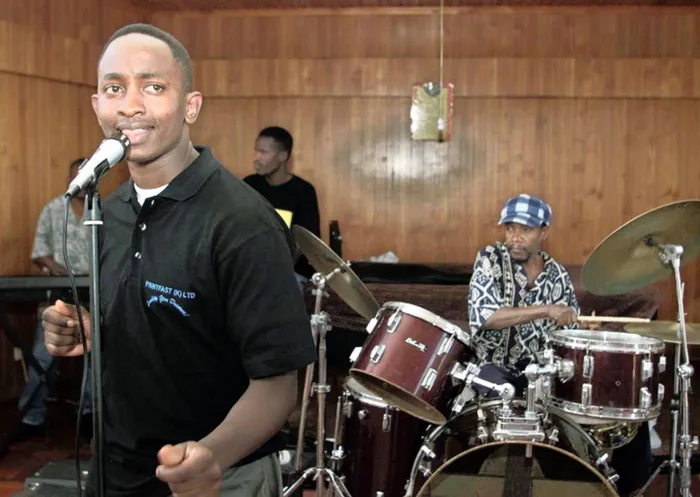
Kenyan singer Eric Wainaina, is one of the leading lights in a new wave of artists hoping to transform Kenya's music scene. His song Twende Twende reflects |on misleading perceptions of Africa. Photo: Reuters Kenyan singer Eric Wainaina, is one of the leading lights in a new wave of artists hoping to transform Kenya's music scene. His song Twende Twende reflects |on misleading perceptions of Africa. Photo: Reuters
Two Nigerians have shown again how young Africans can succeed, writes Victor Kgomoeswana.
Sandton came to a standstill this week, thanks to the gathering of AU bigwigs. Of all the delegates, newly inaugurated Nigerian President Muhammadu Buhari would have attracted the most attention.
An appearance by Africa’s first elected woman president, Ellen Johnson Sirleaf of Liberia, occupies a unique place in the hearts of Africans. The delegates were also struck by Hollywood enigma Angelina Jolie, who lent her voice to the women’s rights campaign.
For South Africa, the AU summit coincided with the Fitch ratings near-miss, which cut its 2015 and 2016 gross domestic product growth forecast to 2.1 percent. Citing energy shortages, the ratings agency spared us the blushes of a downgrade. The love-hate relationship we have with ratings agencies is here to stay. Standard & Poor’s may not be as optimistic as Fitch when its turn comes round.
It would be hard for any ratings agency to ignore the collapsed public sector wage talks, which Fitch cited among the justifications for its reluctance to downgrade.
Ratings agencies are any developing economy’s nightmare because they expect us to play by the rules of developed countries. Their agenda has been questioned, with antagonists doubting their objectivity because of the undue influence of the West on these arbiters of our borrowing power. A downgrade makes the cost of borrowing higher, as lenders view us as being riskier as a debtor.
The higher cost of borrowing would immediately hike the fiscal burden of completing worthy infrastructure projects such Kusile, Medupi or even the Gauteng Highway Improvement Programme. That would inevitably divert funds from social services, like education and health.
The shopping list leaders need to follow to avert a downgrade includes completing the two power projects, reaching finality in the public-sector wage talks and, obviously, not wading into more scandalous waters like Nkandla and the the debacle about the Fifa World Cup and the $10-million payment.
As it is, perceptions are stacked against developing nations. To be taken seriously, it behoves us to outperform our developed counterparts. That is why I give credit to the Energy Department for its plans for a further 13 renewable energy projects to add more than 1 000MW to the national grid – and possibly more than 6 000MW in the medium term. This brings to 92 the number of renewable energy projects approved in a fairly short time.
Each time the government reduces the energy needs deficit by 1 000MW, it brings us closer to the scenario Fitch requires for it not to downgrade South Africa – it could even upgrade our rating – assuming all other variables stay the same.
What excites me about this announcement is that in time South Africa will get its energy mix right.
The International Energy Agency expects renewable energy – including solar and wind power – to account for 25 percent of the gross power generation by 2018, up from 20 percent in 2011. No megawatt of renewable energy is too insignificant to applaud.
Load shedding could make us impatient. We could expect more, and rightfully, as we have abundant sunshine that we are underusing.
But a failure to acknowledge progress means wallowing in more misery than is warranted. Energy Minister Tina Joemat-Pettersson, you may take a bow!
Toast of the Week – Nigerian big in Japan
If President Buhari had an air of pride at the AU Summit it might have been for a reason other than his election triumph.
This week I pat the back of Ufot Ekong, an electrical engineering student who smashed all records left in Japan.
In completing his first-class degree at Tokai University in Tokyo, this Yoruba bright spark achieved marks last seen in 1965.
He solved a 30-year-old mathematics equation in his first semester at the university. It is said that Ekong speaks French, Japanese, English and his mother tongue.
What is impressive is that Ekong had to moonlight to pay his way through university. Doing two jobs to finance his studies did not stop him winning a whopping six awards for academic excellence. How is that for triumph over self-pity!
Post-university life took him to Nissan; who would not hire such a gem? Already, the vehicle maker is reaping the rewards: Ekong is an innovator with the industry at heart. Two patents for electronic car design cannot be a bad return on all the effort and confidence in this African ambassador.
Ekong’s determination, talent and appetite for excellence make him a likely successor to Leo Stan Ekeh – a Punjab University, India, economics graduate and fellow Nigerian.
Today, Ekeh is the chairman and chief executive of Zinox Electronics, the company reputed to have made Nigeria’s first internationally certified branded computers. The company led the way when it made a tablet, the Zipad.
As an entrepreneur, Ekeh is said to have computerised more than 90 percent of Nigeria’s print media, publishing houses and advertising agencies.
Ekong and Ekeh are examples of how Africans can dream and achieve great things on the world stage. When the AU evolved out of the Organisation of African Unity, those leading the charge named this the African Century.
When the 2010 Fifa World Cup came to South Africa, the mantra was “It’s time for Africa” – courtesy of Shakira and Freshlyground. Countries such as Rwanda came to the fore, improving their ease of doing business exponentially in a short time. South Africa won the bid to co-host the Square Kilometre Array with Australia. Nigeria became the largest economy on the continent, etc. Yet, thanks to hints of the risk of relapse, Afropessimists find grounds to doubt what Africa is capable of.
Kenyan singer Eric Wainaina summed it up in his collaborative dance hit with Oliver Mtukudzi, Twende Twende (Let’s Go, Let’s Go): “There’s more to Mama Africa than poverty and war – I wish we had a fighting chance to show off who we are!”
If Ekong does not demonstrate what or who we are, at least it shows what we can be.
The AU Summit might not particularly have delivered food for the hungry or jobs for the unemployed. If the decisions taken there are implemented and young Africans keep on showing the way as Ekong has, we are getting there.
As for those responsible for educating young Africans, may we recognise in Ekong’s story how crucial it is to lay a good foundation in education? Ekong certainly made his mark in Japan, but it would have been his preschool and primary school teachers who shaped his intellectual chassis – in Nigeria!
*Kgomoeswana is author of Africa is Open for Business, anchor of CNBC Africa’s weekly show Africa Business News, and anchor of the daily show Power Hour on PowerFM. He writes in his personal capacity.
Sunday Independent