Three reasons to believe in Africa
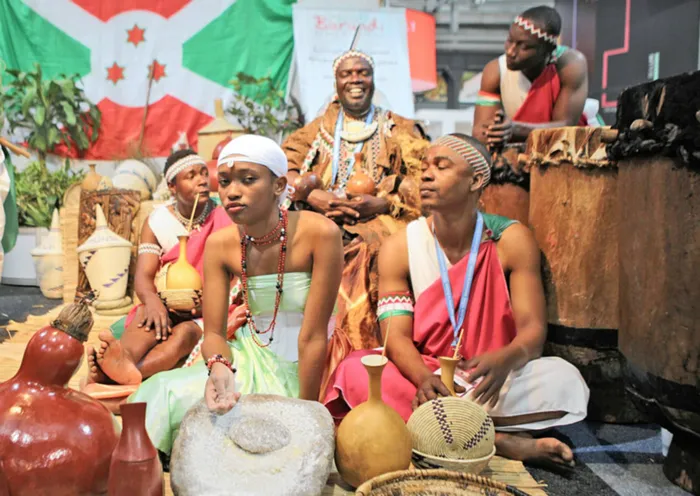
Burundi's stand at the Tourism Indaba last year, the tourism expo in Durban. The writer urges youths to stop relying on politicians' promises to create jobs and set up creative tourist enterprises in their own neighbourhoods. Photo: Marilyn Bernard Burundi's stand at the Tourism Indaba last year, the tourism expo in Durban. The writer urges youths to stop relying on politicians' promises to create jobs and set up creative tourist enterprises in their own neighbourhoods. Photo: Marilyn Bernard
Talk show host Victor Kgomoeswana‘s guests bolster his belief the continent is on the rise.
My Africa Week presented many opportunities to rekindle my Afro-optimism – the belief that the continent has what it takes to dominate this century and reclaim its rightful status as the hub of the world economic order.
It also reassured me that South Africa, although it is no longer the largest economy on the continent, is still a worthy gateway to the economy of at least southern and central Africa.
My reassurance came mainly from the conversations I had with the guests and listeners on my radio show.
I will share three of these: first, the story of Zandi, a township tour operator; then Telkom’s FutureMakers initiative to support small enterprises in information and communications technology (ICT) and the African Regional Conference, hosted by Swift in Cape Town.
Tourism Indaba, Zandi’s “Aahaah” moment
Indaba 2015, a tourism marketing event, which takes place this weekend in Durban, brings together no fewer than 9 000 exhibitors from Africa and the world – though predominantly southern Africa.
According to Durban Tourism chief executive Phillip Sithole, the tourism showcase was expected to rake in about R144 million in revenue for the metro.
As always, whenever a big exhibition such as the Indaba takes place, I ask whether the smaller guy gets any value from it.
This stems from the tendency of the organisers of such events to succumb to the commercial pressure of big sponsors and patrons and lock small, medium and micro enterprises (SMMEs) out of the economic action.
I asked chief executive of the Tourism Enterprise Partnership Dr Salifou Siddo to tell me how his organisation ensured small players were part of the massive industry that is tourism.
Bear in mind, tourism as far back as 2011 was already contributing R84 billion, or 9 percent, to the GDP, more than mining and automotive manufacturing, according to the then tourism minister.
That is a slice of the economy far too significant and dynamic to be kept out of the reach of SMMEs.
Siddo told me the Tourism Enterprise Partnership had assisted more than 4 000 members with information, coaching, training and an opportunity to attend the Indaba, where many start-ups get an opportunity to up their game through exposure to their peers from elsewhere in Africa.
He brought into studio with him Zandi Dhlamini, the bubbly proprietor of Aahaah Shuttle & Tours, who started out her working career in law and marketing. What made her leave her job to start her business, I asked.
Her “ah-ha!” moment came, she said, when she watched outsiders busing tourists into Soweto.
She felt she could offer a richer tourist experience, as a local, than those who tended to focus on the “political history of Soweto”.
Her business offers anything from a visit to a sangoma to a dash to the nearest eatery – where visitors can enjoy a sheep’s head!
Whether it is a party of two or 20, Aahaah Shuttle & Tours promises visitors the experience of a lifetime in South Africa’s most famous township. Why, in Africa Month, and in the week of Indaba 2015, is this such a potent story?
South Africa is a free country politically but, economically, the majority are still locked out of the rainbow nation miracle.
Politicians love to talk about job creation as if it was something they could do, yet they overlook the importance of individual enterprise.
Another point is that Africa’s heritage is grossly unappreciated by us Africans and, as a result, it is little known to the rest of the world.
Therefore, when a young, black South African woman acts on her unhappiness about being unable to capitalise on the heritage of her hometown, Soweto, then starts an enterprise to showcase that which tourists do not know about her roots, it is time for renewed hope.
On another note, the African World Heritage Fund launched a campaign to raise money to protect, promote and preserve Africa’s heritage sites in Midrand this week. Celebrated entrepreneur and former chief executive of MTN Phuthuma Nhleko is patron of the fund.
At the business breakfast in Midrand on Wednesday, the Development Bank of Southern Africa, pledged R500 000 to the fund and Discovery R250 000. Individuals are also encouraged to pledge financial or other resources towards the protection of Africa’s heritage.
Heritage is in all of us. It is in knowing who we are, where we come from, then celebrating it until the world notices.
When Zandi Dhlamini started Aahaah Shuttle & Tours, she followed in the footsteps of others in Soweto, such as Robby’s Restaurant and Tavern in Pimville, Sakhumzi and Wandie’s, among others.
May this tourism Indaba inspire many more – especially black – South African youths to stop believing in politicians’ promises of job creation and start setting up creative tourist enterprises in their own neighbourhoods.
How about the Skinder Boom gossip corner, opposite the Mamelodi Community Hall; the gymnasium where former boxing champ Simon “Tsipa” Skosana used to train or the school music star Joe Nina attended in KwaThema?
Do the people of Seshego or Sekuruwe in Limpopo recognise the tourist appeal of the schools attended by musicians Judith Sephuma and Selaelo Selota, respectively?
Do the residents of Mohlakeng on the West Rand make enough fuss about the home of Patrick “Ace” Ntsoelengoe, a soccer Hall of Famer?
All these are the seeds of what could be a thousand times bigger tourism industry, benefiting locals such as Dhlamini.
My call is for all South Africans and Africans to start cherishing and commercialising their heritage this Africa Month.
Kudos to Telkom and FutureMakers
The chief executive of the company with the top performing share on the Johannesburg Stock Exchange, Telkom, Sipho Maseko was another of my guests this week.
He shared a brilliant initiative that is worth celebrating. ICT is at the core of what we call the “Africa Rising” narrative.
Countries such as Kenya, Rwanda, Tunisia and Tanzania are much better off, thanks to the innovative use of ICT to advance access to banking and market information for farmers, among other uses. Nairobi was voted Africa’s Most Intelligent City for its innovative use of technology to improve the lives of its residents.
In South Africa, Telkom deserves commendation for its free wi-fi initiative in Pretoria, which has led to the birth of free wi-fi TV, enabling the telling of stories by ordinary residents of South Africa’s capital.
This week, however, Sipho (he emphasised that I should not call him Mr Maseko) was talking about a partnership to promote access to funding, mentoring and other support services for SMMEs in telecommunications.
What is exciting about this is that Telkom enlisted the services of black-woman-owned adviser and enterprise-development company Identity Development Partners, founded by Polo Leteka and Sonja de Bruyn-Sebotsa.
For all our criticism of how post-apartheid South Africa has not opened up economic opportunities for the majority of black South Africans, it is irresponsible to ignore success stories such as this one.
Whether we agree with the scale of it or not, Telkom might just be onto something good here. I am keen to see how this pilot unfolds and whether the follow-up will capitalise on the lessons learnt from it.
If more South African enterprises follow suit, especially bringing in reputable partners, as Telkom did in recruiting Microsoft, Cisco and others for this initiative, we might be about to crack the code of economic inclusivity in crucial sectors of the economy. Telkom’s leadership may take a bow because of this one.
Payment traffic volumes prove the Africa Rising narrative
The volume of payment business in Africa has outperformed the rest of the world, clocking a 13.2 percent growth, versus 8 percent for the rest of the world.
This is according to another of my guests, Hugo Smit, head of Swift in sub-Saharan Africa.
Although he was quick to point out that Swift focused its services on trade payments, Smit nonetheless told their 22nd African Regional Conference in Cape Town that over the past three years, Africa’s total Swift payment traffic had risen by 44 percent.
South Africa’s share of this volume dropped from 72 percent in 2003 to 53 percent in the first quarter of this year.
The same conference, which I had the honour of addressing, also heard that the SADC countries had now exceeded R1 trillion in payment traffic – pointing to a more integrated regional bloc.
The better the integration of the payment traffic in this bloc is, the better the prospects of greater regional collaboration, which Africa needs.
Swift also announced the winners of their fintech innovation initiative, the Innotribe Startup Challenge. The five entrepreneurs will compete in Singapore for global honours later in the year, after months of coaching and support.
This is another good example of a private sector player doing something about solving the problems facing Africa’s economic rebirth.
One of the winners of the challenge is from Uganda, while four are from South Africa.
Lest we forget
Ethiopians are generally very quick to remind you in conversation that theirs is the one country in Africa that was never colonised. However, between 1935 and 1941, they went through a terrible occupation phase under the Italians.
On May 5, the brass bands were blaring loud and proud in the capital city Addis Ababa and everywhere in the original home of coffee – Ethiopia – to commemorate Emperor Haile Selassie’s grand entrance into Addis Ababa on that day in 1941.
The emperor apparently chose May 5 to return to Ethiopia because the Italians had entered the city to disrupt Ethiopia’s sovereignty on the same date five years earlier.
This day honours those in the resistance movement who fought the occupation.
Besides the performances by military brass bands to mark the festivities, wreaths are laid before the city’s monuments in honour of the victorious Ethiopian military.
The day is celebrated as Patriots’ Victory Day.
We should also not forget the Cassinga massacre, commemorated by the people of Namibia, closer to home, on May 4. It is called Cassinga Day in memory of those who died in the Battle of Cassinga 1978, when what was then the South African Defence Force attacked Swapo at its base in southern Angola, killing about 600 people. We have come a long way since then.
*Kgomoeswana is author of Africa is Open for Business, the anchor of CNBC Africa’s weekly show Africa Business News and anchor of daily show Power Hour on PowerFM. He writes in his personal capacity.
** The views expressed here are not necessarily those of Independent Media.
Sunday Independent