COMMENT | Why Kaizer Chiefs’ combative edge could benefit Bafana and local football
COMMENT


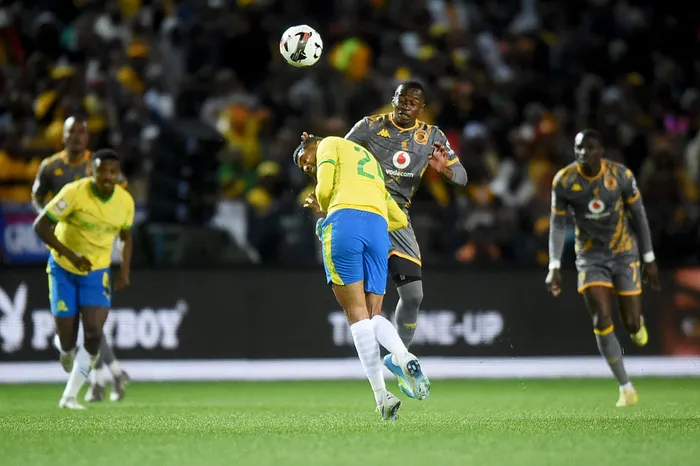
Kaizer Chiefs co-coach Khalil Ben Youssef has jumped to the defence of Siphesihle Ndlovu. While the midfielder's "combative" style has raised eyebrows and left opponents sidelined, the Amakhosi technical team say they remain happy with his contribution. Itumeleng English Independent Media
Image: Itumeleng English Independent Media
Comment
Kaizer Chiefs’ recent clashes against Orlando Pirates and Mamelodi Sundowns have sparked an uncomfortable debate around aggression, physicality and where the line should be drawn in South African football.
Yet beyond the injuries and outrage, there may be a broader benefit for the local game.
For years, South African football has carried the reputation of being technically gifted but physically vulnerable.
Whether it has been clubs in the CAF Champions League or Bafana Bafana at AFCON level, South African sides have repeatedly struggled when matches become confrontational, chaotic and emotionally charged.
Too often local teams have looked comfortable in controlled environments domestically, only to be overwhelmed by the intensity elsewhere on the continent.
That is why Kaizer Chiefs’ combative approach in recent high stakes fixtures may ultimately do more good than harm.
Chiefs, of course, also benefited from it themselves.
Their aggressive displays helped them hold both Orlando Pirates and Mamelodi Sundowns to 1-1 draws, directly influencing the Betway Premiership title race while reasserting themselves in the league’s biggest fixtures.
Against both Pirates and Sundowns, Chiefs disrupted rhythm, pressed aggressively and challenged every duel with far greater conviction than what is traditionally associated with the domestic game.
It turned matches into emotional battles rather than tactical exhibitions and while some have criticised the approach, it mirrors the conditions South African clubs are repeatedly exposed to in continental competition.
CAF football is rarely clean.
It is played in hostile atmospheres, on difficult surfaces and against opponents who test physical and mental resilience as much as technical quality. South African clubs have often battled to adapt to that shift.
The same applies internationally.
Ahead of the World Cup, Bafana Bafana are expected to face a Mexico side known for relentless intensity, a Czech Republic outfit built on physical size and aerial combat as well as a South Korea team that combines aggression with relentless pressing.
These are not environments where players are allowed comfort.
And importantly for South Africa, the national team core is largely made up of Orlando Pirates and Mamelodi Sundowns players.
If those players are repeatedly exposed to emotionally charged, physically demanding fixtures locally, it inevitably aids preparation for the international stage.
There is value in discomfort. There is value in learning how to play when space disappears, when tackles fly in and when emotions rise.
South African football has historically lacked enough of those scenarios domestically and that has often reflected when teams cross borders.
Of course, there is a cost attached.
The recent fixtures have already produced worrying scenes with Tshepang Moremi, Mduduzi Shabalala and Keanu Cupido all leaving games on stretchers across the two encounters.
No coach wants to lose key players and no supporter wants to see injuries become part of the spectacle. That is where balance becomes important.
Aggression should not drift into recklessness and referees still carry the responsibility of controlling dangerous play. But there is also a difference between outright foul play and simply raising the intensity levels of the game.
For too long, South African football has perhaps leaned too heavily toward technical comfort and tactical structure while neglecting the realities of elite competition elsewhere.
The best national teams and strongest club sides combine both.
Chiefs may still be inconsistent in results, but in these major fixtures they have introduced something South African football has often lacked — confrontation, edge and emotional resistance.
And uncomfortable as it may seem now, the broader game could ultimately benefit from it.