2026 FIFA World Cup showdown is in jeopardy as a co-host USA is at war with participant Iran
COMMENT

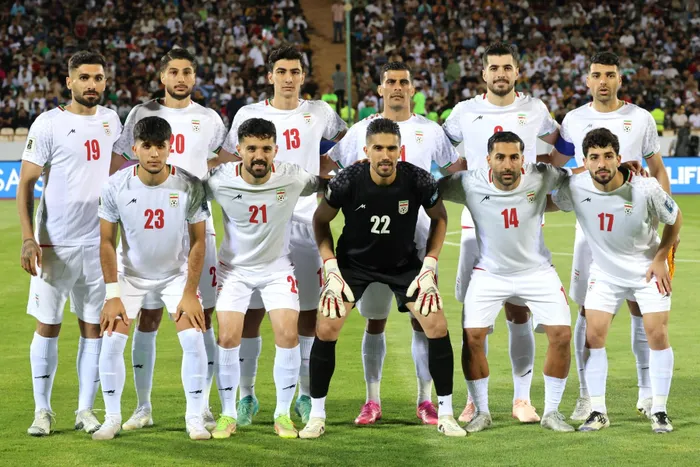
WORLD CUP STATUS ON THE LINE... Iran, one of the first teams to qualify for the 2026 World Cup, could withdraw from the tournament after the country was attacked by the United States and Israel a few days ago. The US is one of the tournament’s co-hosts.
Image: Atta Kenare/AFP
Comment
The raging Middle East conflict is threatening the timeline for the 2026 Fifa World Cup.
The United States, Canada, and Mexico will co-host the global showpiece scheduled to start on 11 June. It is facing unprecedented uncertainty amid the intensifying Middle East conflict.
The tournament co-host (the United States) is at war with a participating nation (Iran).
Iran, officially the Islamic Republic of Iran, is a country in West Asia and has qualified for the tournament. They will play crucial group-stage matches in the US. They qualified for their fourth consecutive World Cup by finishing first in Group A of the Asian qualifying rounds and are in a challenging group with Belgium, Egypt, and New Zealand.
These group-stage matches will take place in Los Angeles and Seattle, marking a historic first: a nation effectively at war with the United States competing on American soil. The potential for disruption looms large, echoing the turmoil that led to the postponement of the Women’s Africa Cup of Nations (WAFCON).
As of early March 2026, geopolitical tensions are palpable, with experts warning that if the conflict escalates, the tournament’s postponement could be in the cards.
The Iranian Football Federation’s president, Mehdi Taj, has expressed pessimism about Iran’s participation, highlighting the ongoing attacks as an alarming backdrop to the World Cup festivities.
While FIFA remains optimistic and is closely monitoring the situation, logistical hurdles and security concerns pose tangible threats to the event’s successful execution.
Already, various sporting events across the region — including World Endurance Championship races in Qatar and matches from the Asian Champions League — have been cancelled or postponed due to the ongoing conflict.
The reality is stark: as tournament dates draw nearer, the spectre of instability looms. If the conflict continues to escalate, or if travel and security become too challenging, FIFA could face difficult choices. This looming uncertainty has reverberated throughout the sporting world, where the stakes are as high as ever.
For Iran, participation in the World Cup carries immense national pride, yet the nation’s turbulent geopolitical realities now overshadow this honour. The Iranians must navigate the complexities of competition on foreign soil amid military actions by a country they traditionally view as an adversary.
As international fans get ready for what will likely be a historic football event, the boundary between sport and politics becomes increasingly blurred amid ongoing tensions.
Sports events, often seen as unifying platforms, are becoming battlegrounds for broader debates over conflict, diplomacy, and national identity.
The question on everyone’s mind is whether the beautiful game can truly thrive amid such discord.
As developments unfold, the world will be watching closely. The outcomes of both the tournament and the ongoing conflict may redefine not just the World Cup but the future of sporting events worldwide.