How the chaotic Jabulani ball defined an unapologetically African tournament
Fifa World Cup 2026


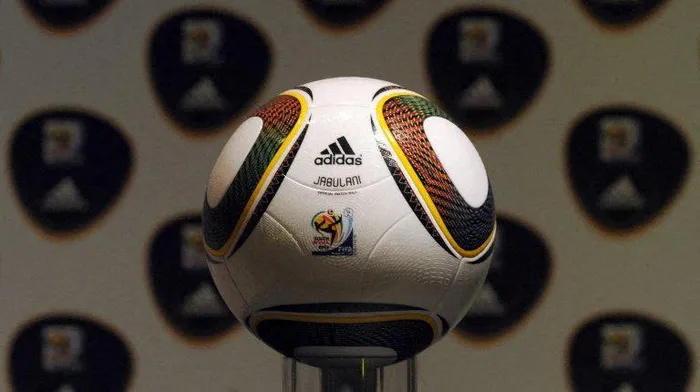
A nightmare for goalkeepers, a dream for strikers: The Adidas Jabulani remains the most controversial and iconic ball in World Cup history. Photo: AFP
Image: AFP
Two points hogged headlines during the first ever FIFA World Cup on African soil — vuvuzelas and the Jabulani ball.
While the plastic war horns deafened those unaccustomed to their constant buzz, Jabulani left goalkeepers in awe and became one of the most loved and most hated World Cup balls of all time. Some are even calling it the GOAT of World Cup balls. As a South African, that would be biased to say, not think.
Fifa and Adidas intended the Jabulani to be a celebration of South Africa. Its name, derived from isiZulu, means "to celebrate" and the ball's colourful design reflected the diversity of the host nation. What nobody expected was that it would become one of the tournament's biggest talking points. The Jabulani was unlike any World Cup ball before it.
With just eight thermally bonded panels and a near-perfect spherical shape, it was designed to fly faster, straighter and more accurately than previous footballs. Instead, players discovered something else entirely.
The ball dipped, swerved and floated through the air with a mind of its own. Goalkeepers hated it. England's goalkeeping coach at the time famously compared it to something bought from a supermarket shelf.
Shot-stoppers complained they could not judge its flight, while defenders feared every long-range effort. For attackers, however, the Jabulani was a gift. The name Jabulani itself derives from isiZulu culture and means "rejoice". The ball might as well have been named "uSaba" (fear) for the goalkeepers, though.
If fans loved the chaos, many players did not. Italy goalkeeper Gianluigi Buffon called the ball "absolutely inadequate", while England's David James simply described it as "horrible". Brazil goalkeeper Julio Cesar famously compared it to "one of those balls you buy in the supermarket", frustrated by its tendency to dip and swerve without warning. Australian goalkeeper Mark Schwarzer perhaps summed it up best when he said the ball sometimes had " a mind of its own".
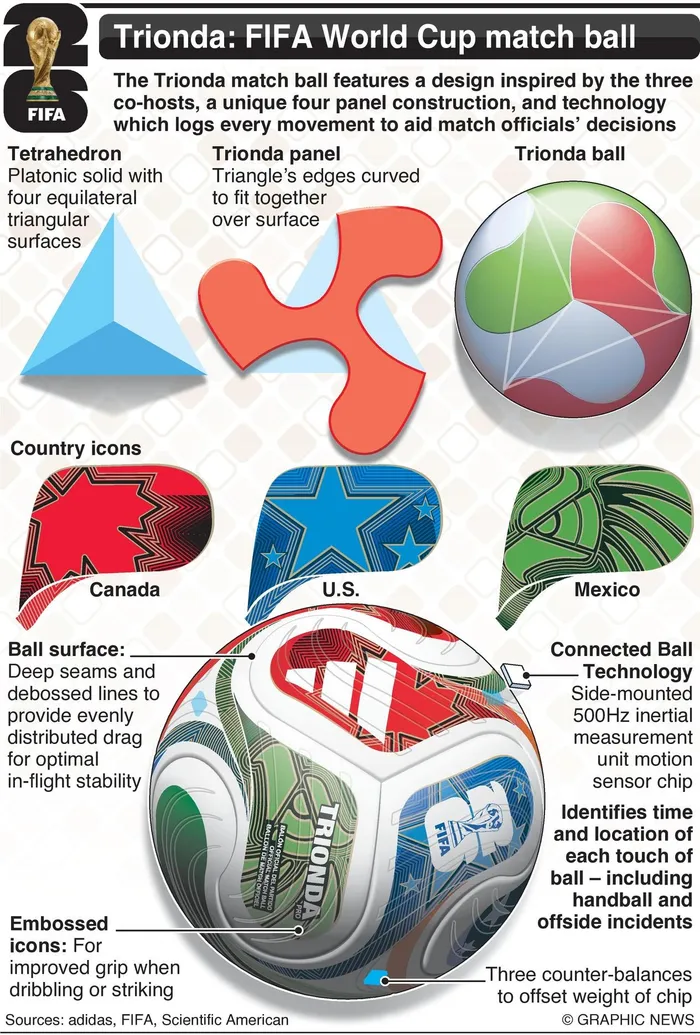
The official Fifa World Cup 2026 ball.
Image: GraphicNews
Yet, while goalkeepers cursed the Jabulani, Uruguay's Diego Forlán completely owned it. Months before the tournament, he reportedly requested one from Adidas and spent hours perfecting his technique.
The results were spectacular. Forlán scored five goals, won the Golden Ball as the tournament's best player and dragged Uruguay to an unlikely semi-final. Years later, he joked about his relationship with football's most unpredictable creation: "We got along great!"
Yet, the Jabulani's legacy stretches far beyond football science. Like the vuvuzela, it became part of the soundtrack and identity of a tournament that changed how the world viewed African football. For decades, Africa had been treated as football's colourful side act. The 2010 World Cup proved the continent could host the biggest sporting event on Earth and do so with its own personality.
The Jabulani became a symbol of that moment. It was different, unapologetically African and impossible to ignore. Much like the host nation itself, it challenged expectations and forced the football world to adapt.
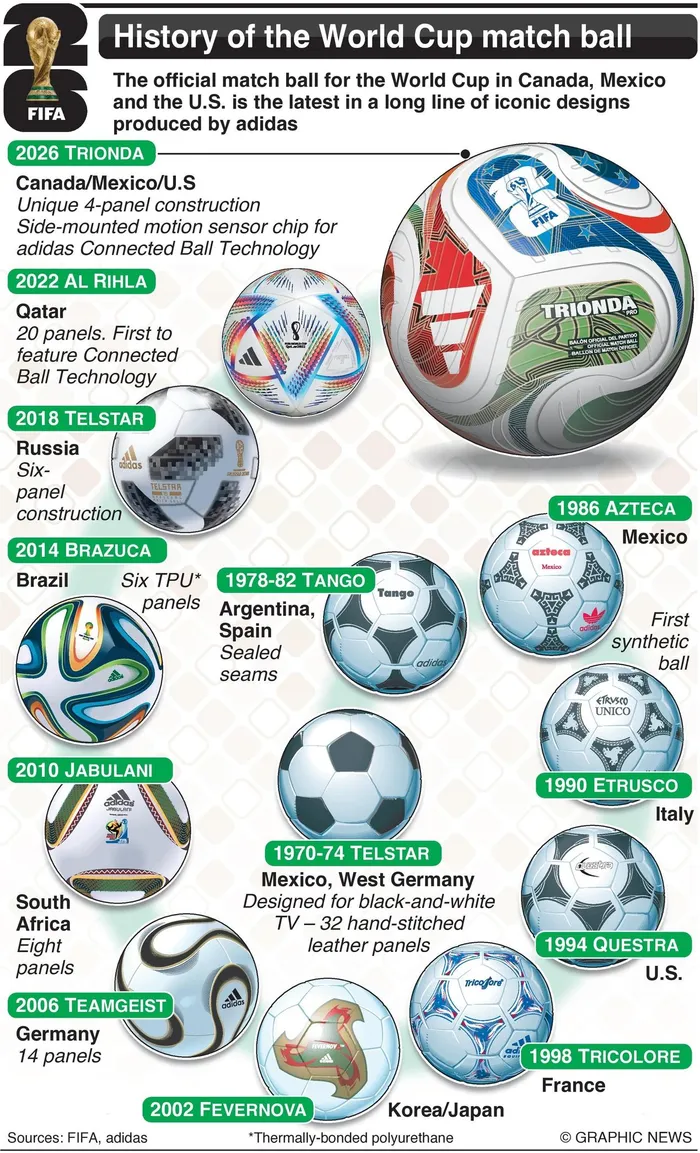
The history of Fifa World Cup balls.
Image: Backpagepix
For South Africans, the ball represents more than controversial aerodynamics. It is a reminder of packed fan parks, waving flags, deafening vuvuzelas and a month when the world's attention turned south.
The Jabulani may have confused goalkeepers, but for an entire nation, it captured something far more important: a once-in-a-generation moment when South Africa stood at the centre of the football world – the biggest stage of them all. Long after the final whistle blew, the ball remained a symbol of pride, possibility and a World Cup experience that may never be repeated in quite the same way again.
Jehran Naidoo is sports reporter for Independent Media and social media coordinator of the our YouTube channel The Clutch