Uncertainty grips the fate of 2026 WAFCON as CAF prepares for critical announcement
2026 Women’s Africa Cup of Nations


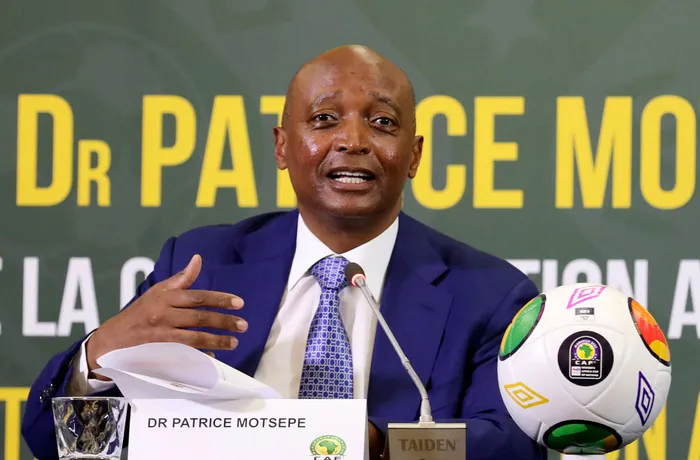
CAF president Patrice Motsepe is expected to lead the organisation's proceedings on Friday as they are set to make a major announcement.
Image: Muzi Ntombela/BackpagePix
The Confederation of African Football (CAF) is set to issue a crucial update regarding the status of the 2026 Women’s Africa Cup of Nations (WAFCON) in Morocco, with an official announcement anticipated by Friday.
This news follows a turbulent period of speculation, potential postponement, and discussions about hosting rights that could reshape the tournament’s future.
On Wednesday evening, CAF Head of Communications, Luxolo September, confirmed that the tournament situation is being closely monitored at high levels, stating, “We will provide an urgent update within 48 hours.”
The seriousness of the circumstances surrounding the WAFCON has experts across the continent on edge as logistical and administrative hurdles emerge, casting a shadow on the original dates set for 17 March to 3 April.
The origins of this uncertainty can be traced back to the highly controversial Africa Cup of Nations (AFCON) final in January, where Morocco suffered a disappointing defeat to Senegal on home soil.
After the event, Morocco requested that CAF overturn the match result, but their appeal failed.
The country subsequently informed CAF of the difficulties it was facing in hosting the forthcoming WAFCON. Still, in the absence of a formal response, Morocco was forced to proceed as host regardless.
In a significant development, it became evident that CAF had begun exploring alternative hosting options. This development prompted a response from South African football officials, who relayed the news to Deputy Minister of Sport, Peace Mabe.
Mabe expressed alarm at the unfolding situation and announced that South Africa would step in as host if necessary, a declaration made at a football function in early February.
The situation escalated significantly due to an intense conflict in the Middle East that began at the end of February, raising concerns about travel and logistics for teams.
Although CAF has yet to state the implications of the region’s instability, it is clear that some national squads are already feeling the effects.
The Nigerian Super Falcons, for instance, held a training camp in Cameroon before their intended arrival in Morocco on Saturday, but have now returned home. With several squad members based in Qatar, travel disruptions have prevented them from joining the training camp.
Meanwhile, Ghana’s women’s team, the Black Queens, found themselves in the midst of uncertainty after arriving on February 25 to compete in the Pink Ladies Cup in Dubai, and have since been holed up in a hotel.
The escalation of conflict has raised concerns about their safety and travel logistics as they seek the best way home.
Many teams have players from clubs in Middle Eastern nations, such as Saudi Arabia and the UAE, where women’s football leagues are flourishing.
The chaos from recent events now leaves these athletes stranded, unable to travel due to suspended flights across the region.
As the clock ticks down to the expected announcement, it appears increasingly prudent for CAF to consider postponing WAFCON without committing to a new date, thereby alleviating pressure on players and teams amid an unforeseeable global situation.