AFCON groups wrap: Drama abounds as fancied powerhouses and rising stars battle for glory
Among the highlights of the AFCON 2025 group stage were clashes between traditional powerhouses and emerging talent, showcasing skill and unpredictability.


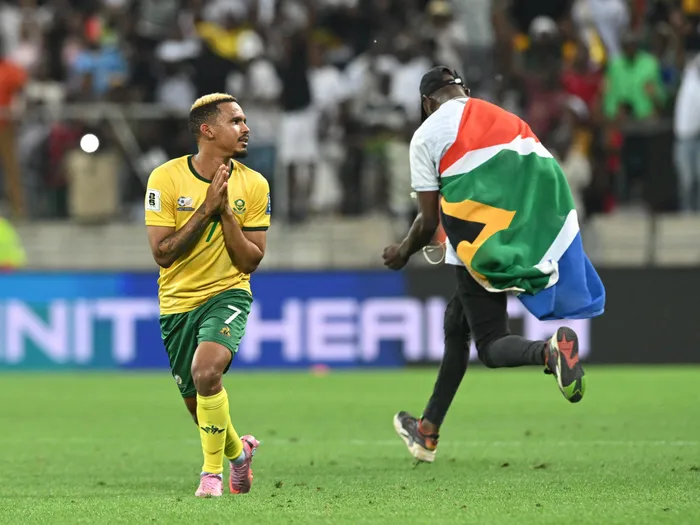
In Group B, South Africa also showcased their potential, with Oswin Appollis scoring twice.
Image: Backpagepix
By the time the CAF Africa Cup of Nations 2025 in Morocco concluded on Wednesday night, the tournament demonstrated once again why it stands as one of the most unpredictable and captivating spectacles in world football.
A total of 87 goals across 24 matches in six groups demonstrated both the attacking ambition and the depth of skill that Africa’s leading nations, alongside emerging contenders, bring to the continent’s premier tournament.
The group phase was marked not only by familiar stars stepping up but also by emerging talent seizing their moment on the continental stage.
The talents of Mohamed Salah (Egypt) and Riyad Mahrez (Algeria) shone brightly alongside the youthful exuberance that typified breakout performances from teenagers and creative midfielders. Central to this thrilling narrative were detailed performances that showcased the evolving landscape of African football.
Group highlights and standout performances
Group A: Hosts Morocco topped the group with seven points, skilfully blending control and dynamic attacking play. Strikers Ayoub El Kaabi and Brahim Díaz each netted three goals, constantly overwhelming their opponents. Mali emerged as resilient qualifiers, while defensive vulnerabilities hampered Zambia’s promising offensive play. Comoros, despite their tenacity, exited the tournament with just two points after struggling to convert efforts into victories.
Group B: Egypt’s strategic experience underpinned their group leadership. Salah’s two critical goals proved vital against tough opponents, securing the first place after a disciplined goalless draw against Angola. South Africa also showcased their potential, with Lyle Foster and Oswin Appollis both scoring twice. Angola and Zimbabwe, however, faltered and were ultimately unable to maintain consistent performance.
Group C: Nigeria delivered the most commanding performance, winning all three encounters. Central to this success was Ademola Lookman, whose two goals and two assists were pivotal. Tunisia trailed closely, buoyed by Elias Achouri’s goals, while Tanzania’s creative play secured one of the best third-placed spots. Meanwhile, Uganda was eliminated early after struggling to convert numerous chances.
Group D: Senegal thrived with both strength and strategy, finishing with seven points. Nicolas Jackson contributed two goals, while Sadio Mané exhibited his match influence. The DR Congo advanced as well, with Gaël Kakuta finding the net twice. Benin performed well, finishing third, while Botswana earned no points.
Group E: Algeria stood out as the only team to maintain a perfect record through the group phase, with Mahrez spearheading the charge by netting three goals. Their blend of balance and efficiency earned them the top spot, while Burkina Faso secured second place. Sudan advanced to the knockout stage as one of the best third-placed teams, utilising tactical efficiency to their advantage, while Equatorial Guinea faced elimination.
Group F: Ivory Coast capped the group stage with impressive dominance, inspired by their youthful talent. Amad Diallo’s two decisive goals showcased his impact, while Cameroon similarly relied on their youth, with teenagers playing vital roles. Mozambique rounded out the group by qualifying as the third-placed team, while Gabon departed after failing to earn a single point.
What lies ahead?
With traditional powerhouses like Morocco, Egypt, Nigeria, Senegal, Algeria, and Côte d’Ivoire advancing alongside resilient qualifiers such as Mali, South Africa, Tunisia, DR Congo, Sudan, Benin, and Mozambique, the upcoming Round of 16 promises a captivating array of styles and high-stakes encounters.
The impressive tally of 87 goals during the group phase not only underscores an attacking spontaneity but also highlights the tactical diversity, technical finesse, and competitive spirit that form the bedrock of AFCON.
As the knockout rounds approach, margins will narrow, yet the unpredictability that characterised the group phase suggests the tournament’s most dramatic moments may still lie ahead.