Rural learners to benefit from landmark conservation-education partnership


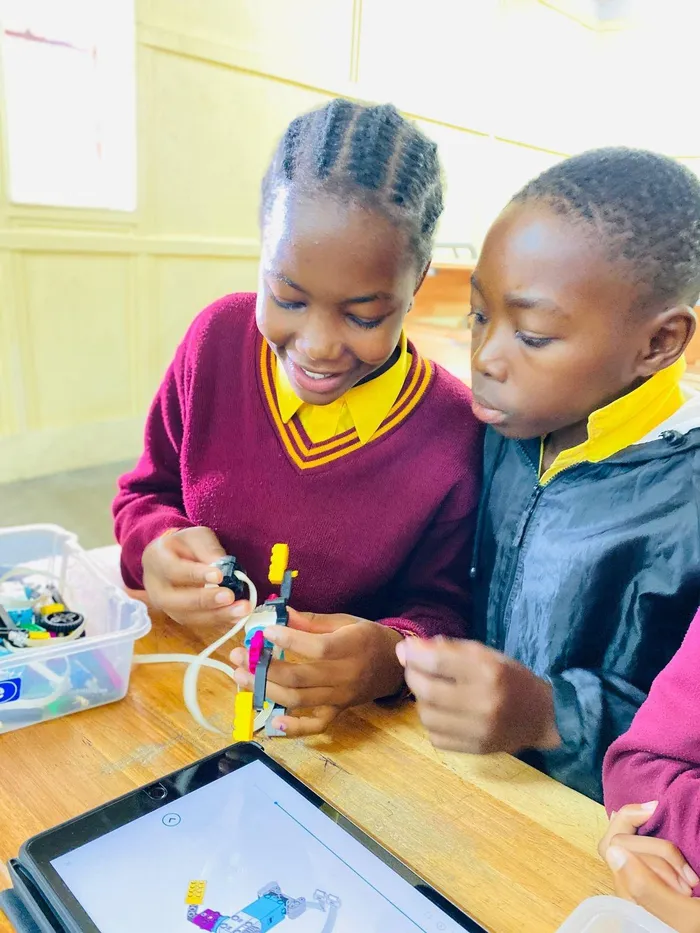
Schoolchildren attending supplementary classes at Good Work Foundation’s digital learning campuses learn how to make and code Lego Spike robots using technology.
Image: GWF
South African National Parks (SANParks) and education non-profit the Good Work Foundation (GWF) have signed a landmark agreement that will increase access to conservation education and skills training for young schoolchildren and jobseekers living near national parks.
Under a memorandum of understanding, GWF plans to expand its digital learning campuses adjacent to key national parks across the country. The organisation already operates five campuses in Mpumalanga, providing digital education to schoolchildren and skills-based training to young jobseekers, a central campus in Hazyview and four satellite campuses surrounding the Sabi Sands Game Reserve. There is also a campus in the Free State town of Philippolis.
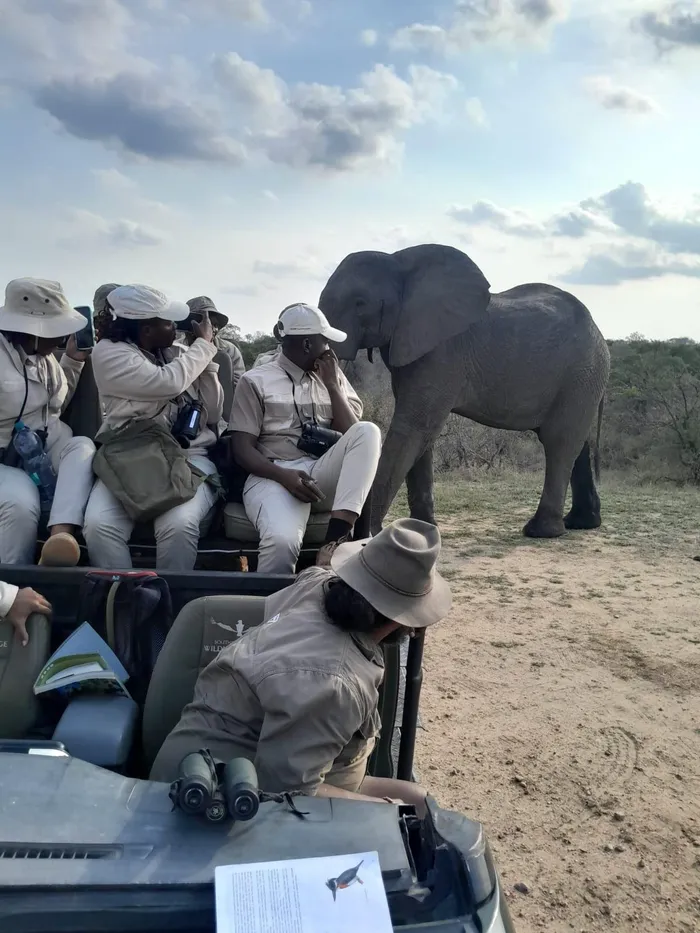
Good Work Foundation Conservation Academy students marvel at seeing an elephant up close in its natural habitat.
Image: GWF
SANParks, which manages 21 national parks, is partnering with GWF to bring this education and skills training model to rural and township communities near several parks, starting with the Greater Kruger National Park. The partnership will be piloted at GWF’s Hazyview campus, serving as a gateway hub to the Kruger National Park, where learners will gain digital skills, conservation knowledge and job opportunities. Additional campuses are planned to meet high demand in the Greater Kruger area.
GWF campuses will also be established in other “mega living landscapes” identified by SANParks, including areas near Addo Elephant National Park, Golden Gate Highlands National Park and Augrabies Falls and Namaqua National Parks.
Good Work Foundation CEO Kate Groch says, “GWF’s mission is to connect young South Africans with the skills they need to access opportunities for careers in South Africa’s rural spaces.” She adds, “GWF already has more than a decade of proof of the effectiveness of our digital education model. We have also been wanting to scale our operations by identifying more local economies we can tap into in rural spaces. So, we started to talk with SANParks about being their education partner and supporting them in achieving their 2040 vision, while aligning with our own 2030 strategy.”
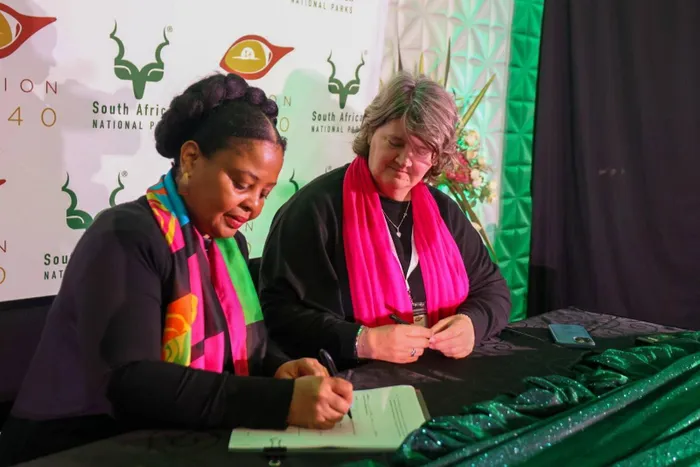
SANParks CEO Hapiloe Sello and Good Work Foundation CEO Kate Groch sign a cooperation agreement that will see the establishment of more digital learning campuses in the vicinity of national parks.
Image: Supplied
The GWF-SANParks partnership will empower local communities, including teachers, as custodians of South Africa’s natural heritage and create jobs within the conservation economy.
With GWF already serving over 13 500 young people across its existing operations, the additional campuses will provide a “massive multiplier effect,” giving tens of thousands of young South Africans access to conservation education, skills and jobs, Groch says.
“Many children living near game parks have never seen a lion or elephant in the wild,” Groch adds - something this partnership aims to change. Students at GWF’s Career Academies and Bridging Year Academy will also have opportunities for internships and work placements at SANParks establishments.
For Groch, a qualified zoologist, former school teacher and one-time travelling tutor, the partnership represents a culmination of her passions: “everything I’ve studied and been passionate about.”
She adds, “If the work we do to connect young people to these job opportunities and careers ends up supporting a vision to protect our beautiful wild spaces, that’s an added impact. The bigger picture is about nurturing young people who can work in those spaces, who are connected to those spaces and who also start to develop those spaces thoughtfully.”
“The opportunities are endless for the development of those regions and communities, as we seek to challenge what we learn, how we learn, who has access to learning and how we get young rural South Africans into career paths in the economies where they live.”