’Guardian angel’ SA pilot rescues stranded South Africans
Published


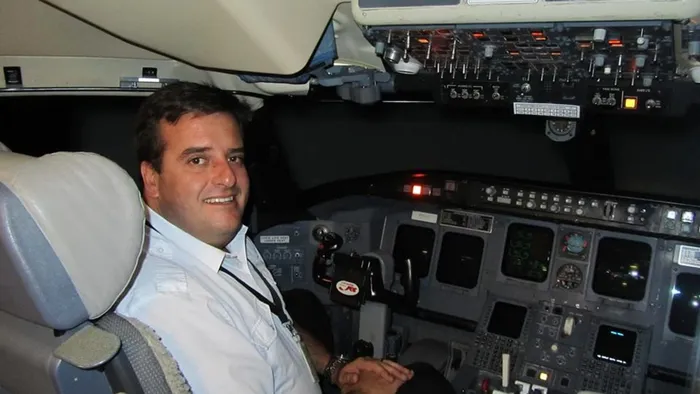
Tertius Myburgh, a South African commercial pilot, has spent all his time under lockdown helping organise repatriation flights for South African and Zimbabwean citizens stranded in various countries around the world due to the Covid-19 pandemic. Image: Supplied.
By Sameer Naik and Karishma Dipa
To all those that has helped during the Covid-19 pandemic, Tertius Myburgh is seen as a guardian angel. But while he is flattered, the South African commercial pilot is having none of it.
“I’m not one of those people who does anything to get my name out,” he says. “Each day my Facebook page is flooded with thank you messages from people who have been reunited with their families.”
Myburgh, who recently relocated from Joburg to New Brunswick, Canada, has spent all his time under lockdown helping to organise repatriation flights for South Africans and Zimbabwean citizens left stranded in countries including Vietnam, Cambodia, Philippines, and even the Maldives.
All with a cellphone, limited talk time and his tiny laptop. “I’ve gotten messages from grandparents who say they are grateful to have seen their grandchildren for the first time. It’s people just being genuinely grateful for the assistance.”
It’s been overwhelming. “People have called me a hero. I sort of feel embarrassed because nobody sees themselves as such a person.”
After being retrenched from a new job he secured in Canada, Myburgh put all his focused on helping South African and Zimbabwean citizens get home.
It began when he was contacted by his former high school principal, Klaus König, now the principal of Helpmekaar High School in Joburg. König, his sister and his friend were all stuck in Myanmar (Burma) and needed to get home immediately.
“With time on my hands due to my retrenchment, I said why not help those in need. Once I succeeded with that flight, things started snowballing with everybody and anybody contacting me to help them. We were operating like a taxi service, flying people from all over the world home.”
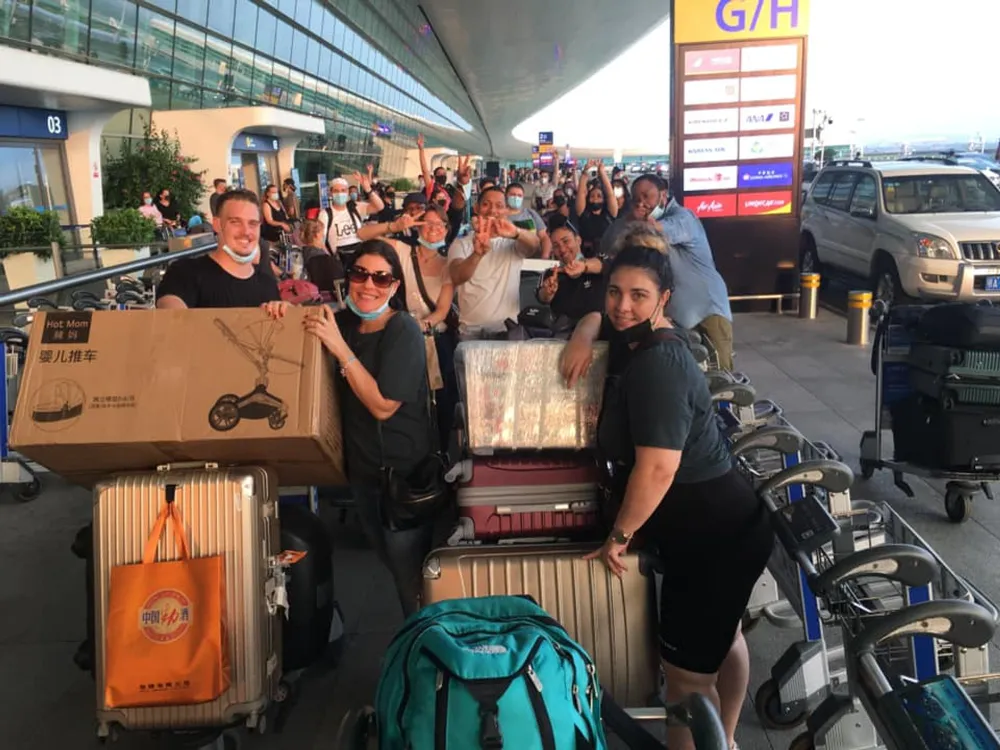
Most recently, Myburgh secured a repatriation flight for 100 South Africans and a few dozen Zimbabwean students stranded for six months in Wuhan, China. To do this, he had to secure Air Zimbabwe’s only functioning aircraft and sort out red tape with diplomatic channels in embassies across the world.
“There is nobody else to help these people. It’s just me, alone and my phone. My phone has very limited talk time as I am still very new in Canada. The biggest credit I could get on my phone has been $300 (R4 000).”
Many South Africans needed to get home from China, in part, because of a cancelled repatriation flight by SAA that had originally been scheduled for mid-June.
“Everyone else was going to charge significant amounts. So I said, let’s try and do it as cost-effective and as lean and mean as possible. I got all these messages from people who were sitting on the floor at the airport and had nowhere to go.
“It was up to me to try and assist them so I put them up in a hotel and arranged rooms with breakfast as well as dinner. I felt compelled to help.”
Arranging such a flight is fraught with complications, particularly during a global pandemic. “Before Covid, you could just contact their civil aviation authority, send the details of your flight and within a day or two, you have authorisation and off you go. I had to navigate plenty of challenges.”
As the number of paying passengers who needed repatriation became clear, Myburgh used his southern African links to lease a Boeing 767, plus its pilots and it screw, from Air Zimbabwe. It was the same 30-year-old plane used by former president Robert Mugabe occasionally.
“We leased aircraft to Zimbabwe on many occasions and so I had plenty of connections.” Myburgh charged $1 000 for each repatriation and ended up paying for the passengers’ hotels and meals.
“Previously, when we had asked Air Zimbabwe for a plane, we asked them to include everything including catering, fuel costs and so on. The figure they gave was quite a number. SoI told them to just give me the aircraft and their crew and they only would cover insurance of the aircraft. The rest, including all the logistics, clearance handling at airports, fuel, and catering, I would handle.
“That allowed us to keep the cost down, where we were in control of who was our fuel supplier at each stop, and who organised the catering, so we can pass that saving on to the actual guy that needs to get back.”
The plane and crew began the journey from Zimbabwe in mid-July. They flew from Harare to Joburg, on to Bangkok, before heading to Kuala Lumpur, where they picked up stranded commercial seafarers from China. The sailors’ firm helped bear the costs of the charter.
From Kuala Lumpur, they headed to Guangzhou, then back to Kuala Lumpur, since they weren’t authorised to take domestic routes in China, and on to Wuhan, to pick up most of the South Africans, before eventually making it back to Joburg. The Bangkok leg had to be added when the 767’s engine broke down, stranding the South Africans for another two weeks.
South African Carmen Johannie, who was working as a teacher at the British school in Guangzhou for three years, was one of the passengers on the flight. She described Myburgh as their “guardian angel” and “hero,” who “saved the day and brought us home”.
She and a group of South Africans, many unemployed, pregnant, homeless, and in need of their medication, attempted to get assistance from the SA government but this did not materialise, Johannie wrote in an emotional Facebook post at the time.
Their plea finally reached Myburgh, who Johannie said “never gave up on them. He promised me he would bring us home and he was true to his word.” The lockdown, said Myburgh, made organisation difficult.
“Things are crazy because now you don’t have just one party or a government that’s in charge of the airspace. With the Covid-19 lockdown, everybody is in charge and it needs to go through every single department from port health to immigration. Ninety-nine percent of the time, you need to go through diplomatic channels to get authorisations and this has proved challenging as I am somebody very new to organising repatriation flights during the pandemic.”
The South African embassy in Bangkok was very helpful and always responsive, as were the diplomatic missions of Zimbabwe.
Myburgh wants to inspire youngsters that “if you put your mind and effort to something, anything is possible. If you just put this whole scenario and everything we did and all the countries we had to contact and all the red tape and diplomatic channels for approvals and so on, if you just put it on paper, you will think ‘how the hell do you do all this’?
“But if you chuck away at it, keep following up and working hard you will realise that everything and anything is possible. Sheer effort and willpower will make things happen.”