Suicide plagues SA's first responders
Mental health


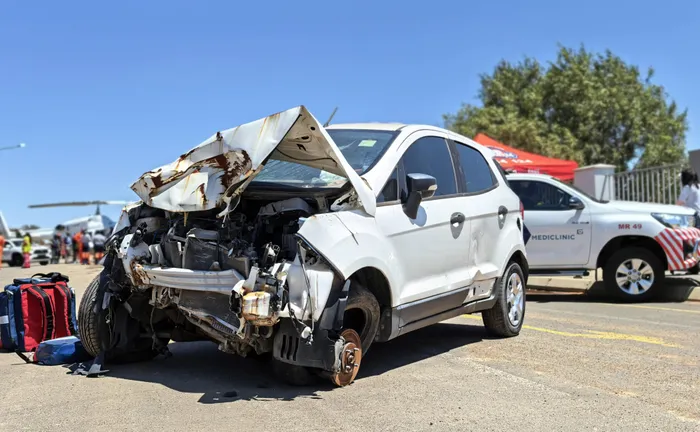
Emergency services at a simulated accident scene.
Image: Danie van der Lith
The enormous pressure on police, ambulance workers and firefighters hammers their mental health. A recent survey showed 47.3% were depressed, 37.8% had generalised anxiety disorder, and 48.5% PTSD.
EVERY week, a South African police officer dies by suicide, and almost no one is talking about it. Experts warn that the mental health crisis among first responders, including police, paramedics, emergency room nurses and doctors, and firefighters, has reached breaking point.
These are the people who rush to save others, but too often, they can’t save themselves.
“This is a national emergency hidden in plain sight,” said Dr Alicia Porter, board member of the South African Society of Psychiatrists (SASOP).
She said workers on the frontline of responding to crime, domestic violence, large-scale road accidents, medical emergencies and natural disasters are disproportionately susceptible to burnout, depression and suicide.
“The problem is that they may have pre-existing mental health conditions, but the nature of the work is very unique because their very work environment is actually exposing them to repeated trauma.”
The figures are chilling: one police suicide every week — 300 in the past seven years and 54 in the 2024/25 reporting period.
“Suicide is a serious risk. So, in my mind, it's exactly the same as uncontrolled diabetes or uncontrolled hypertension. We talk about those things, but when it comes to mental health, there's just this silence and this expectation that there should be this superhero resurgence among our first responders, but they're human,” said Porter.
She also believes that managers and supervisors should be trained to recognise warning signs, fast-track help, and promote mental wellness.
Porter said a recent study among South African police members and paramedics showed that 47.3% would qualify for a diagnosis of depression, 37.8% for generalised anxiety disorder, and 48.5% for post-traumatic stress disorder. These levels far exceed the prevalence in the general population; depression and mood disorders at 9.8%, anxiety disorders at 15.8%, and PTSD at just 2.3%.
Other studies found that 30% of ambulance personnel in the Western Cape experience PTSD. In Gauteng, 30% of advanced life support paramedics were found to be suffering total burnout and 63% experiencing burnout related to work, patient care or personal stress. More than two-thirds of public hospital emergency room doctors in Gauteng, working shifts of up to 24 hours at a time, were assessed at high risk of burnout.
Year after year, police suicides pile up; most involving service-issued firearms. In the latest incident, a 53-year-old sergeant from Riba Cross in Burgersfort, allegedly part of the Presidential Protection Unit in Pretoria, killed a female colleague and wounded his wife before turning the gun on himself.
Last August, a police officer implicated in a hit-and-run in Phoenix, Durban, killed himself. In June 2023, at least ten officers took their own lives, including a constable from the Mthatha Flying Squad. Reports indicate that when he discovered his cousin had used his service pistol to commit suicide, he used the same gun to end his own life. In 2022, a Durban Harbour officer used her service pistol to kill her boyfriend, then turned herself in.
A former police officer and firefighter, Mr K, said there is no debriefing despite the trauma they face. “Debriefing is not a priority for first responders. You are told to man up and get on with it because you can’t take time off to mentally recoup.” He said traumatised officers often self-medicate with alcohol. “Two of my friends killed themselves. I’m talking about seasoned police officers. Many of them have taken their lives because they just couldn’t deal with it anymore.”
Gun Free South Africa notes that as far back as 1999, over 80% of police suicides involved service weapons. Discovery Life data shows suicide has now overtaken vehicle accidents as the leading cause of unnatural death among South Africans aged 41 to 60, accounting for 45% of claims. Suicide-related claims surged 62% in 2024 compared to the previous five-year average and now account for 35% of all unnatural death claims, ahead of vehicle accidents (23%) and crime (17%).
Mpho Mpogeng, a paramedic and president of the South African Emergency Personnel Union, said they cope with extreme trauma by turning to alcohol. “We don’t have many suicides but nine out of ten paramedics abuse alcohol in their own space and some even go to work when they are drunk. They are drinking to cope with the pressures of the job, and that can be dangerous for them and the patients,” he said.
Paramedics are under-resourced, often lacking basic supplies like gloves. Ambulances intended for two patients sometimes carry five or six, violating privacy and increasing stress. Mpogeng said the workload is overwhelming, instructions are sometimes unreasonable, and staff face threats of dismissal.
A retired paramedic added that they often deal with criminals as well. “You get trauma counselling, but within the next week you’re back on the road with the trauma you experienced. You end up not sleeping, and we all know how easily sleep deprivation can lead to depression.”
Theresa Geldenhuys, president of the Southern African Emergency Services Institute (Saesi), has been a firefighter for 34 years. She says, like paramedics, many firefighters turn to alcohol as a coping mechanism. “When you leave home in the morning, you say goodbye, not knowing if you're going to come back.”
She said firefighters run toward situations others run away from - people burnt beyond recognition, trapped under buildings or in cars, not knowing whether they’ll be able to save them. While most firefighters have access to employee wellbeing programmes and trauma counsellors, Geldenhuys said many still use alcohol to suppress trauma. “Some of them have seen their friends commit suicide. Some drink, get involved in fights, even cheat on their spouses, drive fast cars, and party.”
The South African Depression and Anxiety Group (SADAG) reports a sharp increase in calls from first responders and their families. Many reach out anonymously, terrified of being identified by colleagues or superiors. “Those working on the frontline of trauma face enormous emotional strain,” said Cassey Chambers, Operations Director at SADAG. “They are often the first to witness violence, tragedy and loss, and they carry an enormous emotional burden. Untreated mental health challenges don’t just harm first responders themselves but also affect their ability to serve and protect others.”
SADAG cites constant exposure to trauma, lack of rest, stigma around seeking help, limited access to counselling and under-resourced workplaces as key drivers. Many first responders fear judgment or career consequences if they admit to struggling mentally, and access to mental health care remains limited, especially in rural or smaller towns.
Megan Gonsalves, Netcare Akeso’s 24-hour Crisis Line Manager, said stigma remains a major barrier to seeking help. “Police and most emergency personnel have access to mental wellbeing resources and medical cover that provides for therapy and treatment. Often, however, stigma around mental health can prevent people from reaching for support when it is needed, with potentially tragic consequences.”
Richard Mamabolo from the police union Popcru said the SAPS 2024/25 Annual Report — which revealed 54 police suicides in the past year — “is a serious indictment on the institutional support structures that fail those who dedicate their lives to serving and protecting others. It’s a national crisis that demands urgent, co-ordinated intervention.”
“Behind the uniform are men and women who endure immense emotional and psychological strain, often compounded by unsafe working conditions, understaffing, poor management practices, and the growing threat of violent crime against officers. Police officers are frequently denied access to timely, confidential psychological assistance, while those who do seek help often face stigma, isolation, or even punitive treatment. The militarised management culture within SAPS discourages open conversations about mental health, leaving many to suffer in silence,” he said.
Foster Mohale from the National Department of Health said all employees in the department, including EMS personnel, have access to provincial programmes as determined by each province. “This includes wellness response teams, access to chaplains, and health care professionals as needed,” he said.