Four landmines kill a R250 million business: A Chadwicks case study


By Tim Chadwick, CEO at Chadwicks
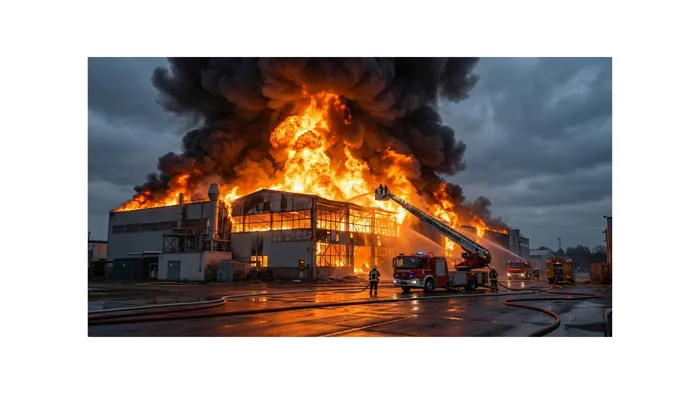
The YeboYes Group manufacturing facility burnt to the ground on a Tuesday afternoon, which was inconvenient for several reasons, the least of which was that Simon Smit, the CEO, had been halfway through a particularly aggressive curry at the time and was now standing in the charred ruins of his factory. His indigestion suggested Delhi belly was imminent.
He wore his usual faded jeans and a camo long sleeve shirt that had seen better days. Red Bull in hand, he surveyed the wreckage of what had been a R250 million operation.
"Ja nee," he muttered, which translated roughly to: The universe seemed to take a rather dim view of my Tuesday.
Beside him stood Wilma Croft, the operations manager, peering through her elegant pink reading glasses, which was optimistic considering everything readable had converted to ash.
She wore a floral scarf despite the heat and was already tapping calculations into her tablet. 120 employees. Severance packages.
Ag shame, she thought, though her face betrayed nothing but the stoic composure of someone who had spent twenty years managing chaos and she was not about to start panicking now, skattie.
"The insurance will cover it," Simon said, though his tone suggested he was trying to convince himself more than anyone else. "We have got full Business Interruption. We are sorted, no worries.”
Pieter van der Merwe, the IT manager, appeared from behind a collapsed beam like an apparition in well worn Caterpillar boots, carrying his fifth coffee of the hour. His long blonde fringe needed pruning as usual and he wore the expression of a man who had achieved such complete detachment from earthly concerns that even a factory fire registered as merely another Tuesday.
He began humming. An annoying habit that surfaced whenever pressure mounted.
What none of them knew yet, was that their Business Interruption insurance policy, arranged some 14 months prior by a Financial Service Provider whose name none of them could quite recall and whose credentials remained elusive even now, was about to reveal itself as spectacularly useless.
A Claimageddon was brewing.
Their policy contained four landmines. Nobody had noticed. Yet.
YeboYes was about to step on all four.
Landmine One: The Lottery Indemnity Period
When the claims assessor arrived three days later, a humourless individual who approached the ruins with the enthusiasm of an accountant auditing a morgue, he asked a question that should have been simple: "What is your indemnity period?"
Simon blinked. "Twelve months."
The assessor consulted his clipboard and after what seemed like an eternity responded, "Your policy states 12 months”, silently hoping his clipboard and hearing was wrong and that it was a more palatable 36 months.
"Ja," Simon confirmed. "That's what I said," wondering if the clipboard had absorbed all the assessor's cognitive functions.
"And how long will it take to rebuild this facility and restore your manufacturing capacity to pre-loss levels?"
There was another uncomfortable pause.
Wilma, who had been sucking viciously on a peppermint, stopped mid-suck.
Pieter's humming faltered.
Simon's Red Bull can made a faint crumpling sound as his grip tightened.
“Oh dear,” Wilma said softly. “Trouble."
The assessor delivered the news with the bedside manner of a pathologist: the facility alone would take 24 months to rebuild.
Then, the specialised manufacturing equipment required lead times of nine months. The regulatory approvals for certain production processes would take another four months. The training of replacement staff to operate the reconfigured production lines would consume three more months. Then there was the time it would take to re-enter the market.
And yet the insurance policy, arranged by that phantom Financial Service Provider, covered only twelve months of Business Interruption.
Between month 13 and optimistically month 30, the YeboYes Group would be insured for precisely boggeral.
It was a textbook Business interruption failure.

Chadwicks CEO, Tim Chadwick
Image: Supplied
The indemnity period had been selected not through a careful risk analysis of actual reinstatement timelines, but through what might charitably be called some ”hopeful guesswork" and less charitably as "closing one's eyes and picking a number".
The saying “the lights are on but nobody’s home" is well known. The new version, adapted for this tragic Business Interruption insurance tale, might read: “The policy is active for 12 months, but the business won’t open in 30… or never”.
Landmine Two: Accountant Meets Policy
The claims assessor moved to his second question: "What is your sum insured for Gross Profit?" he asked the accountant.
The accountant, a pleasant individual with the personality of a tax return, laid out the financial statements. “Their Gross Profit for the last financial year was R100 million,” he stated confidently.
The claims assessor’s frown was pronounced. "According to the insurance definition of Gross Profit, I calculate R120 million VAT ex.”
There was a pause, during which both parties stared at their respective calculators as though willing them to agree.
"What's the difference?" Simon asked, though he sensed he was about to regret the question.
The answer, explained dryly by the assessor, was this: “The accountant's definition of Gross Profit and the insurer's definition of Gross Profit are not the same thing.”
The accountant’s version: Gross Profit was basically Gross Revenue minus Cost of Goods Sold. Cost of Sales included Purchases, Salaries and a few other minor items.
In standard Business Interruption insurance, Salaries are not excluded – they are seen as an expense that continues even if machines are idle. It was a definition designed to reflect the income needed to retain the workforce and, generally, to keep the business fully operational during interruption. Not the income declared to SARS or discussed in shareholders meetings.
Horrorfest. The YeboYes policy had been written using the accountant's method.
“So,” proclaimed the assessor, “that dreaded proportionate average clause kicks in. You only insured for R100 million when you needed R120 million, meaning insurers will only pay 100 divided by 120, times your loss. That's 83 cents on every rand. R20 million less”.
Wilma turned to Simon. “I can’t believe that we missed this. We could have gotten paid R120 million and kept our staff on.”
Simon stared at her long and hard.
“Our policy lists what gets excluded from Gross Profit. Purchases, Bad Debts, Discounts. Surely someone should have asked our accountant what they'd deducted from the Turnover. Made sure the numbers matched." She paused. "Nobody did."
Simon's jaw tightened. He was thinking the obvious, who was that “someone”.
"We run a R250 million operation and we don't understand our own insurance," he said with a hint of caveman frustration.
"Ja," Wilma said. Flat and straight.
“We just took whatever that ghost FSP quoted. Signed the forms. Paid the premium. Never asked what Gross Profit meant in the policy.”
She was not finished ranting.
“Aren’t the good people in the insurance industry supposed to help us check the accountant's Gross Profit figure and policy definitions? Make sure it's pap for pap, not pap for steak?"
She looked at the ruins, gathering steam. "And we're not talking a packet of chips here. One hundred and twenty jobs are on the line. Whoever arranged this policy confused insurance with lucky packets. Expensive lucky packets."
The wind shifted. Ash swirled between them.
Simon said nothing. There wasn't much to add.
Landmine Three: Epic Omissions
The claims assessor moved to his next question which landed with the subtlety of a Springbok prop: “Did you include VAT in your R100m Gross Profit sum insured?"
“Mmmm… does it matter?” Simon muttered, with the sinking feeling of someone who had just asked a question he did not want answered.
“Ja, it matters considerably," the assessor replied, with the tone of someone explaining fundamental arithmetic to a person who should have learned it years ago. "VAT must always be added to sums insured. Insurers settle claims VAT inclusive, so if the sum insured excludes VAT, the policy is automatically 15% underinsured before you can say Jack Robinson."
“It was VAT ex” Simon said, in the tone of a man confessing to a capital offence.
There was a long pause. Then a section of roof collapsed behind them with a metallic crash, which felt like the building's commentary on the conversation.
The assessor continued. "The insurers will pay out your policy sum insured of R100 million." He paused to clear his throat and not for dramatic effect.
"But YeboYes, as a VAT vendor, will owe SARS approximately R13 million in output VAT on that payout. Which means in reality you will receive around R87 million net payout after settling with the tax man. So, in addition to being out of pocket for the R20m Gross Profit miscalculation, you are now also R13 million out of pocket for VAT liability. Then, you need to factor in your huge uninsured balance sheet loss for the indemnity period shortfall. That’s really tough.”
For the first time the assessor almost sounded human.
Wilma, who was highly logical and pretended to be composed even when the walls were collapsing, removed her reading glasses and polished them with methodical fury.
“Okay then," she said, which of course, meant it was not okay at all.
Simon set down his Red Bull. "Houston," he said, with his mind raging quietly, "we have a problem.”
Landmine Four: Trends Unmentioned
The final landmine, the pièce de résistance of administrative catastrophe, detonated during a meeting with YeboYes's auditors three days later.
The assessor, who by now had adopted the air of a surgeon delivering multiple terminal diagnoses, moved to his third observation.
"Your policy," he said, "was arranged 14 months ago, when your annual Gross Profit should have been R120 million plus VAT. What is your current annual run rate?"
Simon consulted his mental ledgers. "We've grown. We're running at about R135 million GP now."
The assessor raised an eyebrow. “And the policy sum insured was never adjusted?"
“Yebo…no,” Simon said dispassionately, in the tone of a man who was beginning to suspect that they were knee deep in crocodiles. "We assumed it would be fine."
It was not fine.
Business Interruption insurance, when properly arranged, includes an adjustment for business trends. If a company grows exponentially at 20% per annum, the indemnity calculation must reflect what the business would have earned had the loss not occurred, not what it used to earn back when the policy was written. YeboYes had been on a growth trajectory – new contracts, expanded capacity, increased market share.
But the policy, arranged with the help of the mysterious FSP, whose reputation was becoming increasingly dubious, had been written on a static basis. No trend clause. No adjustment provision. The insurer would pay based on historical figures, not projected ones.
There was no mercy - more proportionate underinsurance would apply. The shortfall was widening like sinkholes in Pretoria.
“Good grief,” Simon finally said, though this time it sounded less like acceptance and more like the last words of a man watching a truck bearing down on him in slow motion.
"This is not our finest hour,” he continued, his voice flat as someone reading their own eulogy.
Pieter, still clutching his coffee and humming with the serenity of someone who had mentally checked out three landmines ago, offered his trademark rehearsed contribution: "Well, paint me green and call me a pickle."
Needless to say, this did not land well.
Its Johnny. Johnny Fairbrother
It was at this sad juncture, approximately two weeks into the smouldering aftermath of discovery, when hope had been reduced to ash along with everything else, that Johnny Fairbrother, Risk Advisor extraordinaire, exploded through the door.
He arrived wearing his professor spectacles and his favourite sleeveless puffer jacket, carrying his ever present iPad Pro like a lethal weapon.
Johnny was the Risk Advisor Simon should have consulted fourteen months earlier but had not, having instead gone with a Financial Service Provider whose name nobody could recall and whose qualifications nobody had verified. That decision, made in the interests of convenience and cost, was now costing them millions.
"Morning's," Johnny said, settling into a chair with the calm authority of a surgeon arriving to perform a miracle. "I understand we've got ourselves a situation."
"Ja meneer," Simon replied, handing over the policy document with the weariness of a man surrendering a losing hand. "We've got four very bad situations."
Johnny spent the next two hours dissecting the policy with surgical precision. He did not sigh or deliver lectures. He simply worked through each clause, each definition, each catastrophic miscalculation; occasionally muttering to himself and offering silent condolences.
At one point he sang slightly off tune, a somewhat irritating habit that usually only surfaced when he was in the insurance zone, consulting his iPad with the reverence of a man who pushes AI to the limit, despite his intense dislike for AI hallucinations and AI slop.
When he finished, he slowly removed his spectacles, cleaned them meticulously and looked up.
“Meneer,” he began, "this policy is a masterpiece of inadequacy. With respect, it has achieved a level of colossal failure that required a lack of effort and understanding I hitherto have not seen, even from amateurs. One might call it Policy Purgatory, a term I invented for a risk condition where the client pays a handsome premium, but receives scant cover."
Simon stared at his Red Bull.
Wilma studied her fingernails.
Pieter hummed.
"The good news," Johnny continued, slowly raising his eyes from his iPad, "is that I can fix this. Not the current claim – that ship has sailed and sunk. But I can make sure this never happens again.”
Simon leaned forward. "How?"
Johnny outlined a plan: A complete overhaul of the insurance programme, VAT inclusive sums insured, scaled for an appropriate indemnity period, with trend clauses, with definitions reconciled between accounting and insurance. In short, Johnny would do a proper risk and insurance analysis.
Making eye contact with Simon, Johnny said, “You need professional guidance and hopefully I’m your man. Interested?"
“100%,” was the rapid fire response from Simon.
The lesson, and disasters always have lessons, is clear: Business Interruption insurance is either done properly or done wrong. There is no middle ground. Choose your adviser based on experience and expertise, not on the cheapest premium and expediency.
The policy wording is perfectly clear. Reading it helps. As does someone who understands it. If that someone is not in your organisation, which is highly likely, find a reputable advisor. Fast.
And no, AI is not a reputable advisor.
The moral of the story?
The road to insurance hell is paved with cheap cover and phantom advice.
*** Tim Chadwick is the CEO of Chadwicks. He advises businesses and individuals on risk and insurance. He also writes on the psychology of risk.
***This is a work of fiction for educational purposes only. The characters, events and conclusions described are hypothetical and illustrative. This content is not professional insurance, financial or legal advice and should not be relied upon as such.