The US Iran peace talk collapse is triggering a massive risk off wave across South African forex desks


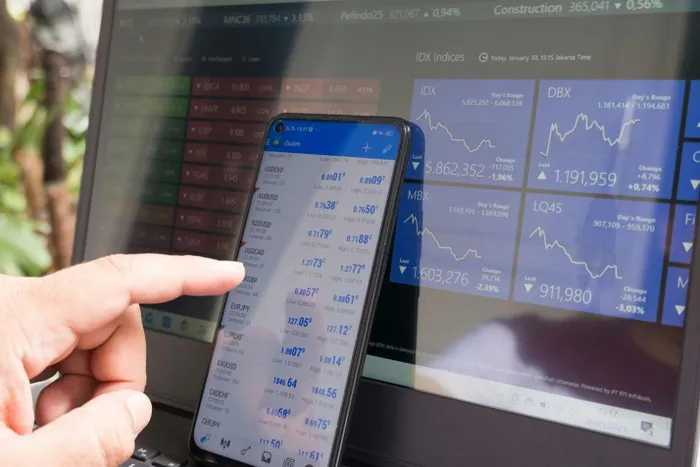
As US-Iran peace talks collapse, South African forex desks brace for a turbulent market, with oil prices and the dollar influencing the rand's fate
Image: Supplied
South African forex desks are once again dealing with a market that feels nervous before the first coffee is finished.
The collapse of US Iran peace talks has pushed traders back into defensive mode, with oil prices, the dollar, and emerging market currencies all reacting to the same problem. When global tension rises this quickly, the rand rarely gets to sit quietly on the sidelines.
For traders focused on forex trading South Africa the pressure is easy to understand. South Africa is highly exposed to global risk sentiment, and the rand often reacts sharply when investors move away from emerging market assets. Add higher oil prices into the mix, and the story becomes even more uncomfortable because South Africa imports a large part of its fuel needs.
The result is a classic risk off wave. Traders reduce exposure, safe haven demand rises, and currencies like the rand can come under pressure even when local data is not the main driver. It is like watching a storm roll over the Indian Ocean. It may begin far away, but Durban still feels the wind when conditions shift.
Why the rand feels the shock first
The rand is one of the most actively traded emerging market currencies, which makes it sensitive when global investors want to adjust risk quickly. When peace talks fail and uncertainty increases, many funds move toward the US dollar and away from higher risk currencies. That shift can hit USD/ZAR fast.
South African traders have seen this pattern before. A geopolitical headline breaks, oil jumps, the dollar firms, and suddenly the rand gives back recent gains. Why does it happen so quickly? Because global desks often use the rand as a liquid way to express broader emerging market risk.
For local traders in Johannesburg, Cape Town, and Pretoria, this means the chart can change direction before the full political details are even understood. The rand becomes a pressure valve for global anxiety. Once that valve opens, price action can move harder than expected.
Oil adds pressure to South Africa’s outlook
Higher oil prices are especially important for South Africa because fuel costs feed directly into inflation, transport expenses, and household pressure. When Middle East tension threatens energy supply, traders immediately start thinking about what that means for the rand, local inflation, and future policy choices.
A spike in oil can act like an extra tax on the economy. Commuters feel it at the pump, businesses feel it in logistics costs, and investors feel it through weaker sentiment. You might notice how quickly local market conversations shift from politics to petrol when global crude prices rise.
This is why South African forex desks pay close attention to the Strait of Hormuz and wider Gulf stability. Even if the fighting is far from Africa, the oil route is close to the global economy’s heartbeat. When that heartbeat speeds up, the rand often starts breathing harder too.
The dollar becomes the market’s safe room
In risk off conditions, the US dollar often becomes the market’s safe room. Traders may disagree on politics, inflation, or central bank timing, but when fear rises, many still run toward dollar liquidity. That creates a second layer of pressure on the rand.
For USD/ZAR traders, this can make moves look one sided in the short term. The rand may weaken not because South Africa has suddenly changed, but because the dollar is being bought across the board. That difference matters. A trader who understands the driver is less likely to panic and more likely to wait for confirmation.
Think of it like traffic on the N1 during a sudden road closure. Everyone moves in the same direction at once, not because it is the best route, but because it feels like the safest. Markets behave the same way when geopolitical risk rises.
What local traders should watch next
South African traders should watch three things closely: oil prices, dollar strength, and the tone of emerging market flows. If all three point against the rand, USD/ZAR can remain under pressure. If oil cools and the dollar softens, the rand may recover some ground quickly.
Local data still matters, of course. Inflation numbers, SARB commentary, bond yields, and business confidence can all shape the rand’s path. But during a geopolitical shock, global sentiment often takes the steering wheel first. Domestic signals may only regain influence after the panic settles.
That is why traders should avoid treating every move as a simple technical breakout. A candle can look clean, but the headline behind it may be messy. In this kind of market, discipline matters more than excitement.
Conclusion
The collapse of US Iran peace talks has made South African forex trading more tense, more reactive, and more connected to global risk sentiment. The rand is being pulled by oil prices, dollar demand, and emerging market caution, all at the same time.
For South African traders, the opportunity is real, but the risk is just as real. This is not a market for emotional entries or oversized positions. It is a market that rewards patience, wider awareness, and clean risk control. When geopolitics shakes the room, the smartest traders do not just stare at USD/ZAR. They ask what is moving the whole building.