Mathematics: The doorway too many learners never get to open


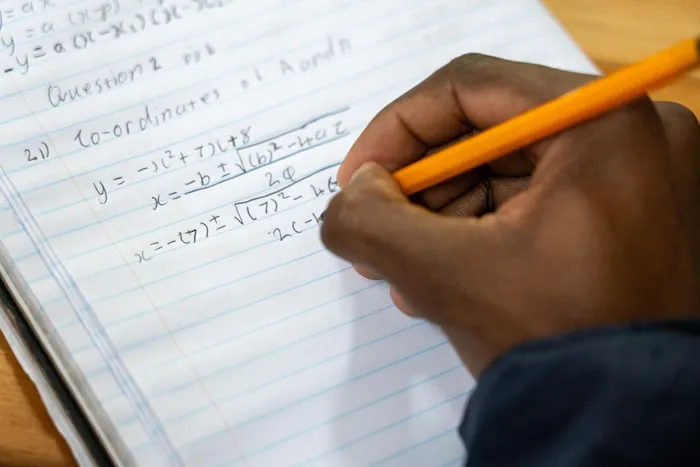
With 464 public schools in South Africa lacking mainstream Mathematics, the future of countless learners hangs in the balance, says the writer.
Image: Supplied
The revelation that hundreds of South African public schools do not offer mainstream Mathematics should alarm every parent, educator and policymaker.
According to recent figures, 464 public schools across the country do not offer Mathematics, including 61 schools in the Western Cape. This is not merely a curriculum issue; it is a matter of social justice and economic opportunity.
Mathematics is far more than a school subject. It is the gateway to some of the most sought-after and rewarding careers in the modern economy. Degrees in engineering, actuarial science, computer science, data science, medicine, architecture, information technology, and many other professions require Mathematics as an entry requirement. Learners who are denied access to Mathematics are effectively denied access to these career paths before they have even had the opportunity to make an informed choice about their futures.
The consequences are profound. A learner attending a school that does not offer Mathematics may possess the intelligence, determination, and ambition to become an engineer, software developer or scientist. Yet that learner's aspirations can be extinguished simply because the subject was unavailable at their school. Such a situation entrenches inequality and limits social mobility.
While Mathematical Literacy serves an important purpose, it is not a substitute for Mathematics when it comes to university admission requirements in many STEM-related fields. Learners and parents often discover this reality too late, when applications to tertiary institutions are rejected because the necessary Mathematics qualification is absent.
The long-term implications for South Africa are equally troubling. The country faces shortages of engineers, scientists, mathematicians, data analysts, and technology specialists. At a time when the global economy is increasingly driven by science, technology, and innovation, reducing access to Mathematics is akin to closing the door on future economic growth.
Every learner deserves the opportunity to study Mathematics if they are willing and able to do so. Education authorities must urgently investigate why schools have abandoned the subject and develop strategies to restore it. South Africa cannot afford to deny its young people access to the very subject that unlocks some of the most promising careers of the future.
Adiel Ismail, Mountview