Conference of the Left signals realignment in South African politics


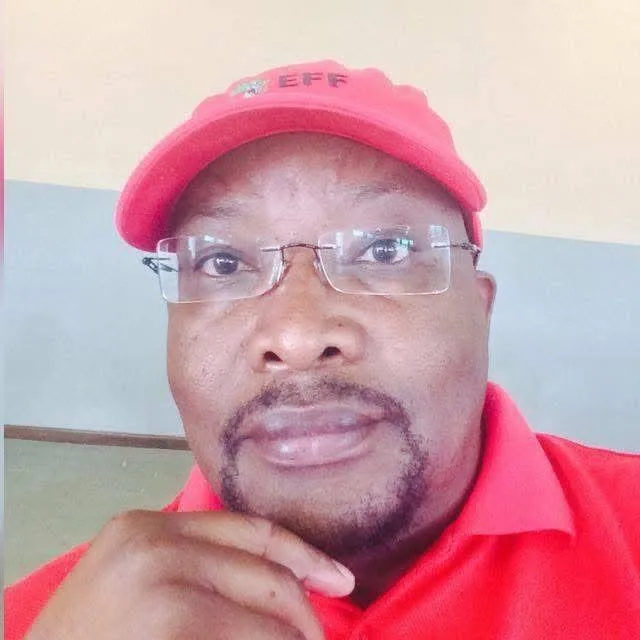
The Conference of the Left reflects growing dissatisfaction with South Africa’s political and economic direction following the ANC’s coalition government with the DA argues EFF Commissar Sam Matiase. The gathering brings together left-wing parties, unions and civic organisations seeking possible cooperation around socialism, working-class politics and economic transformation amid rising inequality, unemployment and political fragmentation.
Image: Supplied
Could the Conference of the Left mark the beginning of genuine left consolidation in South Africa? What has triggered this moment, and why now?
One of the most significant developments in South Africa’s post-apartheid political landscape was the emergence of the Economic Freedom Fighters in 2013. The formation of the EFF followed the expulsion of its president and commander-in-chief, Julius Malema, from the African National Congress and its Youth League.
Malema had become one of the most vocal advocates for radical economic transformation and left-leaning policies within the ANC tradition. Together with other young activists, he championed policies such as land expropriation without compensation, the nationalisation of strategic sectors and the commanding heights of the economy, as well as a more militant anti-capitalist posture.
His expulsion was intended to silence this radical current and curb prospects for its advancement. However, left-wing politics in South Africa did not begin with the EFF.
Historically, the South African Communist Party was one of the most influential left-wing forces in the liberation struggle. The late Chris Hani, an iconic figure associated with socialist politics and the armed struggle through Umkhonto weSizwe, symbolised the revolutionary socialist current within the movement.
Hani’s assassination in 1993 by Janusz Waluś underscored the extent to which communist and socialist ideas were viewed as a threat by right-wing forces during apartheid.
The apartheid government had earlier enacted legislation such as the Suppression of Communism Act, demonstrating that anti-communism formed a central pillar of its ideology. Throughout history, right-wing forces have often responded to leftist movements with repression, propaganda and violence.
Over time, however, the SACP became increasingly absorbed into the broader ANC-led alliance. Through the Tripartite Alliance — comprising the ANC, the SACP and the Congress of South African Trade Unions — the Communist Party gradually lost its independent organisational identity in the eyes of many South Africans.
Dual membership between the ANC and SACP further blurred ideological lines, reinforcing the perception that the SACP functioned largely as an internal ideological wing of the ANC rather than as an autonomous revolutionary force.
The 2024 general election dramatically altered this arrangement. The ANC suffered one of its most severe electoral setbacks in democratic South Africa, losing its parliamentary majority for the first time since 1994.
This decline was accelerated by the emergence of the uMkhonto weSizwe Party, led by former president Jacob Zuma, which successfully mobilised disillusioned black voters, particularly those dissatisfied with the ANC’s leadership and direction.
In response to these losses, the ANC entered a Government of National Unity, primarily with the Democratic Alliance. This move intensified ideological tensions within the liberation movement and among alliance partners.
For many on the left, the GNU represented not merely a tactical arrangement, but a deeper ideological shift towards liberal constitutionalism, market orthodoxy and accommodation with capital.
This development inevitably raised a critical question: could a communist party continue aligning itself with a government increasingly associated with neoliberal governance and centrist coalition politics?
From a revolutionary socialist perspective, the answer increasingly became no. Consequently, the SACP’s decision to contest elections independently for the first time represents a historic rupture within the liberation alliance.
This rupture carries profound implications not only for the ANC, but also for organised labour and broader working-class politics.
COSATU itself has shown growing discomfort with its continued association with the ANC under the GNU framework. Declining worker confidence, organisational weakening and reduced mobilisation capacity point to a deepening crisis in traditional labour politics.
COSATU now faces a strategic choice: either redefine itself as an independent, militant working-class federation or risk long-term political irrelevance.
Against this backdrop, the SACP’s call for a “Conference of the Left” at Birchwood in Boksburg has emerged as a potentially historic intervention.
According to its stated objectives, the conference aims to confront worsening material conditions facing the working class in South Africa, across the African continent and globally. These conditions include rising unemployment, poverty, inequality, austerity measures, privatisation and the continued dominance of monopoly capital despite the democratic breakthrough of 1994.
Importantly, the conference frames South Africa’s crisis as fundamentally a crisis of capitalism. It argues that only organised working-class power can chart a genuine path towards liberation and socialism.
In this sense, the conference is not merely a gathering of organisations, but an attempt to reconstitute left politics in a rapidly shifting political environment.
The diversity of participating organisations is particularly noteworthy.
The conference reportedly brings together political parties, trade unions, civic organisations, student and youth formations, NGOs, traditional structures, left-oriented think tanks and international participants.
Among those expected to attend are the EFF, the MK Party, the National Education, Health and Allied Workers’ Union (NEHAWU), the National Union of Metalworkers of South Africa (NUMSA), the Association of Mineworkers and Construction Union (AMCU), the Pan Africanist Congress of Azania (PAC), the Azanian People’s Organisation (AZAPO), the South African National Civic Organisation (SANCO) and CONTRALESA, representing traditional leadership.
Prominent ANC figures such as Nkosazana Dlamini-Zuma and Lindiwe Sisulu have also reportedly expressed support or interest.
Among the prominent individuals and foundations expected to participate are Moeletsi Mbeki, Prof Patrick Bond, Prof Maserumule, Muzi Sikhakhane, Dr Pali Lehohla, the Nelson Mandela Foundation, the Moses Kotane Foundation and the Joe Slovo Foundation.
International fraternal organisations include the Socialist Party of Zambia, the Communist Party of Greece, the Portuguese Communist Party, PUDEMO and several others.
This raises a fundamental theoretical and political question reminiscent of Lenin’s What Is to Be Done?: Is South Africa witnessing the early stages of left consolidation?
While ideological differences among participating organisations remain substantial — particularly on questions of nationalism, socialism, Pan-Africanism, electoral strategy and the role of the state — the conference nevertheless signals a growing recognition that fragmentation on the left has strengthened neoliberal and centrist forces.
The possibility of tactical cooperation among left-leaning organisations could therefore herald the emergence of a new political bloc capable of reshaping opposition politics in South Africa.
For the ANC and the DA, such a development would pose a serious challenge. The ANC risks losing even more of its traditional working-class support base, while the DA could become increasingly identified with defending the status quo within the GNU.
Should a coherent left alternative emerge, it could fundamentally alter the ideological terrain of South African politics in the years ahead.
Whether the Conference of the Left becomes a genuine vehicle for left unity or remains merely another symbolic gathering will depend on its ability to move beyond rhetoric and achieve organisational coherence, ideological clarity and effective mass mobilisation.
Nevertheless, its emergence reflects a deeper crisis in South Africa’s post-apartheid political order — one marked by declining trust in established institutions, intensifying socio-economic inequality and renewed debates about socialism, nationalism and the future of democratic transformation.
**EFF Commissar Sam Matiase is a member of the Central Command Team of the EFF and an EFF member of Parliament.
*** The views expressed here do not necessarily represent those of IOL or Independent Media.