When unelected wealth governs development priorities


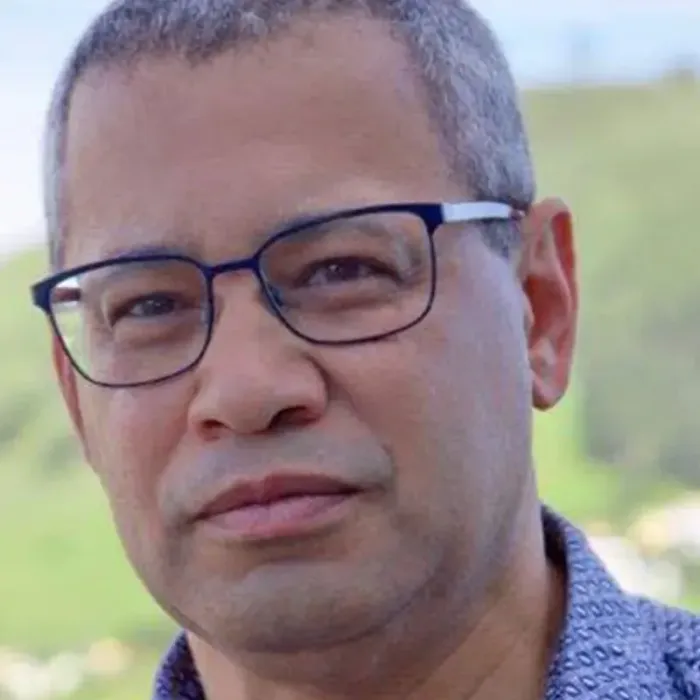
Lorenzo Davids is the Executive Director of Urban Issues Consulting.
Image: Supplied
I have had Prof Raghuram Rajan’s book ‘The Third Pillar on my shelf for almost 7 years now. I have given copies to a South African premier, an MEC for Social Development, and to philanthropy and NGO CEOs.
It’s a disturbing account about who decides what matters. Increasingly, development slogans like "communities matter" and "people first" no longer hold any truth. Like a slow cancer, constellations of foundations, donors, multilateral institutions, academic and expert networks have become a ‘Central Committee’ determining the future of countries and their people.
Without ballots or public mandate, this new unelected, global “Central Committee” has emerged - one that demands efficiency and urgency through grants, frameworks and funding priorities rather than laws and decrees. History warned us about the dangers of Central Committees: small circles convinced that their expertise confers on them, the few, the right to decide for millions.
History tends to show that every age develops its own central committee. Unlike the old Soviet Central Committee or today’s White House, the central committee of the philanthro-empire issues no decrees. It governs through grants, development frameworks and self-identified funding priorities.
Our age has built new versions of the central committee, dressed not in party uniforms, but in the language of impact, evidence and philanthropy. They wear no ideological badge. It speaks the language of systems change and measurable impact yet quietly determines which problems matter and whose voices count – and whose don’t. Unelected, transnational and occasionally benevolent - their power lies in deciding what humanity’s priorities ought to be.
Prof Rajan warned us that markets and states will band together, concentrating their power while “leaving the periphery to decompose.” The question for our age is whether global philanthropy, with all its resources, is intentionally participating in this quiet transfer of agency from community to this new central committee? Has philanthropy become a pseudo-state agency, using its proximity to power to enforce the demands of philantrocapitalism? The word first appeared in a 2006 article in "The Economist" called "The Birth of Philanthrocapitalism." Later a book was birthed titled "Philanthrocapitalism: How the Rich Can Save the World by Matthew Bishop and Michael Green. Just the title should send shivers down the spines of every developmental activist and economist.
Global philanthropy is heavily concentrated – it’s a relatively small cluster of large foundations - mostly based in the United States and Europe. However, they hold enormous assets and shape agendas in health, education, agriculture, democracy, climate and development. This means that private wealth accumulated in specific economies for philanthropic distribution increasingly has the significant power to influence developmental, political and economic priorities in poorer countries. All of this raises the question: When foreign aid agencies spend billions on educational or agricultural technologies, vaccine types, or digital systems in a particular country, does it indirectly shape what governments, NGOs, and universities prioritise?
The most powerful people shaping childhood, health, food security, education and development across the world are not presidents, ministers, voters or communities. They are philanthropy trustees, their CEOs and their finance partners. While the world was busy applauding wealthy donors as “social investors,” unease has developed around issues such as this growing global central committee and, most importantly and most dangerously, its agenda-setting power. Large foundations often influence agendas beyond their money. Local agencies merely become implementers rather than agenda setters. Are we on the verge of seeing the birth of the philanthro-empire – a global network of countries and their politicians and economies funded and influenced by philanthrocapitalism? For who governs when governance shifts from democratic institutions to networks of philanthropic money?
While most problems in the world today are structural – it's built into the design of the political and economic system – philanthropic agencies are underinvesting in the structural transformation of that system, while still expecting that occasional charitable donations to the poor will provide long-term stable democracies, productive economies, and peaceful communities later. What one gleams from the current system of philanthropic investment is that poor people’s children up to the age of 6 are generally the principal targets of philanthropy, not the structural crisis that produces their poverty and the accompanying crises they will face later in life. After age 6, these children are mostly abandoned. Gangs then nurture them, and the institutional structure welcomes them into poverty, crime and drugs, because we have an education system that produces credentials but not have the courage to change the system.
I am always surprised by the funding for all kinds of Western-identified compassionate projects, such as health care, food programmes, and climate change initiatives; priorities that are all good. But there is often a reluctance to invest in institutional, economic, structural, and democratic independence-strengthening reforms.
The state and its economic and philanthropic partners know the system is bad and that the problems are structural. We can all see the mass privatisation of education, health and community spaces. They have protected themselves from the structural flaws and systemic failures of the state and its social and economic partners. The poor have no such protection. They enter the system, believing they will be educated, loved and fed, only to be abandoned on their way to this promised future. South Africa is littered with philanthropic rands that did not reach the finish line. Philantrocapitalism has its own ranking, one that serves its own economic interest. The motto is: only help the deserving poor, the poor with potential, the poor who are good for our message and marketing.
Rajan writes that “people in developed democracies, engaged in their communities and thereby organised socially and politically, enforce the necessary separation between markets and the state through their democratic voice.” The poor in democratic states face something different. They are at risk of suffering a coup by the philanthro-empire and its philanthro-capitalists. The aid industry, instead of giving them a voice, now speaks for them. Their voice doesn't exist anymore. Their structural exclusion by the state, the markets, and the aid industry has left them with a sense of democratic exhaustion. They don’t believe, nor do they talk anymore.