Cape Town's housing crisis needs urgent action


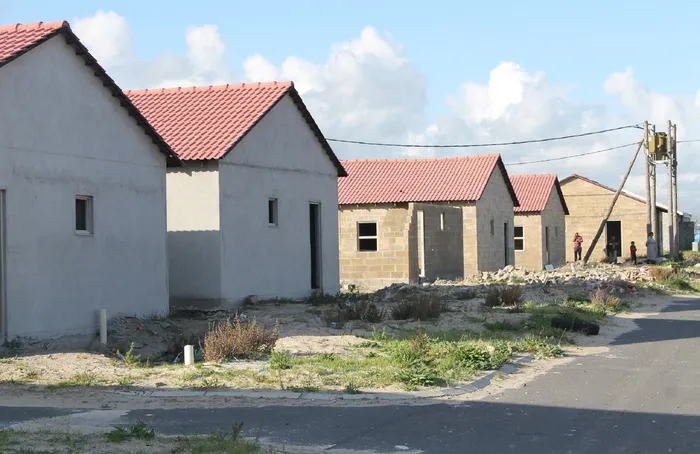
Cape Town's housing waiting list has grown beyond 612 000 names, says the writer.
Image: File
Thirty years into our democracy, one in five Capetonians still wakes up in a shack.
Cape Town now stands at a point of decision. The city can either pursue genuine spatial transformation or continue cycling through elegant plans that do not change our people's lives. The decisions taken now will shape the next generation of urban life in this city.
Cape Town presents itself as South Africa's urban success story. Investors arrive from across the world. Restaurants collect international acclaim. Luxury apartments rise along the Atlantic Seaboard.
Property prices climb faster than wages and entire neighbourhoods are being converted into investment assets for global capital. At the same time, the housing waiting list has grown beyond 612 000 names. Behind that number are ordinary households. Families rent backyard rooms in Langa, Delft and Lotus River.
Many pay R800 or R1 200 for a single room without proper sanitation. Taps are shared between multiple households with no flushing toilets. They cannot wait for distant allocations in five or ten years. They are trying to survive today.
A domestic worker cleans an apartment in Sea Point and travels home by Golden Arrow Bus to Khayelitsha. A nurse finishes a night shift at Christiaan Barnard Memorial Hospital and spends hours changing taxis before reaching Delft. A teacher born in Woodstock can no longer afford to rent in her own childhood street.
Their stories are the daily struggles of a city whose prosperity increasingly depends upon excluding the people who sustain it. Cape Town does not face an ordinary housing shortage. It faces a critical emergency rooted in geography, economics and political will.
The City's current Integrated Development Plan disperses affordable housing across disconnected departments with limited budgets and weak enforceability.
The scale of the crisis now demands something far more serious: a standalone Affordable Housing IDP for the 2027 to 2031 cycle, backed by protected budgets, enforceable delivery timetables and statutory obligations capable of surviving political turmoil.
The next IDP will be drafted in 2027 immediately after the 2026 local government elections. The decisive choices shaping it are being made now, before coalition bargaining reduces long-term planning to short-term trade-offs.
The central demand is straightforward. Release public land in good areas for social housing with enforceable targets written directly into the IDP.
A rare opportunity has now emerged, possibly the only one of its kind in a generation. The National Department of Public Works has begun advancing the release of two major public mega-sites, Wingfield and Youngsfield. These are not ordinary land parcels.
Youngsfield sits within the southern suburbs close to established infrastructure, schools and economic activity. It can accommodate 90 full-sized soccer fields. Wingfield, close to Century City, is positioned near key transport corridors and employment nodes. It is large enough to fit the Cape Town CBD and the Foreshore within its boundaries.
A dedicated IDP would change this trajectory. It would align national land release with municipal planning. It would link infrastructure investment to delivery timelines. It would secure affordability conditions that cannot be quietly weakened over time. Without such a framework, Wingfield and Youngsfield risk becoming another missed opportunity. Khayelitsha lies roughly thirty-five kilometres from the CBD. Delft is about twenty-five kilometres away. Mitchells Plain stretches nearly thirty kilometres from the city's economic core. Those distances were not created by geography alone.
Apartheid planning deliberately pushed black and coloured working-class communities to the urban periphery so that labour could service the city by day while remaining spatially separated from opportunity.
Democratic Cape Town did not create that geography. It has, however, preserved much of it through prioritising market-led development and the continued disposal of well-located public land almost exclusively for high-end development.
A dedicated housing IDP should establish a publicly auditable pipeline of municipal land reserved for affordable housing with clear release dates and affordability bands linked to real household incomes rather than detached market benchmarks.
Cape Town must adopt a Social Value Test for public land disposal. The measure of success has to shift from short-term revenue to long-term public benefit if we are to build a truly inclusive city. Mandatory inclusionary housing requirements should apply to major private developments in high-demand areas.
Developers in Sea Point, Green Point and the Waterfront should be required to contribute a fixed percentage of the planned construction cost to a dedicated municipal affordable housing fund. Publicly generated wealth from urban development cannot continue to exclude the majority of residents from the city it shapes.
Neither the market nor the state acting alone will resolve this crisis. Expecting fully state-funded delivery to resolve the backlog is not realistic. The City faces fiscal constraints, infrastructure backlogs and limited delivery capacity. Cape Town therefore requires a more balanced model of development that aligns public land, private investment and organised community participation. Working-class communities already hold significant forms of value that formal development systems routinely ignore.
International cooperative housing models show that where residents participate in building and maintaining their own communities, vandalism declines, maintenance improves and social cohesion strengthens. Cape Town should integrate this approach through community housing cooperatives linked to municipal land release programmes.
Government would still provide land, bulk infrastructure and planning coordination. Private finance and social housing institutions would still play a central role. Communities would then become active development partners rather than passive beneficiaries.
This approach is particularly relevant at Wingfield and Youngsfield. These areas should form the backbone of a new mixed-income housing strategy built around long-term affordability and spatial inclusion. Housing developments should also function as economic infrastructure. Ground-floor commercial space, community markets, workshops, backyard rental units and urban agriculture should be integrated from the outset rather than added later.
Structured development programmes could simultaneously create employment and skills pipelines for young people across the Cape Flats in construction, plumbing, electrical work, roofing and solar installation. Housing delivery would then function not only as shelter provision but as economic development. Affordability does not end at housing costs. Electricity has become one of the most significant burdens on low-income households already facing transport and food inflation.
Cape Town's efforts to reduce dependence on Eskom and secure cheaper electricity are therefore central to housing policy.
The next IDP should integrate housing and energy planning through investment in cheaper municipal electricity, embedded generation and targeted support for qualifying households. Shelter without energy security remains incomplete dignity.
Global cities eventually discover that competitiveness erodes when essential workers can no longer afford to live where they work. London faces this pressure. San Francisco has reached a point where hospitals and schools struggle to recruit staff because housing costs exceed professional salaries. Cape Town risks following the same trajectory without the fiscal cushion those cities possess.
Communities preparing for the 2026 election should frame their demands as a Community Development Compact presented to all candidates before voting day. Every candidate should be asked directly whether they support an affordable housing plan with enforceable land release targets, funded informal settlement upgrades and tiered affordability across income groups. Ward committees must be strengthened so participation carries real influence rather than functioning as procedural consultation. The minimum credible commitment is a twenty-year Spatial Transformation Framework with cross-party support, five-year milestones, independent monitoring and public reporting. Without it, housing transformation will remain out of reach.
Communities must organise early enough to shape the next IDP before it becomes politically fixed. Affordable housing must be recognised not as welfare but as vital to Cape Town's democratic legitimacy, social stability and economic future.
Cape Town has already proven it can attract investment. The next test is whether it can remain a city for the people who already call it home.
* Cassiem is a Cape Town resident