Why we must transform mineworkers from data subjects to active partners


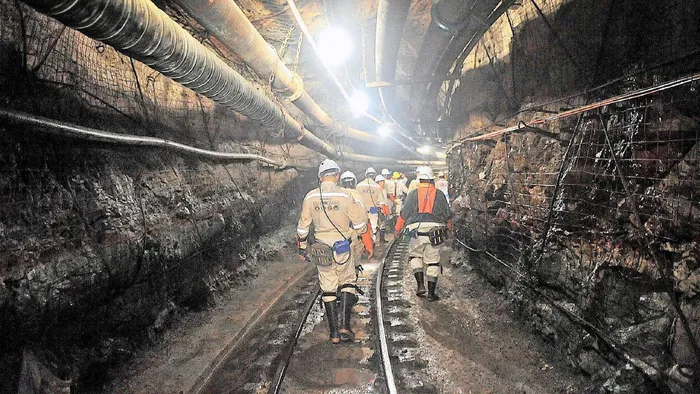
Mining is an industry that has long relied on manual labour, and it is likely to remain so for the foreseeable future, says the writers.
Image: Itumeleng English/Independent Newspapers
Mining remains a key economic driver worldwide, yet the sector faces major challenges in improving the safety of mineworkers and operational efficiency amidst the growing adoption of technology. The sector is wrestling with a profound paradox as mines are becoming more automated and connected.
Although the fourth industrial revolution (Industry 4.0) provides unprecedented opportunities to digitise mining operations, human beings at the centre of this transition – 450 000 workers in South Africa alone – remain vulnerable. Despite the introduction of “smart” sensors, the mining industry reported over 2 000 injuries and 74 fatalities in 2021.
As we mark Workers’ Day on 1 May, we must confront an uncomfortable truth: while we have digitised our machines, our people are often treated as passive data subjects rather than active partners in safety-critical systems.
Our recent research into the Mineworker Administration Shell (M-AS) – a digital integration mechanism to improve the monitoring and coordination of mineworkers in underground mines – highlights a need for a fundamental shift in how we integrate humans into “Smart Mines”.
To improve the safety of mineworkers, we propose moving away from isolated, stand-alone wearable gadgets toward human-centric technologies through human cyber-physical systems (HCPSs), that is, systems that bring people and technology together to work collaboratively.
Shortfall of stand-alone safety
Current safety technologies often rely on “smart” helmets or Internet-of-Things-enabled jackets. While these are valuable, they frequently function as data silos. A helmet might beep if it detects methane, but if that alert isn't systemically integrated into the wider mine control architecture, we are missing an opportunity for proactive, coordinated safety responses.
Furthermore, the underground environment is notoriously hostile for standard Industry 4.0 technology. Wind speed and sensor orientation in underground tunnels can have an impact on the accuracy of low-cost sensors. A robust safety system cannot simply be a passive data logger; it must be capable of actively processing reliable data streams to provide a true representation of a worker’s health and safety status.
Empowering “Mineworker 4.0”
We shouldn't view technology as a tool to replace people, but to enhance their skills. In the vision of “Operator 4.0” (a tech‑augmented human worker), the mineworker is an augmented operator whose abilities are enhanced by digital tools.
The M-AS concept, built on the BASE (Biography-Attributes-Schedule-Execution) architecture, provides every worker with a digital representative in a mine’s information system. This is not just a digital twin for simulation; it is a decentralised, active software tool that can negotiate safety constraints and coordinate actions directly within the operational loop. The BASE architecture categorises worker data into four parts:
- Biography: A record of past events that serves as a reliable external memory.
- Attributes: Static or slow-changing personal metrics used for personalisation.
- Schedule: Management of future activities and allocation of tasks.
- Execution: Real-time information on the worker’s current state.
Evidence from SIMLAB
We developed an HCPS to bring the M-AS concept to life. To test this system, we replicated an underground mining scenario at the Smart Integrated Mining Laboratory (SIMLAB) at Stellenbosch University. We simulated three 8-hour shifts to see if the M-AS could handle both day-to-day operations and emergency scenarios.
The results of our experiments were compelling. The M-AS successfully monitored heat stress and automatically updated a worker’s activity readiness status. If thresholds were exceeded, the system didn't just log it; it informed the scheduling process that the worker was no longer eligible for the next shift.
The system also demonstrated its ability to move beyond the passive monitoring of a gas leak to active coordination. Upon detecting the leak, it initiated a phased evacuation, sending direct instructions to workers’ interfaces and requiring acknowledgements that were relayed back to the central coordination process.
Path forward
Critics may fear that deep integration will lead to a “dystopian” workplace where workers are mere cogs in a machine. However, the goal of a human-centric M-AS is the opposite: it aims for a “socially sustainable” workplace where technology supplements human skills and improves working conditions.
The technical feasibility is already there. Our experiments showed that the system uses minimal computational resources and operates quickly (mere milliseconds), ensuring that safety alerts are virtually instantaneous. However, it’s important to note that such systems must be adapted to each specific site. There is a big difference between a laboratory and deep-level mines. We need a phased adoption strategy to:
- Pilot deployments in non-production training areas to validate the resilience of the network.
- Engage with actual mineworkers to ensure interfaces are usable and the technology is accepted.
- Fully integrate the M-AS with existing resource planning systems to create a holistic safety architecture.
Mining is an industry that has long relied on manual labour, and it is likely to remain so for the foreseeable future. We owe mineworkers more than just a wearable sensor that beeps when they are already in danger. We must provide them with a digital lifeline, a systemic, integrated representation that proactively manages their safety. The M-AS is not just a technical upgrade; it is a moral imperative for the modern mine.
*Sa’eed Fataar, Karel Kruger, Anton Basson and Nicole Taylor are affiliated with the Department of Mechanical and Mechatronic Engineering at Stellenbosch University.