The case for a Government of national maturity


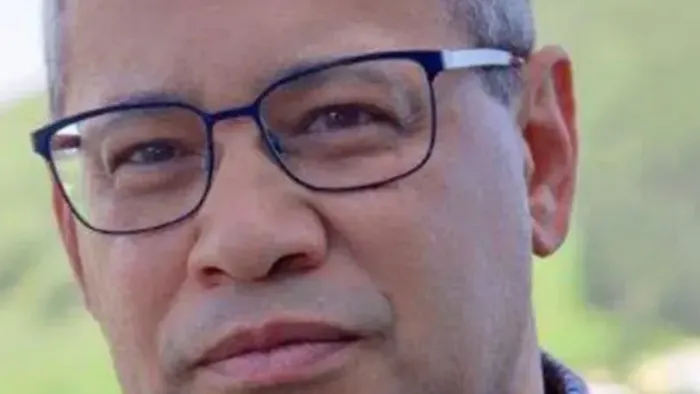
Lorenzo Davids is the Executive Director of Urban Issues Consulting.
Image: Supplied
Any generalisation is unfair. It’s often a suspension of reason and an oversimplification of experience in an attempt to establish fact. That makes that ‘fact’ a lie. “The war in Iran is over. We won.” “Everyone in the ANC is corrupt. Don’t vote for them.” “The DA is racist. Don’t vote for them.” All lies.
The voting public seeks a trustworthy political leadership that brings integrity and an inspirational political vision, baptised in frankness and honesty, to the work of building a lean high-functioning State. Political parties, however, seem to be dumbing down on a failed past: government bloatedness, soundbites filled with inane stabs at the opposition, and the tired offering of a single party that will solve all our problems.
South Africa’s political future lay within a Government of National Unity, for at least the next 25 years. Our diverse political realities require it. A GNU is very different in aspiration and sentiment from a coalition government. It seeks to make democracy meaningful for each constituency that aspires to a political reality that preserves democracy and its values. Everyone is recognised within a government of national unity, whereas coalitions often exist only for those inside them. Nation-states like Denmark have 12 to 13 political parties, and three of them form the Danish coalition government.
As of late 2025, South Africa has 508 registered political parties, according to the Independent Electoral Commission. This total includes 295 parties registered to contest at the national level and 404 registered at the local level. The reason for this is partly because we have immature ideological and ethno-cultural obsessions, a leftover from the early 1900s, when two wars failed to bring reason to ideological contestations.
The world wars of 2026 have inserted presidential power and ego as the new poison into these perverse ideological battles. The Russia/Ukraine war is about a president’s egotistical ambitions to have his will imposed. Israel and Iran are similar. Does a war-mongering Benjamin Netanyahu get to destroy Gaza and Iran for his own display of power? Does Iran get to continue to restrict its citizens’ political existence and freedoms within the constraints of the Islamic Republic's undemocratic, clerical framework, which has led to at least 1639 death penalties executed in 2025, of which 13 were public executions?
The war in Sudan is entering its fourth year in April 2026. It is potentially the most neglected humanitarian calamity in the world. The war between the Sudanese Armed Forces and the Rapid Support Forces has caused massive displacement, accusations of genocide and has resulted in over 30 million people requiring aid. Two leaders, Abdel Fattah al-Burhan, Chairman of the Sudanese Sovereignty Transitional Council, and Mohamed Hamdan Dagalo, military leader of the Rapid Support Forces, cannot agree on how power should be shared in that war-torn country, following the 2019 coup that removed long-time dictator Omar al-Bashir. Fragile egos have inflicted unimaginable harm on the existence of the Sudanese people and destabilised an entire region.
Donald Trump joins this rogues' gallery of war-mongering, fragile egos. With his obsessive penchant for awards, he gets the ‘Most Fragile Ego’ Award. Supporting Fragile Ego Awards for these lingering global crises that place almost a billion people and the global economy at risk falls to a dithering NATO, the United Nations, and the African Union. NATO did not have the guts to prevent war – they all went the “we don’t want to get involved” route.
They did not close their airbases to the USA. Spain was the only country to spit out its paella and shout ‘En absoluto!’ They stated that the war on Iran was “profoundly illegal and profoundly unjust.” NATO and the UN’s "we don’t want to get involved” approach and the AU’s incoherent fumbling on Sudan have made these wars lingering human rights disasters that will have an impact on our global wellbeing for decades to come.
My point with this diatribe is this: Geordhin Hill-Lewis should go to parliament. As the new DA leader, he owes the country an anti-egotistical, anti-power-drunk and anti-party-obsessed style of leadership. It’s not about the blue – it’s about whether he leads a party that understands this moment in our history and what is needed.
He needs to face Cyril Ramaphosa in regular debate. He needs to build a vision for voters that he is sober-minded and principled, unlike the ANC, and non-egotistical, unlike some of his immediate predecessors. He needs to build a vision in voters' minds of a country that can thrive beyond narrow party ideological obsessions, unlike the ANC, which still sells a party that deeply betrayed people as the solution.
Hill-Lewis has a lot of party drag that might hold him back, limiting his ability to take off. The appointment of Ryan Coetzee is one such possible drag on his momentum to launch his vision. I would even suggest that it's one of Hill Lewis early mistakes. Instead of looking forward, Hill-Lewis harked back.
Coetzee was one of the architects of the DA’s negative campaign strategy, starting with the 1999 ‘Fight Back’ campaign that left a sour taste in many voters’ mouths. In her 2015 paper “Reproducing Toxic Election Campaigns: Negative Campaigning and Race-Based Politics in the Western Cape," Prof. Cherrel Africa from the University of the Western Cape quotes research that refers to these DA slogans as “’polarising', ‘fearmongering’ and ‘alarmism’.” Coetzee went on to be appointed by the UK’s Liberal Democrats leader Nick Clegg as its 2015 elections head. The consequence? The Lib Dems lost 49 of the 57 seats they held. Coetzee is viewed by many as having guided the party into oblivion.
We need a political party leader who can move beyond harking back to a past that did not work, beyond the dominant egos and petty party politics. Hill-Lewis should lead from the front. We need an ‘¡En absoluto!’ attitude from him, especially towards the drag in his own party.