Cape Town needs leadership that faces reality


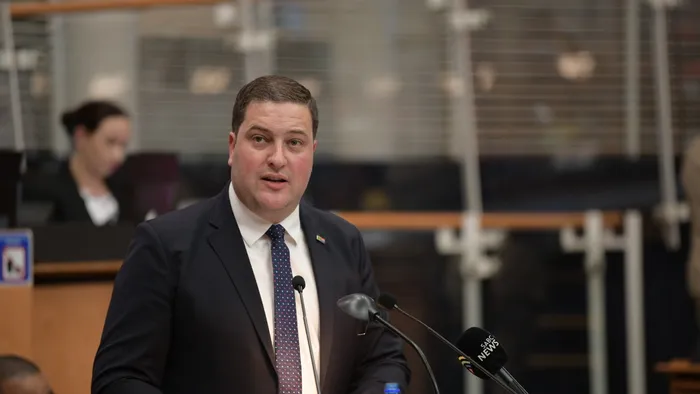
Cape Town Mayor Geordin Hill-Lewis has defended the City’s approach to housing supply as affordability challenges persist, says the writer.
Image: File
Mayor Geordin Hill-Lewis recently won a debate that almost nobody in Cape Town was having. He bravely denounced failed, Berlin-style rent freezes, while neatly sidestepping the actual housing crisis unfolding under his watch.
The Mayor is correct that blanket rent control fails. The international evidence on this is settled and it takes a certain political courage to say so plainly in a city where housing anxiety is running high. However, after having won that point, the Mayor appears to believe the debate is over. It is not. He has simply avoided the harder conversation.
The question was never whether to impose failed rent freeze policies. The more pertinent question is: what can a city do for its residents when living costs are rising faster than incomes, and when supply-side solutions will not materialise in time to help households facing decisions right now? On that topic, the Mayor offers little.
The numbers are stark
Cape Town is not facing a hypothetical affordability risk; it is already deep into one. The latest municipal valuation roll recorded property value increases of 15–20% on average.
Municipal tariffs and fixed charges continue to rise above inflation. Median rents in the Western Cape hover around R12 000 per month, while national wage growth remains stagnant in an economy with unemployment above 30%.
These pressures do not operate in isolation. They compound. A household absorbing a rent increase, higher rates on a revalued property, and stagnant income is not experiencing a temporary inconvenience. It is experiencing a structural squeeze, one that accumulates quietly until relocation becomes unavoidable.
The City can point to approval pipelines and development frameworks, but those are not answers for households deciding where to live in 2027.
Supply is not sufficient
The Mayor's prescription is, at its core, a single answer: increase supply. In the medium term, that prescription is right. Cape Town needs significantly more housing stock and the City does deserve credit for moving faster on approvals and densification than most other metros. However, this policy has an unavoidable time lag. Even under accelerated conditions, meaningful new stock only reaches the market after years. The families being priced out of Gardens and Goodwood are not waiting for the 2029 housing pipeline; they are making decisions now.
A policy that solves affordability in five years while ignoring displacement today is not a housing strategy. It is a deferral. The honest acknowledgement the Mayor has not made is this: we need supply and we need short-term stabilisation measures, because one cannot substitute for the other.
What stabilisation actually means
To be clear: stabilisation does not mean freezing rents. It means publishing annual guideline increases and requiring justification for increases above that threshold. Tenants remain free to negotiate downward. Landlords remain free to set initial rents and are allowed one large "catch-up" increase at vacancy, rather than being incentivised to hit tenants with annual double-digit hikes throughout a tenancy.Versions of this framework exist in Scotland, Oregon, and in Berlin's current post-litigation regime. This is not radical; it is disclosure and fairness. While rent stabilisation does carry risk, some marginal investment projects may not go ahead, Cape Town is not struggling to attract capital. It is struggling with a crisis of displacement.
Any stabilisation measure should include a "sunset clause" tied to vacancy rate triggers. When citywide vacancy exceeds 5%, the guidelines expire. The goal is not permanent control. The goal is a bridge.
The spatial shift is already happening
The structural reshaping of the city is already underway, and it is not easily reversed. Well-located areas are being progressively consolidated by high-income earners, investment buyers, and short-term rental operators.
Middle-income households—most often teachers, nurses, and young professionals—are being pushed further from employment and community networks.
This is not a market "correcting" itself. It is a filtering system selecting for wealth and excluding everyone else. Once that spatial sorting hardens, and the social fabric of a neighbourhood is replaced by transient occupation and speculative ownership, recovery becomes enormously difficult. The Mayor's supply argument assumes we have the luxury of time.
The evidence on the ground suggests we do not.
False binary is the real evasion
The Mayor frames the choice as "rent control versus free-market supply." That binary is a political convenience, not a policy reality. Every functioning global city with a serious housing challenge operates somewhere between those poles. New York uses rent stabilisation alongside aggressive upzoning.
Toronto applies primary-residence relief. Vienna has maintained social housing at scale for decades. Even Johannesburg is experimenting with inclusionary mechanisms.
None of these cities has solved affordability through supply alone, because supply alone does not prevent displacement. It may moderate price growth at the market boundary over a decade, but it does not protect the household facing a 10% rent increase next month.
The blind spot: homeowners and rates
There is a second affordability crisis the Mayor's framing ignores entirely: what rising municipal rates are doing to long-term homeowners. When property valuations rise by 20% while incomes do not, residents become asset-rich and cash-poor. A uniform rating system makes no distinction between an investor holding a portfolio and a retired nurse who has lived in her Pinelands home for thirty years. The effect is regressive; it taxes attachment and community embeddedness.
The fix: cap annual rate increases for primary residences at the lower of the valuation increase or nominal wage growth for the metro. Any deferred amount can be attached to the property upon sale rather than being payable by the current resident.
This is not a subsidy; it is a liquidity bridge. It ensures that residents aren't forced to sell the roof over their heads simply because their neighborhood became a popular investment destination.
What is needed from leadership
Leadership requires dealing with the problem in front of you, not only the one that fits neatly into a preferred policy framework.
A complete response would: 1. Stabilise costs in the short term through rent guidelines and primary-residence rate relief. 2. Accelerate supply in the medium term through land release and fast-tracked approvals. 3. Target instruments specifically where displacement pressure is highest. Mr Hill-Lewis is right Cape Town does need more supply, that demand reflects success. A city people want to live in is doing something right but success that progressively prices out the workforce required to run that city is not a story of prosperity. It is a story of a city eating its own foundations.
The Mayor is winning a debate against a ghost. While he fights "rent control," Cape Town’s middle class is being quietly hollowed out by a structural squeeze that supply alone cannot fix in time.
Cape Town does not need rent control. It needs rent stabilisation. It needs rate reform and it needs leadership willing to say that supply, however necessary, is not the only solution. The real risk is not bad policy; it is confident inaction dressed up as economic principle.
Leadership is not about winning the wrong argument. It is about facing up to the right one.
* Cassim is a Cape Town resident