Housing delivery in Cape Town: Facts over fiction


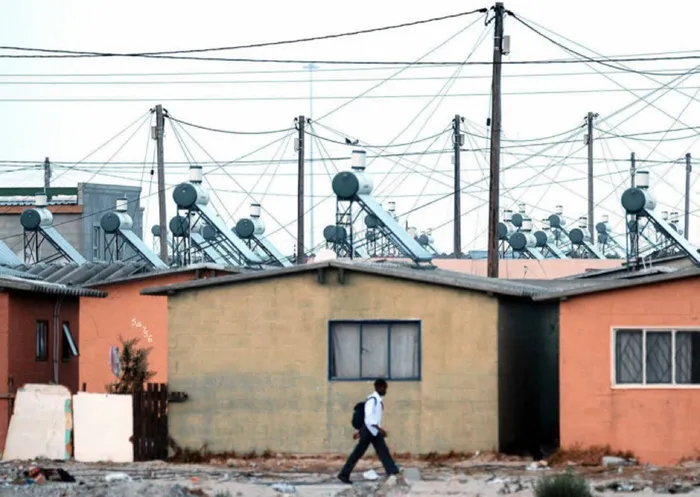
The provincial government has deliberately moved away from a model that measures success only in numbers, to one that measures success in opportunity, dignity, and long-term sustainability, says the writer.
Image: Henk Kruger/Independent Newspapers
Recent claims that housing delivery in Cape Town has “plummeted” make for convenient headlines, but they do not reflect the full reality. If we are serious about addressing South Africa’s housing challenges, we must move beyond selective statistics and engage honestly with the data, the context, and the policy shifts that are shaping delivery today.
The first and most important fact is this: Cape Town is growing rapidly, because it works.
The Western Cape continues to attract thousands of people each year, with approximately 15,000 people moving into Cape Town annually. They are choosing better governance, more reliable service delivery, and stronger economic opportunity. This is a positive story, but it comes with real pressure. Every year, new demand is added faster than historical backlogs can be eliminated.
No city in the world can immediately absorb sustained inward migration at this scale. So, when housing backlogs grow, the question cannot simply be how many houses were built. The real question is whether the system is responding responsibly to rising demand.
On that measure, Cape Town is not failing. It is absorbing success.
The second issue is the misuse of data. It is often claimed that housing delivery has declined when comparing the period between 1995 and 2006 with more recent decades. Yes, approximately 99,000 homes were delivered in that earlier period, and just over 100,000 subsidised opportunities have been delivered over the past two decades.
But this comparison ignores a fundamental shift in how housing is delivered.
Today’s environment is significantly more complex. Well-located land is scarce and expensive. Bulk infrastructure, like water, sewerage, and transport networks, must be upgraded before development can proceed. Environmental approvals are stricter. Community engagement processes are more robust. Legal compliance requirements are far more extensive.

Tertius Simmers, Western Cape Minister of Infrastructure.
Image: Murray Swart/Cape Argus
Most importantly, we have made a deliberate decision to move away from apartheid-era spatial patterns.
In the past, housing delivery focused primarily on volume, often building on the urban periphery, far from jobs and opportunity. While this approach increased numbers, it entrenched inequality by isolating residents from economic participation.
Today, our approach is different. We are focused on building integrated, sustainable human settlements. And that requires a different model.
This brings us to the real issue: the evolution of housing delivery.
We have deliberately moved away from a model that measures success only in numbers, to one that measures success in opportunity, dignity, and long-term sustainability. That shift is not a sign of failure. It is one of the most important reforms in housing delivery since 1994.
In practical terms, this means prioritising well-located development.
Projects such as the Prestwich Precinct in the Cape Town CBD, along with developments at Leeuloop and Founders Garden, are designed to bring residents closer to jobs, transport, and social amenities. These are not simply housing projects, they are instruments of economic inclusion.
We are also advancing the Rapid Land Release Programme to unlock underutilised state-owned land for development in high-opportunity areas. This ensures that housing is not only delivered, but delivered in the right places.
At the same time, the Western Cape is driving a R132 billion infrastructure pipeline, aligning housing delivery with bulk infrastructure, transport networks,
and economic growth corridors. Housing cannot exist in isolation. It must be supported by a broader system that enables communities to thrive.
Large-scale projects such as Welmoed, which will deliver more than 3,200 housing opportunities in its initial phase, and Ithemba, with approximately 2,400 opportunities, reflect this integrated approach. These developments are not quick fixes. They are long-term investments in sustainable communities.
Of course, there are real challenges. The most significant of these is affordability. Only a small percentage of households earn enough to access the formal housing market, while many do not qualify for fully subsidised housing. This “missing middle” represents a structural policy gap that cannot be resolved by local government alone. It requires national reform, including changes to funding instruments and housing finance mechanisms.
That is why we are actively engaging on reforms to the Urban Settlements Development Grant and exploring new partnerships with development finance institutions and the private sector. Addressing housing challenges requires collaboration, innovation, and alignment across all spheres of government.
The reality is this: housing delivery is one of the most complex functions in government. It involves land, infrastructure, finance, regulation, and community dynamics. Reducing this complexity to a narrative of “decline” is not only misleading, but it is also irresponsible.
We do not deny the scale of the challenge. But we reject the idea that progress should be measured only by speed, without regard for sustainability or inclusion. We face a clear choice.
We can return to a model that builds quickly, but far from opportunity, repeating the mistakes of the past.
Or we can continue building a city that is inclusive, integrated, and opportunity driven.
The Western Cape has chosen the latter. Because infrastructure is not an expense. It is an investment in dignity, confidence, and long-term opportunity. And in housing, as in all infrastructure, every rand must build the future.
* Simmers is Western Cape Minister of Infrastructure