Running on madness: Why ultra-runners are the real thrill-seekers


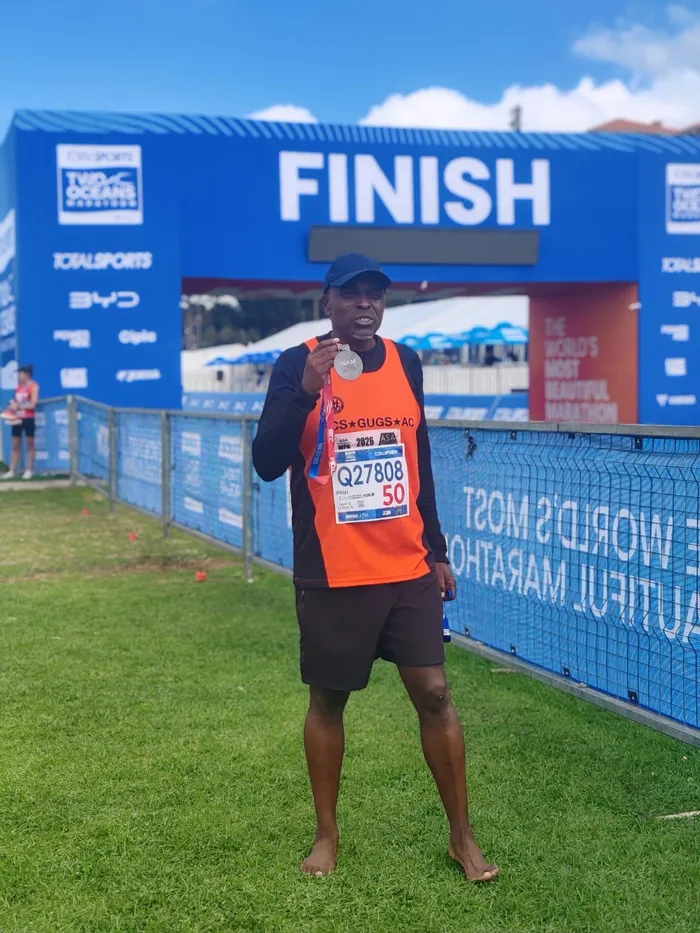
He who fears nothing, conquers. I conquered.
Image: Ntobeko Sisusa
Are runners normal people? What kind of person willingly wakes up at 3am to punish their body for a 5am, 56km ultra-marathon?
If that sounds irrational, that’s because it is. And yet, here I am—proudly claiming that so-called madness. I earned it at the Totalsport Two Oceans Marathon, and I wear it like a badge of honour.
Let’s be clear: runners are a different breed. Not better, just wired differently. While the world sleeps, they lace up. While others negotiate with comfort, they negotiate with pain. Whether it’s a slow 1km jog at 10am or a brutal pre-dawn long run, every runner deserves respect.
Discipline at that level is not normal; it’s rare and powerful.
At the start line, doubt showed up early. A tall man next to me joked about whether we should be checked into a psychiatric hospital for being there at that hour. I laughed, but deep down, I knew he was voicing what many of us felt. Because standing there, in the cold silence before the gun, you question everything. Your training. Your sanity. Your “why.”
Then the race starts, and all that noise disappears - only the sound of sneakers.
As a novice ultra-runner, I had one job: survive what I signed up for. The whispers about Chapman’s Peak and Constantia Nek weren’t exaggerations; they were warnings. And still, nothing prepares you for Constantia Nek.
Calling it a hill is generous. It’s a punishment. It’s like dragging a wheelbarrow full of bricks uphill while your legs beg you to stop. That’s where the race stops being physical and becomes brutally mental.
That’s where many break. I refused to. Last year, runners were cut off, and gates were closed on them before they could finish. That image stayed with me. I was not going to be one of them. So when my body emptied, when my legs turned heavy, and my lungs burned, I leaned on something deeper - resilience. Stubbornness. Pride. And the people.
Because no one tells you this enough: races like these are not just about runners. They’re about humanity; strangers shouting your name, communities lining the streets. Different races, different languages, one purpose, pushing you forward when you’re ready to quit. That energy carries you when your body can’t. Without them, I never would have made it.
So no, runners are not normal people. We are the ones who choose pain over comfort. Who chases something intangible; who finds meaning in suffering and clarity in exhaustion.
And now, I can proudly say: I am one of them. Call it madness if you want. I call it transformation.
And to the young people watching from the sidelines, this is your invitation, not a lecture.
You don’t have to run 56km. But you do have to choose something because the same discipline that gets someone to an ultra finish line can get you out of cycles that destroy futures.
Gangs don’t build you. Drugs don’t define you. But commitment, purpose, and movement? Those things can change everything.
There are running clubs, football teams, debate groups - spaces where you can belong without losing yourself. I didn’t grow up in them; I found them later. You don’t have to wait that long.
Fear is not your future; movement is. I’ve run my race. Let’s agree on one thing: it was brutal, but the feeling inside is awesome.
Now I am stronger, wiser, better, and much better. Now I pass the baton.