Between combat, clarity and the rational centre
Another Voice


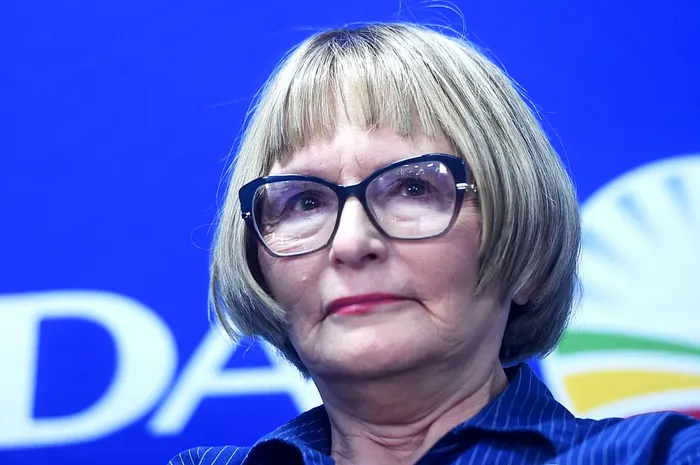
Helen Zille’s second coming to party leadership has been difficult, given the fallout following the unceremonious exit of then-party leader Mmusi Maimane, says the writer.
Image: Itumeleng English
Helen Zille is exactly what South Africa needs. Helen Zille is exactly what South Africa doesn't need. And somewhere in the middle lies the truth.
I listened several times to the interview between with Helen Zille, and I am always impressed by her agility to deliver crisp, cutting replies—whether right or wrong.
There is no hesitation or self-doubt. Criticism is combatted, and critique is dismissed. But there is very little unpacking of the issues that move the dialogue towards Zille’s philosophy of the rational centre. Instead, there is simply the constant aura of potentially explosive combativeness. She is a politician with a base to answer to — one who has moved beyond people-pleasing.
Zille’s second coming to party leadership has been difficult, given the fallout following the unceremonious exit of then-party leader Mmusi Maimane. She inherited a party reputation that required careful repair. The fumes of racism and whispers of white nationalism filled media columns after the disastrous 2019 general election. Some interpreted the results as evidence that DA voters were unwilling to serve under a black leader. Others anticipated the growth of white nationalism and defected to parties such as the FF Plus. Amid this turmoil, the ‘woke left’ got laden with the bulk of the blame.
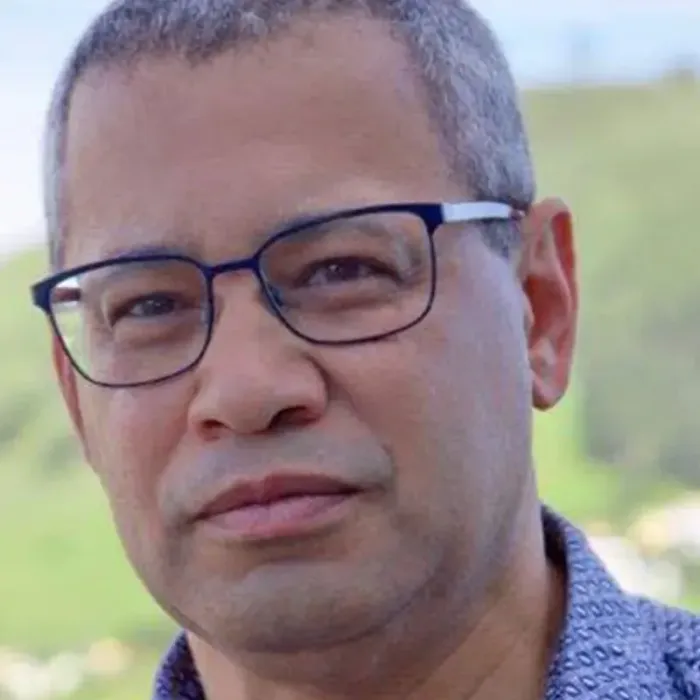
Lorenzo Davids is the Executive Director of Urban Issues Consulting.
Image: Supplied
Within two minutes of the interview, Zille warns of the dangers of the woke left and identity politics. In a country where racial identity remains embedded in virtually every decision-making process, this is perhaps both the bravest and the most misguided thing to say. But let us unpack the “woke” era.
The Republican Party, under Donald Trump, took a political swipe at the Democrats at CPAC (Conservative Political Action Conference) in Dallas in July 2021, when Trump famously declared that “everything woke turns to shit”, marking the shift to “woke” as a primary political weapon. When Trump said it, it effectively became Republican orthodoxy—and it remains so today. While few fully understood the term, it was weaponised to attack nearly every form of consciousness relating to race and justice.
In 1923, Marcus Garvey used the term to call on black people to “wake up” and remain alert in an era of grave danger and oppression. Before Garvey, it existed in African American Vernacular English, referring to the physical safety of black people. It carried two essential meanings: wake up to how you are perceived and treated and stay awake—don’t become complacent and fall asleep! The phrase later appeared in blues music and literature in the 1960s. The 2014 Ferguson protests and the 2020 protests after the killing of George Floyd sparked a resurgence of the term. Movements such as #BlackLivesMatter and #FeesMustFall also adopted it. #StayWoke became a digital rallying cry.
Trump and the Republican Party found a phrase they could associate with everything they opposed in America—and they wielded it aggressively, particularly against student protest movements. They had found a weapon. The “woke left” became convenient shorthand for progressive policies and activism.
At roughly the same time, the DA had suffered a humiliating electoral outcome, and the term crossed the Atlantic, finding fertile ground in South Africa. The “woke left” was blamed for the party’s poor performance. It diverted attention from internal party failures—systemic and human—and displaced accountability onto an abstraction. Anyone referencing race or justice was swiftly labelled “woke left” and thus positioned as toxic and part of the problem. The weaponisation of the terms ‘woke left’ and ‘#staywoke’ became nuclear. If politicians were lost for words, they would simply employ the term. End of discussion. Instead of the phrase being a consciousness of existing systemic injustices, Trump and his global linguistic allies made the phrase a catch-all for what he called the “radical left.”
In South Africa, "woke" has undergone a challenging metamorphosis. While it carries some of the baggage of the Trump-era demonisation, it is an asset in debates about governance, racial redress, and disillusionment with some existing politics. Conversations about race and justice remain necessary for South Africans to have. Yet politicians increasingly deploy “woke” as a means to shut such conversations down.
It is characteristic of the "Woke" generation, as with many others, to be deeply critical of both the ANC’s liberation-era failures and the DA’s perceived avoidance of race and justice as policy issues. The ANC has spectacularly failed South Africans, in part due to its fixation on nationalism. It doesn’t have a political philosophy that lends itself to a sensible message on implementation. The DA, by contrast, often diminishes the enduring impact of racial and gender injustice on efforts to build a capable, diverse state. While for the ANC it's all about cultural nationalism, for the DA it's a class nationalism. Both are flawed. We are collectively weaker because we keep avoiding the issues and inventing battleaxes instead of round tables to deal with what South Africans need.
The ANC has failed the psychological transition from a party baptised with revolutionary fervour to a mature and sensible civic government that represents South Africa’s collective interests. It has not moved on from the "politics of the spectacle" (protests, slogans, and disruptions) to the "politics of the mundane" (effective oversight, a professional civil service, fiscal discipline, and reliable service delivery). Decades of protests and sloganeering have all contributed to a form of learned helplessness: citizens who have come to believe the system is so corrupt and rigged against them or broken beyond repair, and that burning things down is the only way to be heard.
Revolutionary histrionics is emotionally immediate and addictive. Civic governance, by contrast, demands a high degree of literacy, patience, and bureaucratic competence to navigate the slow machinery of the state. The ANC appears to lack sufficient cadres who fully grasp this shift.
Thus, as both the ANC and DA remain trapped in their respective psychological obsessions and fears, the “woke left” must engage more constructively with the status quo. It must move beyond performative outrage towards technical competence. When “wokeness” becomes the discipline of analysing provincial budgets, contributing sensibly and not cynically to macroeconomic planning, confronting corruption wherever it is found, and upholding the Constitution above party loyalty, it can become a stabilising and capacitating force for constitutional democracy.
Helen Zille is not your problem. Helen Zille is your lesson. This is the hard work that must be done to become effective at public leadership.