City Cape Town can't auction its responsibility to build an integrated City


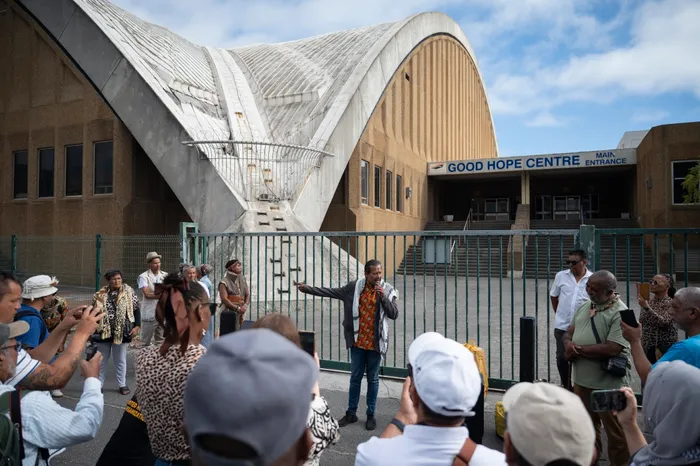
The auction of Good Hope Centre has sparked controversy over public asset management in Cape Town. The recent sale of R135m sale must still obtain statutory approval, says the writer.
Image: Armand Hough / Independent Newspapers
On the one hand, the City of Cape Town argues there’s a shortage of suitable land on which to build affordable homes in good neighbourhoods – which is why it has yet to build any such housing.
On the other hand, it has dozens of land parcels in good neighbourhoods that it considers suitable for raising funds through auction. Fifty-three went under the hammer last week, including the enormously valuable Good Hope Centre that was “knocked down” for a snippet (the R135m sale must still obtain statutory approval, which GOOD’s caucus of Cape Town councillors will strenuously oppose).
Whatever one’s opinion of the Good Hope Centre, the value and development potential of the seven hectares of land it occupies in inner-city Cape Town is immense. Because of its heritage status, the structure can’t simply be flattened, and the site redeveloped. The use of the space must be reimagined.
In public hands, it could be developed for public good, maximising its potential for affordable homes in a happening new Cape Town space. In private hands, it could become a church or hotel! The point is, once it is sold, it is no longer a genuine public space, and access becomes transactional and/or conditional, and potentially exclusive.
To put it in blunter, more political terms, instead of using an important public asset to effect the mild redress of building a model integrated community in the centre of the city, the City says it’ll rather take R135m. It wants residents to believe that the Good Hope Centre is a financial albatross, and that by dumping it, it is saving them money. But the City takes no responsibility for its own hand in the poor upkeep, management, and marketing of the facility.
The Good Hope Centre is a public events and conference facility that costs money to operate. So do libraries cost money to operate. So do community halls. So does City Hall. None of those facilities exists to turn a profit, which doesn’t imply they should be shoddily managed. They exist because cities require civic infrastructure – places for learning, gathering, culture, democracy, and community life. If “not profitable” is the test, should the City then consider selling libraries next?
Governments are custodians of public goods. Maintaining public facilities is not a failure of governance. It is governance. Calling it an “albatross” reframes a constitutional function as a commercial mistake. If the argument is that the Good Hope Centre is underperforming, then its custodian should address the management issues. Upgrade it. Repurpose it. Improve programming. Underperformance is not a justification for privatisation. It is a call for better governance.
Here’s the danger in Cape Town’s logic: Once it decides that every public building must justify itself in financial terms, it reduces the city to a balance sheet. Anything that doesn’t maximise yield becomes disposable.
That’s what corporates call asset liquidation. It is the diametric opposite of city building. Public infrastructure carries social and economic value that does not appear as profit on the City’s balance sheet.
Things like cultural advancement, community cohesion, local economic spin-offs from events, and accessible civic spaces- these are real assets, though they don’t necessarily conform to line items.
When a City that has yet to address the spatial exclusion (and concomitant responsibilities) of history sells off dozens of valuable properties, it prolongs the exclusion. It creates another permanent shift in who the city belongs to.
Who it is for. Where we live isn’t just an address; it affects where children go to school, exposure to gangs and crime, and hope and hopelessness. If we allow Cape Town’s “financial albatross” spin to prevail unchallenged, we participate in the City’s quiet loss of its public character – one “non-performing asset” at a time.
*Herron is GOOD Secretary-General