Why theocratic political power is failing in today's world


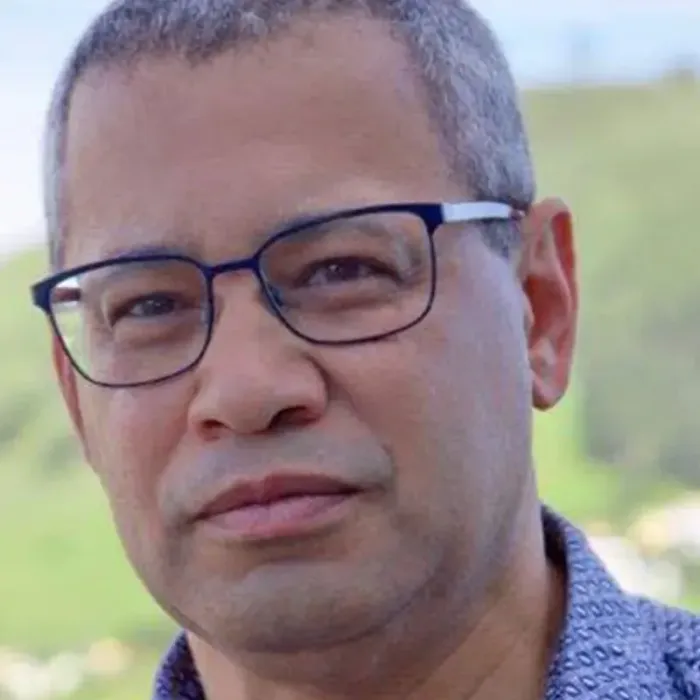
Lorenzo Davids is the Executive Director of Urban Issues Consulting.
Image: Supplied
The USA and Israel have launched attacks on Iran. Iran, in turn, has launched attacks on Dubai, Doha, Bahrain, and Kuwait - places with US military bases, or that are allied to the US. Pakistan have launched attacks on Afghanistan. It is headlines most journalists have had in a folder for many months. Nothing here is surprising.
The cause of these tensions and wars lies in a persistent dissatisfaction with two interrelated issues: the structural awkwardness of doctrinally absolutist religious movements governing polities composed of diverse and competing faith interpretations, and the worn-out phrase “majority rule.”
Dogmatic religious movements should not be governing multi-religious and agnostic/atheistic societies, regardless of whether they are a majority religion. In a world where populations within countries consist of diverse faith and non-faith practices, theocracies – especially those of one dominant religion - are an outdated form of government. Over the last 1000 years, religious governments have shown themselves to be guilty of some of the worst global atrocities in human history.
From Constantine, who painted Christian crosses on his soldiers' shields for the purposes of killing others in war, to the belief that blowing oneself up to kill others satisfies God, or exterminating others you deem to be your enemy, religious movements have established systems of government that have thrived on exacerbating human suffering. When religious leaders, especially in the West, pray for soldiers to be successful in killing people, there is something fundamentally wrong with our understanding of everyone’s humanity.
It is well known that many proselytising movements (of all religions) have been embedded in the political and economic ambitions of their governments. They are often funded to serve as the front for incursions aimed at creating regime change in countries, through war or the ballot box. People were often converted to both the religion and the values of the religious state.
The world is at war today primarily because of three religions. Christianity, Judaism and Islam. All three of these religions are firm proponents of a rigid political theocracy. All of them believe they rule by the authority of their God. All of them bless their soldiers to kill the other.
In South Africa, parties like the ACDP and Al Jama-ah seek a religious government based on their respective religious statutes. Whilst the two religions have significant adherents in the population, accounting for some 87% of the total population, history has taught us that such governments often do not have good human rights records.
Our diverse democracy requires an intelligent secular state that makes room for everyone and prohibits the dominance of any one religion.
The secular state is the salvation and safety net for a diverse state. The concept of secularism as a form of government comes from the upheavals that followed the Reformation. John Locke, among others, argued for religious tolerance and the separation of civil authority from ecclesiastical control. His 1689 “A Letter Concerning Toleration” argued that the state derives its legitimacy from protecting civil interests and not from enforcing religious orthodoxy. He believed civil interests to be matters such as "life, liberty, health, and indolency (freedom from pain or suffering) of body; and the possession of outward things, such as money, lands and houses."
God – for those who believe in the concept of a God - is not a puny politician who threatens damnation unless His name is inscribed in every constitution and on every building. Such actions are just pure tradition – not deity-instructed demands. I think God, assumed here to possess the power to be one, non- or multi-gendered, would much rather prefer the consistent practice of a set of values that honours and dignifies all of creation, especially its people. Locke wrote about the ineffectiveness of coercion in matters of belief. He said, “Such is the nature of the understanding, that it cannot be compelled to the belief of anything by outward force.” People do not become better by force or compulsion.
We are in a devastating war in the Middle East this morning because of three religions. All are led by a God who declares himself to be the God of Peace. Think about that for a moment. And don’t for a moment think that the USA is not also a cross-dressing theocracy.
Locke also wrote, in the same year, his “Second Treatise of Government", where he explains the philosophical premise for majority rule. But we are a long way from the city-states of 1689 and the mono-cultural societies of the day. How should modern states, structured on the principle of majority rule, ensure a safe, equitable and respectful society for everyone who lives in it? In some instances, it may appear that majority rule implies the subjugation of minorities, which it does not. Locke said that “the act of the majority passes for the act of the whole, and of course determines, as having, by the law of nature and reason, the power of the whole." But nowhere does it imply that the acts of the majority are only to advance the interests of the majority and not also to advance the interests of the minority, for those two (sometimes competing) interests should serve to advance the good of the whole.
South Africa has an opportunity to show the world the kind, protective and respectful power of the secular state. It does not need theocratic laws or autocratic majorities to be a great country. It needs good secular and good religious people who can together build a country for all, without the dominance of any one entity or deity. It also needs a nuanced majority rule that protects both minorities and majorities, for the goal of government is the good of the whole. In such a world, where the good of the whole is the goal, some majority and minority interests may have to be sacrificed. That's what a great country does and looks like. We should not be fighting another devastating theocratic war.