Imagining a South African election free from political inertia


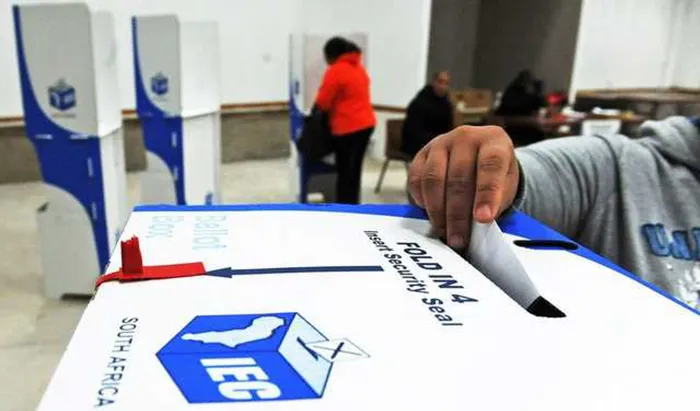
When will voters open their eyes to see the delusion, asks the writer.
Image: File
Can we, for a moment, imagine a different election? One where politicians are not allowed to sing and dance. Where they are not allowed to drive their fancy cars to campaign stations and polling booths.
Or have any form of security or protection. They are not allowed to jump the queue to vote; they must stand in line like everyone else. Or an election where they must all be the last to vote. Every election speech must be published and handed to the audience before they take to the podium. They must have budgets and data available to support their claims.
In every room where they campaign and deliver speeches, there will be independent fact-checkers to immediately review and correct any statement they make that is not supported by legislation, budgets, or data.
When will voters open their eyes to see the delusion? Our politicians have not been sent to parliament by the electorate. They have been sent there by a political party. They don’t represent any community or constituency. Watching the Parliamentary Ad Hoc Committee to Investigate Allegations made by Lieutenant General Mkhwanazi, we have hours of footage of our politicians at their most intimate moments with our country’s future.
The results are not pretty to watch. These Commissions are a window into the often pathetic, near-comedic performances by the person being questioned and a political class that lacks the intelligence to address this incompetence and put a stop to it.
We have a crumbling criminal justice system. Yet those members we saw on television for hours on end are the ones who are supposed to be fixing it. The TRC, the Zondo Commission, the Marikana Commission, and the Life Esidimeni Inquest are among the many that were intended to help clean up our justice processes.
In the Life Esidimeni tragedy, 144 mental health patients died, and their families are still waiting for justice more than a decade later. To date, prosecutions have been limited to two former Gauteng Health officials, with proceedings still pending.
The portfolios of education, social development, health care, justice, police and the economy are all public-facing departments. But it's these portfolios that have damaged the South African voters' psyche the most. Go to any court and see the frustrating work being done there. Zenzo Meyiwa was murdered in 2014, nearly twelve years ago. The Zenzo Meyiwa trial has been going on for nearly five years now.
The defence must still present their case. Despite all the promises made, pit latrines still remain a serious problem in this country. Water is still a problem in this country. Construction, Transport and Water mafias are unrelenting problems in South Africa. Cartels hijacking buildings across South Africa are a huge problem. Police dockets going missing are a huge problem. According to evidence presented at the two commissions that are probing allegations against senior officers, our police are, by all accounts, a cesspool of politically and financially motivated criminality.
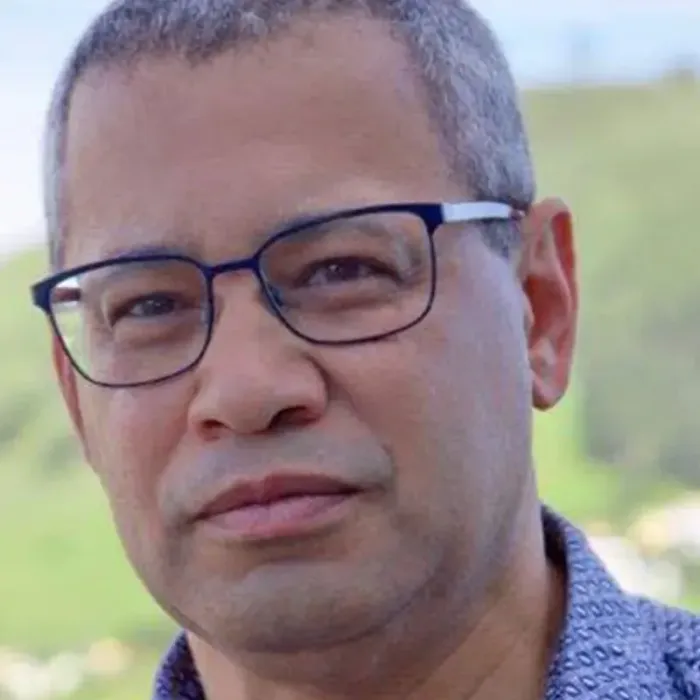
Lorenzo Davids is the Executive Director of Urban Issues Consulting.
Image: Supplied
There is no urgency to fix anything. It took politicians and their bureaucrats eighteen years to provide the country with reasonably stable electricity. Systems are broken all over. Courts don't have air-conditioning. Police stations don't have electricity. Or paper to take statements. Municipalities don't have water. Commuters don't have safe public transport. Our voting stations and their materials are at risk of not being adequately secured. A municipal meeting starts 45 minutes late, without an apology. Millions are unemployed. But we have politicians who take pictures of themselves walking on a red carpet.
Our problem is that we have mistaken power for intelligence. We have a fairly mid-sized parliament for our size economy and population. Yet we have a failing political system. We should not get overly excited about a 0.5% drop in the unemployment rate. We should be asking: "But why is it only 0.5%? What can we still do to rapidly improve it?” South Africans have learnt to tolerate gross political failure. Parties have given up promising voters heaven. They now only promise voters a better hell. Traffic is a nightmare. Try getting from Phillipi to Claremont on a weekday with a taxi or bus. On a bad day, it's a two-hour nightmare during peak hour, unless the driver risks everyone’s lives to get his passengers to their destination on time. It’s not a construction problem. The construction is much needed. It’s the sheer lack of traffic management and enforcement on the route, as if black peoples’ jobs and journeys don’t matter.
The growing poisonous culture of political powers that cannot be challenged or critiqued have given birth to an anaemic and sickly election cycle. There are no serious debates. There are only shouting matches. There is no data discussed, only allegations made. There is no fact-checking. Just lies uttered to create great sound bites. There are no records of service discussed, of budgets not spent, or failures highlighted: just deflections and counter-allegations. The "Pam Bondi Online School of Political Deflections" will have full classes this South African election season.
It’s not only South African political parties that have failed us. It's the many Parliamentary Portfolio Committees on which they serve that have failed us. It's the never-ending meetings they attend that cost millions and produce nothing of substance that have failed us. It's the many Commissions that they vote for that have failed the voters. The system that they all work in has failed the voters.
An election won’t fix us. Only a drastic inconvenience will. A necessary hardship that is suffered by all, and mostly by the elite, that confronts the nightmare of our existence. The 2026 elections are a reckoning. Think before you vote. Lose your fear. Embrace the inconvenience, for the parties and the past have promised you a better life. You don't have that better life. They lied. Remember that.
* Davids is the Executive Director of Urban Issues Consulting