When infrastructure works, so does the economy


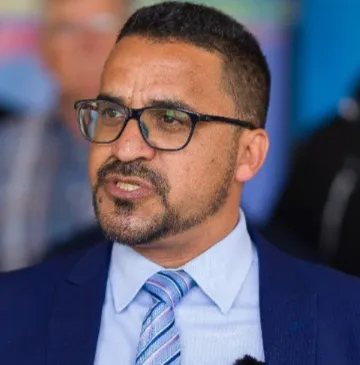
Department of Infrastructure MEC Tertuis Simmers.
Image: SUPPLIED
The Western Cape Government’s multi-billion Rand Infrastructure Programme is a key driver of economic growth in our province, connecting communities, supporting businesses and creating thousands of jobs.
Provincial infrastructure projects upgrade public buildings, create dignified housing opportunities for our most vulnerable residents and ensure that our network of roads connects people to opportunities.
But Infrastructure delivery is not just about roads, housing projects or public buildings. It is also about time. When public infrastructure is upgraded or built timeously, we give more residents direct and safe access to housing and job opportunities. Every month, week or day saved by delivering infrastructure efficiently is a direct investment in families, workers and businesses.
Infrastructure Acceleration, properly understood, is not about cutting corners or lowering standards. It is about improving the systems that slow delivery down.
One of the biggest misconceptions about infrastructure is that money is always the problem. While funding matters, it is not the only constraint. Delays often arise from fragmented planning, poor coordination between institutions, slow decision-making, and delivery models that are no longer suited to the scale and urgency of current needs.
There are also real trade-offs that must be confronted honestly. Governments constantly balance maintenance against expansion, speed against quality, and short-term pressure against long-term resilience. Avoiding these trade-offs does not make them disappear. It simply shifts the cost into the future, where it becomes more expensive and more disruptive.
Take road infrastructure as an example and consider the impact the weather has on the Western Cape network. New projects are important but failing to maintain or safeguard existing assets leads to deterioration that costs far more to fix later.
Acceleration, in this context, means preserving what we already have before failure becomes more expensive than prevention. It also means changing how roads are delivered, with a New Provincial Roads Delivery Model set to come online from April 1, this year, alongside early announcements on strategic gravel road maintenance and upgrade priorities. In the 24/25 financial year, the Western Cape Government spent over R5 billion on transport infrastructure, working with 64 SMMEs and creating over 3 000 jobs. Over 4.3 million square metres of surfaced roads were resealed
The same logic applies to housing. Delivery is not only about announcing projects. It’s about ensuring that planning, services, land use, and construction move together. When these elements are not aligned, projects stall, and families pay the price in years of waiting. That is why affordable housing closer to economic opportunity, including inner-city areas, remains a priority, with further announcements expected this year as projects reach readiness. In the 24/25 financial year, the Western Cape Government spent over R1.68 billion on human settlements infrastructure, which provided 9 600 households with formal housing or services.
People are right to be sceptical when they hear government speak about faster delivery. Too often, acceleration is promised without any explanation of what will actually change. Credibility comes not from ambition alone, but from demonstrating that systems are being improved and decisions are being taken earlier and more deliberately.
Better planning and better use of data are essential to this shift. Modern infrastructure delivery depends on understanding where the needs are greatest, which projects are ready to proceed, and how limited resources can achieve the greatest impact. It also depends on building the right partnerships. In the coming months, key partnerships will be announced to help unlock the province’s infrastructure pipeline and move projects from planning phase to implementation.
In the Western Cape we are deliberately moving toward an approach that emphasises readiness, coordination, and lifecycle thinking. This is not about doing more for the sake of it. It is about doing things better, faster, and with greater accountability.
Acceleration also matters for economic reasons. Infrastructure underpins growth, mobility, and access to opportunity. When roads safely connect communities to opportunity, when housing is closer to economic centres, and when public facilities function as they should, the economy works better for everyone, particularly those who can least afford delays.
None of this is easy. Infrastructure delivery operates under fiscal constraints, regulatory requirements, and capacity limits. But difficulty is not an excuse for a lack of action. The cost of slow delivery is simply too high. Accelerating infrastructure delivery is ultimately about addressing people’s needs, protecting public assets, and building confidence in the government’s ability to deliver. It requires discipline, honesty about trade-offs, and a willingness to reform systems that no longer serve their purpose.
Because when infrastructure delivery accelerates responsibly and intelligently, so does opportunity.
* Simmers is Western Cape Minister of Infrastructure.
*The views expressed do not necessarily reflect the views of Independent Media.