BRICS literary award more than a prize


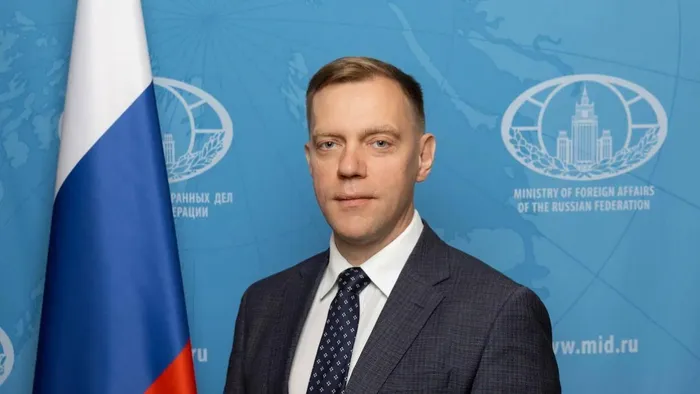
Consul General Ruslan Golubovskiy.
Image: Supplied
Dmitry Likhachev, preeminent Russian scholar of medieval literature and linguist: “Literature allows us to understand each other, to feel another person’s pain as our own.”
These words, more than any others, capture the essence of the BRICS Literary Award - an international initiative designed to bring cultures, people and languages together through the power of the written word.
The award emerged not only as a form of recognition for outstanding writers, but also as a bridge between worlds, where the history, spirit and values of each nation find expression in literary art.
The idea of the award was first articulated at the “Traditional Values” Forum in Moscow in November 2024. Representatives of the BRICS member states agreed on the need for a new level of cultural dialogue, in which literature would serve as a tool for strengthening mutual understanding between countries, showcasing the richness of mentalities. The award supports authors whose works deeply reflect the cultural and spiritual values of the people of the BRICS countries and creates space for translation, publication and the global exchange of literary experience.
In 2025, the international jury announced the results of the award’s first season at a ceremonial event in Khabarovsk, held as part of the BRICS Arts Festival. The Egyptian writer Salwa Bakr became the first laureate of the BRICS Literary Award, receiving the prize for her contribution to contemporary arabic prose and for her masterful portrayal of social realities and moral questions in her works.
The first season’s longlist also revealed the rich diversity of literary voices from across the BRICS countries. Among the finalists were acclaimed writers from Brazil, India, China, Russia, Indonesia, UAE, Iran, Ethiopia, as well as three authors from South Africa, whose works reflect the lived experience and cultural particularities of South African society. Nthabiseng Jah Rose Jafta explored themes of African identity, language and the human connection to the land in her poetry and prose.
Bongeka Mhlongo focused her essay collection “Thinking in Full Colour” on reflections about national development, social and corporate contexts, and everyday life.
Particular attention was drawn to Zaynab Khan, whose children’s books - such as “Yusuf’s Choice” and especially “A Letter from Gaza to the World” - address the theme of Palestine through a child’s perspective. Her stories of love, compassion, unity and the hardships of war and displacement help young readers and adults alike empathize with the fate of children and nurture in them a striving for peace and justice.
The BRICS Literary Award is more than just a prize. It is a new cultural bridge, intended to broaden readers’ horizons, deepen mutual respect among people and demonstrate that the true value of literature lies not only in words, but in the hearts it ignites. I believe that literature can not only comfort, but also heal, become a light in a difficult moment and remind that hope always begins with a word.
Literature weaves a subtle dialogue between friendly nations, where shared stories shape political understanding through empathy rather than command. For this very reason, the BRICS Literary Award matters: it honors imagination as a shared cultural force that strengthens cooperation beyond economics or power.
* Ruslan Golubovskiy is the Consul General of Russia in Cape Town.