Understanding South Africa's education crisis: The bottleneck we can no longer ignore


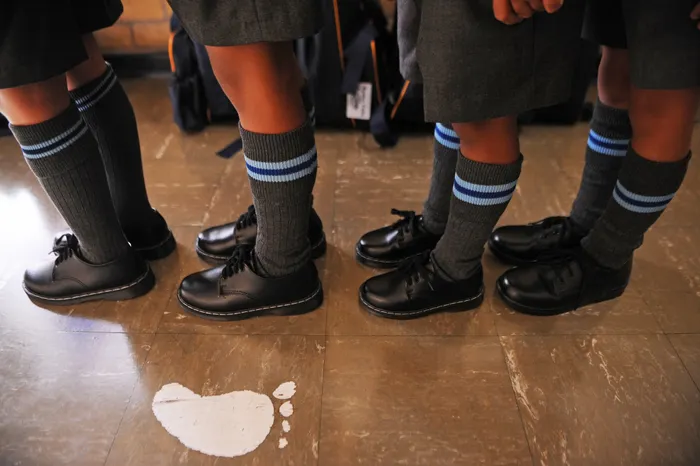
This crisis is not just an educational issue; it threatens the very fabric of our society.
Image: Supplied
South Africa’s basic and higher education system is facing a reckoning we have long postponed. The reality is stark. More than half a million young people who qualify for further study will be left without a place in the traditional university system. Not because they lack intelligence, discipline, or ambition, but because our physical infrastructure cannot absorb them. This is not a future problem. It is happening now. And next week, as admission outcomes are released and registration deadlines pass, chaos will begin.
Every year, we repeat the same ritual. Matric results are celebrated with speeches about record passes and improvements in quality. Ministers congratulate departments, newspapers publish success stories, and families dare to hope. Yet beneath the applause lies a brutal contradiction. Success in basic education does not translate into access to higher education. For hundreds of thousands of young people, the promise of opportunity ends at the gates of overcrowded universities. South Africa produces more qualifying learners than it has spaces to accommodate. This is not new. It is structural, predictable, and entirely of our own making. Public universities simply do not have the lecture halls, residences, laboratories, or academic staff to meet demand. Yet we continue to act surprised when campuses overflow, registration systems collapse, and students sleep in queues or on pavements, pleading for a place. The result is an annual crisis that has become normalised.
Young people are told to apply elsewhere when there is nowhere else to go. They are encouraged to be patient while their lives are put on hold. Others are pushed toward private institutions they cannot afford, or into technical and vocational colleges that remain uneven in quality, under-resourced, and poorly connected to the labour market. This is not just an education problem. It is a social and economic emergency. When hundreds of thousands of capable young people are excluded from meaningful study pathways, the consequences ripple outward. Youth unemployment deepens. Household dependency increases. Social frustration grows. Political instability becomes more likely. A country cannot build a stable democracy or a growing economy while systematically blocking its youth from development. The most dangerous lie we tell ourselves is that this is an issue of individual failure. It is not. These students did what was asked of them. They passed. They qualified. They applied.
The system failed them. What makes this crisis even more indefensible is that it is foreseeable. Demographic data, school enrolment figures, and matric trends have for years pointed to the coming surge. Planning should have been proactive. Instead, investment in new universities has stalled, existing institutions remain overstretched, and alternative models of higher learning are treated as secondary rather than essential. We cannot continue to rely on a narrow university model to absorb a mass youth population.
South Africa needs a diversified and flexible education system. This must include expanded university capacity, strengthened technical and vocational colleges, credible online and blended learning options, and stronger partnerships with industry. Most importantly, these alternatives must be properly funded, quality assured, and socially respected. They cannot be presented as consolation prizes for those who did not make it.
Next week’s chaos will not be an accident. It will be the direct outcome of years of policy paralysis and political avoidance. When students protest, sleep outside campuses, or flood social media with desperation, we should not ask why they are angry. We should ask why we allowed this to happen again.If South Africa is serious about development, equity, and social cohesion, access to further education cannot remain a bottleneck controlled by bricks and mortar alone. The question is no longer whether we have a crisis. The question is how many more young lives we are willing to place on hold before we act.