The putrescent legacy of US intervention in Latin America
Another voice


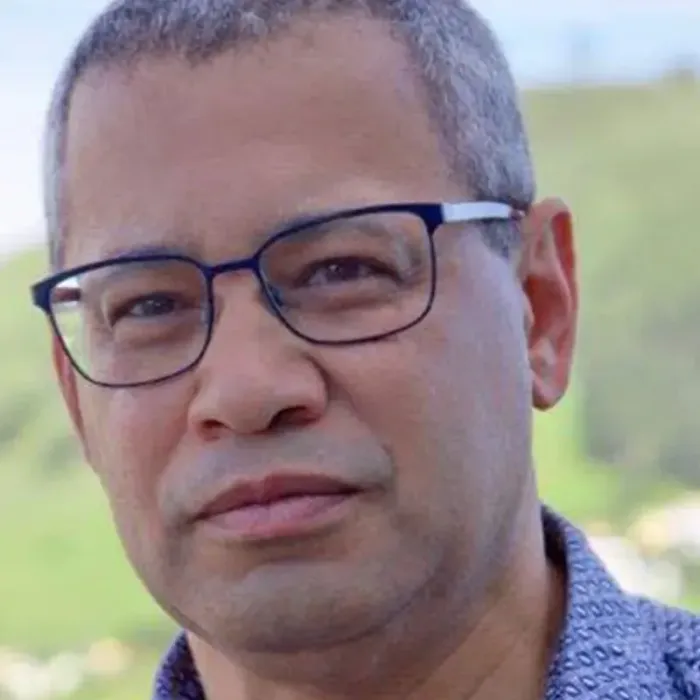
Lorenzo Davids is the Executive Director of Urban Issues Consulting.
Image: Supplied
Like a putrescent odour, the rotting legacy of 20 March 2003 still courses through my brain's sensory pathways. Words such as “weapons of mass destruction”, coalition of the willing”, and axis of evil” created sufficient global madness to launch a million missiles onto Iraq. A gullible world believed America.
It believed Colin Powell when he held up that tiny vial at the UN Security Council meeting on 5 February 2003 to show how much anthrax or other biological material could kill thousands of people.
Powell’s presentation was meant to scare the world. It was meant to show that Iraq had WMD capabilities. It was meant to scare the world into believing that Iraq might share WMD with terrorists. It was meant to convince the UN that military action was necessary. Later, after somewhere between 500,000 and 1 million Iraqis lay dead on the ground, it was disclosed that no stockpiles of chemical or biological weapons were found, no active nuclear weapons program existed, and that most intelligence claims were false or exaggerated. Powell later said, “It was a blot on my record”, and acknowledged that the evidence he presented was deeply flawed.
The United States of America was wrong. But it took about 1 million dead Iraqis to expose America’s lies.
Over the last 50 years, the US has been the primary destabilising force in Latin America. Its imperialist attitude in Latin America is well documented. On 11 September 1973, it used Augusto Pinochet to lead a US-sponsored military coup against democratically elected Salvador Allende. Allende was killed, and the US installed Pinochet as president.
Pinochet led a brutal dictatorship from 1973 to 1990. Pinochet dissolved the Chilean Congress and suspended the constitution. Chile was ruled by decree for 17 years. Over 3,000 were killed or “disappeared”. Thousands more were tortured.
The USA sent a group of US economists known as the “Chicago Boys” to design new economic policies for Chile. They privatised state industries and cut social spending. State-owned banks were sold to private investors. Other sectors, such as steel, petrochemicals, electricity, water, telecommunications, airlines, ports, railways, and infrastructure, were all privatised. The State pension system was replaced with privatised pension funds. All these were classic cases of state capture by the wealthy for personal enrichment.
Unemployment rose to over 20% and life for the ordinary Chilean became unaffordable. Chile became a case study of the failure of the US economic model of a market-based social policy. Chile under Pinochet also became a human rights graveyard. State violence against citizens made Chile one massive US-sponsored gulag for its people. Chile eventually faced financial collapse in 1982 due to over-deregulation and fixed exchange rates. The state had to rescue banks it had previously privatised.
Everything the USA brought into Chile in the name of 1970s Reagan-style neoliberal ideology had failed. What did not fail was the enrichment of Pinochet and his wealthy friends. What was sold to the Chilean people as “anti-communist efforts to make Chile great again” was nothing more than a scam by the wealthy to privatise state assets and monetise them for personal gain. Pinochet was arrested in 1998 in London for crimes against humanity. He died without being convicted.
In 1983, the US sponsored regime change in Grenada. President Maurice Bishop was killed during a US-sponsored internal coup just before the US invasion, called Operation Urgent Fury. The Bishop Government was replaced by a U.S.-approved government.
Panama’s history as a vital trade corridor between North and South America, as well as between the Atlantic and Pacific Oceans, is well documented. Its 1821 independence from Spain led to it becoming part of Gran Colombia. In 1831, Gran Colombia collapsed, and Panama became a province of Colombia. Disaffected Panamanians were supported by a USA-backed Panamanian Independence movement. US warships prevented Colombia from suppressing a Panamanian revolt. In 1903, Panama declared its independence from Colombia. It was partial independence, as the Hay-Bunau-Varilla Treaty gave the US control over the Panama Canal Zone.
During the late 1980s, Manuel Noriega, a CIA asset and unelected de facto ruler of Panama, whom the US used extensively as its anti-communist intermediary in the region for over 25 years, was exposed as a drug and arms trafficker and money-launderer on the payroll of the CIA. This became highly embarrassing for the US. It exposed the disease within US foreign policy that supports authoritarian allies for short-term strategic gain.
The US only condemned Noriega after his crimes were exposed and his geopolitical usefulness ended. During the 1989 US invasion of Panama, called Operation Just Cause, Noriega was captured and imprisoned in the US. On December 31, 1999, the US transferred complete control over the Panama Canal to Panama. During the first Trump presidency, the Panama Canal was again raised as a potential claim by the Trump Administration.
In Haiti, the US and France removed Jean-Bertrand Aristide as president in 2004. It started with a US-supported coup in 1991, followed by Aristide's forced exile in 2004.
In Honduras, President Manuel Zelaya was overthrown in a 2009 military coup. In Bolivia, President Evo Morales was forced to resign after US-supported military pressure and election fraud claims in 2019. Later studies found no proven evidence of election fraud.
The US tried to remove Fidel Castro from power during his tenure. It failed. It also tried to remove Hugo Chávez from Venezuela during a 2002 coup attempt that failed.
Donald Trump and his America is back in Latin America as the continent’s main destabilising force. The Monroe Doctrine appears to be nothing more than an arrogant agreement between two imperial power blocks in 1823 to delineate global territory between themselves. Venezuela is now in American hands as of January 3.
As veteran British journalist and commentator Andrew Neil wrote on Saturday, “This is not liberation; it’s a hostile corporate takeover. Trump didn’t remove a dictator to restore democracy – he cleared the lot for new management. It’s not a rescue mission, but the pilot episode of colonialism rebranded as reality TV.”
The US “Venezuelan intervention” fits the same pattern as before. Its lies are broadcast to the world to present the USA as the world’s “bulwark against communism and drug trafficking.”
But it is nothing more than a scam by the wealthy to privatise state assets and monetise them for personal gain. It’s happened in the past. The putrescent smell of empire. It’s happening now in Venezuela.