Can South Africa finally change the script?


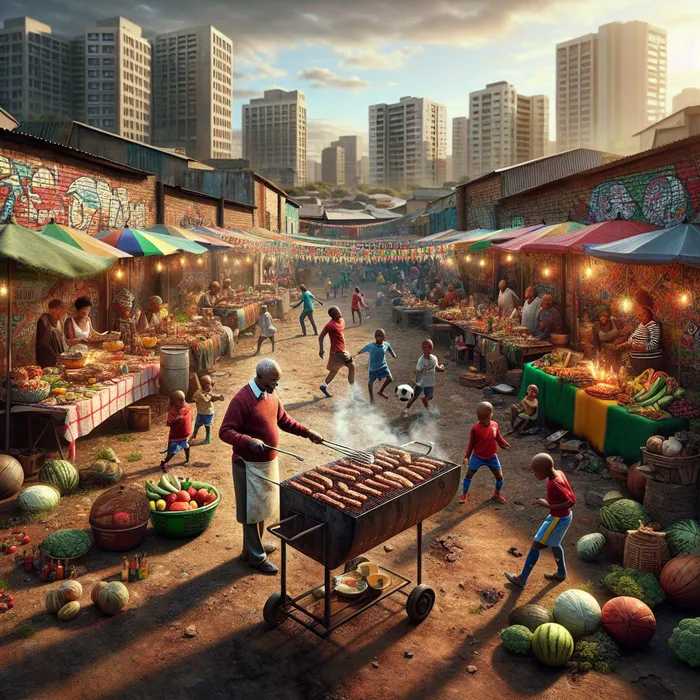
As the calendar crept toward 31 December, many South Africans were absorbed in the ordinary mathematics of survival, says the writer.
Image: AI RON
December in South Africa is a season of contradiction. It is the only time when grave national crises must compete with beach traffic, the smell of boerewors on the braai, and the stubborn hope that next year will somehow be better.
As families search for shade and rest, the state often appears at its most restless. Year-end decisions are announced, policies are “clarified”, and trust is quietly tested. Too often, the pattern is familiar: haste, opacity, and public confusion.
This year followed that script almost perfectly.
As the calendar crept toward December 31, many South Africans were absorbed in the ordinary mathematics of survival. New Year’s clothes versus January school shoes. A tank of petrol versus groceries. Meanwhile, the burden carried by the Minister of Police, first Bheki Cele and then his successor Senzo Mchunu, was of a different scale. As political custodian of the Political Task Team, the minister does not get a festive shutdown. Crime does not recognise public holidays.
Yet the defining act of this period was not a decisive crackdown, but a closure. The disbandment of the Political Task Team, created to confront politically motivated violence, landed like a blunt instrument. One is left asking whether this was necessary surgery or a full amputation where rehabilitation might have sufficed.
When a specialised state unit fails, is the instinct always to shut it down, or should we first interrogate who allowed it to fail and why? For communities living under the shadow of political killings, the decision felt less like renewal and more like retreat.
Almost on cue, December delivered its next twist. As the public absorbed the PKTT’s demise, the Starlink saga surfaced. Suddenly, the empowerment rules that small businesses wrestle with daily appeared flexible, even negotiable.
The Minister of Communications seemed willing to adjust BEE requirements with an ease that left local entrepreneurs blinking. In a country drowning in compliance and red tape, policy elasticity arrived only when billion-dollar satellites entered the conversation. The message was unspoken but clear. Institutional agility is not driven by public need. It responds to altitude.
Before the implications of that inconsistency could fully settle, tragedy intervened. The fatal shooting of DJ Warras shocked the country and triggered a depressingly familiar official response. Police cordons went up. Statements were issued that said very little. CCTV footage became mysteriously unavailable.
This is the moment when South Africans instinctively turn to WhatsApp for answers. Rumour becomes evidence. Speculation is promoted to expert testimony. And trust, once again, slips quietly out of the room.
Elsewhere in the world, the controlled release of such footage is standard practice. It is not recklessness. It is a strategy. Transparency builds trust, invites public cooperation, and demonstrates procedural confidence.
Here, information is treated as power to be hoarded rather than a public good to be shared. Ironically, the footage almost always emerges anyway, badly edited and poorly contextualised, narrated by someone’s cousin on social media. The public is not demanding perfection. We are asking for a partnership in the pursuit of truth.
And yet, because this is South Africa, December refuses to leave us without contrast. Bafana Bafana reminded us that another way is possible. At the Africa Cup of Nations, they played with hunger, discipline, and tactical clarity. They were not tournament favourites, but they carried themselves with quiet confidence and collective purpose. They showed what happens when individuals commit to a shared plan and execute it honestly.
Imagine if that same approach guided governance. What if the South African Police Service operated with the cohesion of a settled backline? What if policy decisions were communicated with the clarity of a Hugo Broos game plan? As we wait for the inevitable year-end statement from the Minister of Sport, Mr McKenzie, complete with figures and forecasts, one hopes the lesson goes beyond the numbers. Progress is not declared. It is demonstrated.
As we stand on the edge of 2026, the national wish is not for flawless leadership. That is unrealistic. What South Africans are asking for is simpler and more demanding at the same time. A break from the December ritual of reaction, silence, and damage control. We need governance defined by intention, transparency, and the basic respect of speaking to citizens as thinking adults.
South Africa has survived far worse moments than this. Our resilience is unquestionable. But resilience alone is not a development plan. It is not a policing strategy. It is not an economic model. The question for the new year is no longer whether we can endure. It is whether we are finally ready to demand systems that learn faster than we are forced to relive our crises.
Bafana Bafana offered the metaphor. The ball works best when it is passed deliberately, with awareness of the field and trust in your teammates. It is time for our leaders to play with the same purpose, discipline, and vision.