Letter: Why a wall along the N2 could enhance motorist safety


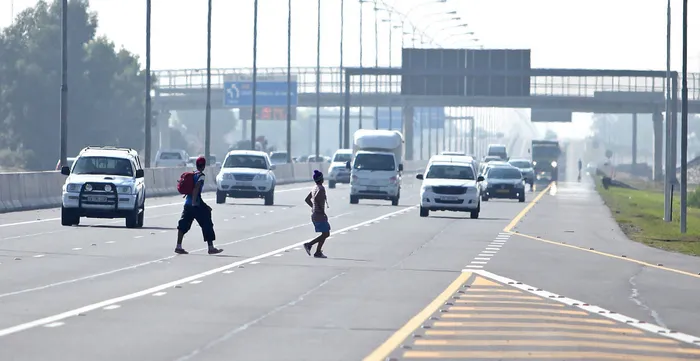
The City of Cape Town's initiative to erect a wall along the N2 aims to safeguard motorists from escalating attacks, says the writer.
Image: Independent Newspapers Archives
Thulani Dasa, Khayelitsha
The escalating violence along the N2 corridor has moved beyond the realm of concern and into a full-blown public safety crisis. Motorists are being attacked on one of the country’s most important transport routes, not sporadically, but with increasing frequency and apparent coordination.
In such circumstances, the government has both a moral and constitutional obligation to intervene decisively.
It is for this reason that the City of Cape Town’s proposal to erect a protective wall along sections of the N2 deserves serious, good-faith consideration rather than reflexive dismissal. While no single measure can eliminate crime, physical barriers that limit access, remove ambush points, and regulate movement are internationally recognised tools in high-risk environments.
On a route where drivers are routinely forced to slow down or stop, such interventions can mean the difference between safety and tragedy.
Critically, the wall must not be presented as a silver bullet. It should form part of a layered crime-prevention approach that includes increased visible policing, rapid response capability, improved lighting, surveillance technology, and cooperation with surrounding communities. Long-term solutions addressing poverty, unemployment, and social breakdown remain essential. However, the existence of deep-rooted causes can not be used to justify inaction in the face of immediate danger.
What is deeply troubling is the ease with which some commentators condemn the government for failing to curb crime while simultaneously opposing practical, lawful measures designed to do precisely that. This contradiction reflects not principled concern but political posturing. Public safety can not be held hostage to ideological battles or partisan dislike of those advancing a proposal. When lives are at risk, governance must prioritise outcomes over optics.
Precautionary measures are not admissions of defeat; they are acknowledgements of reality. The duty of the state is not to appear pure in theory but to be effective in practice. It is on the above-mentioned grounds that I fully support the City of Cape Town’s proposal to erect the wall.
It is absolute madness to constantly criticise the government for ineffective crime-fighting while simultaneously obstructing lawful, practical measures aimed at protecting the public. Safety precautions are not admissions of failure — they are responsible acts of governance in the face of real danger.
Opposing a proposal for its own sake, driven by political hostility rather than evidence, is both reckless and morally indefensible. When proposals have the potential to save lives, they must be judged on their merits, not on who brings them forward
This debate also underscores the urgent need to devolve certain policing powers, subject to clear terms, conditions, and oversight. Crime manifests locally, adapts quickly, and demands responses that are both flexible and accountable. Centralised control alone has proven insufficient in addressing complex, location-specific threats such as those currently unfolding along the N2.
The question before us is not whether a wall is an ideal solution but whether we are prepared to allow preventable harm to continue while awaiting perfect ones. Protecting motorists on the N2 requires urgency, realism, and the political courage to act.
Get your news on the go, click here to join the Cape Argus News WhatsApp channel.
Cape Argus